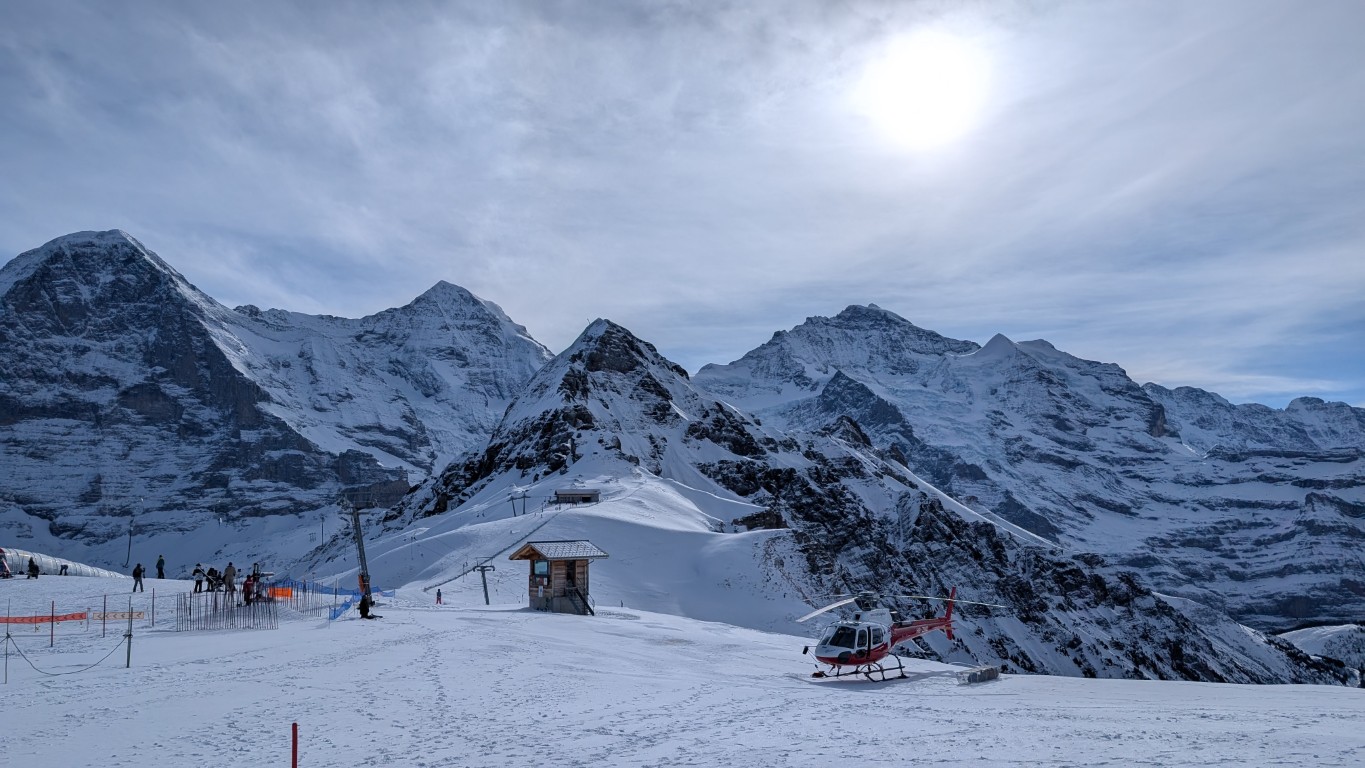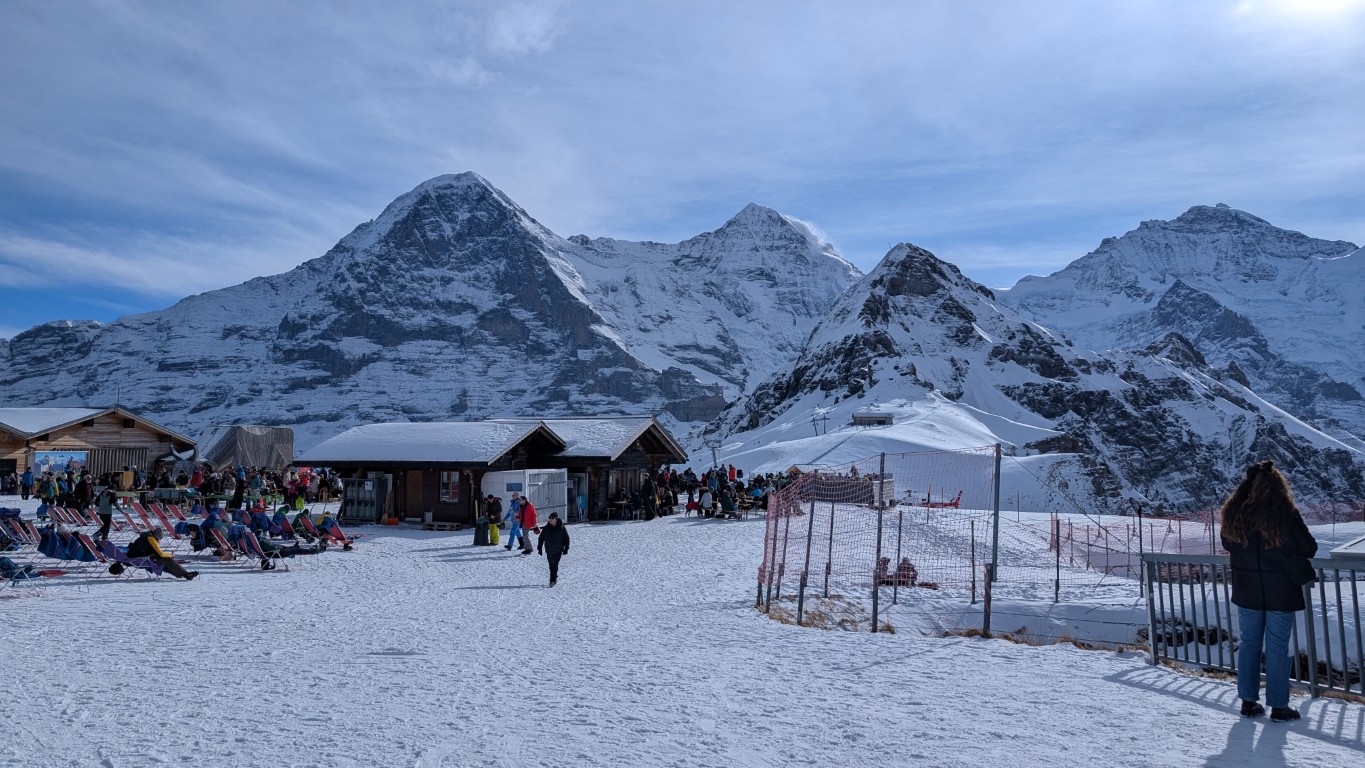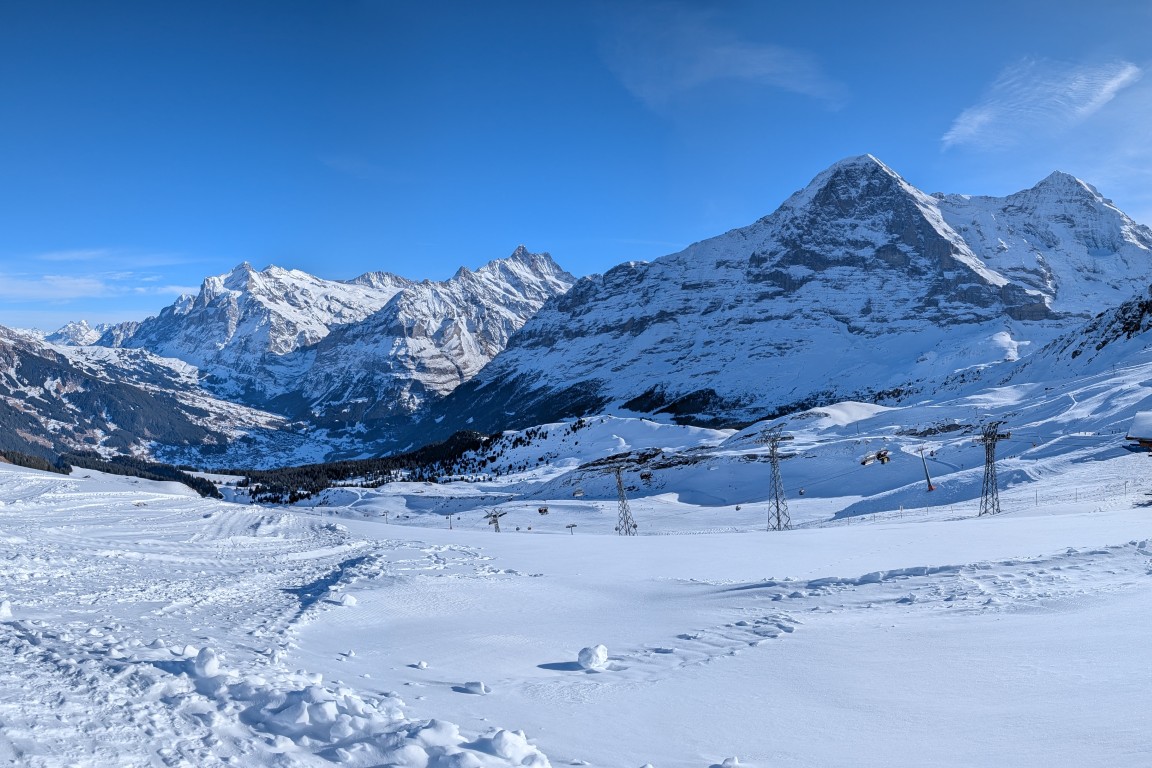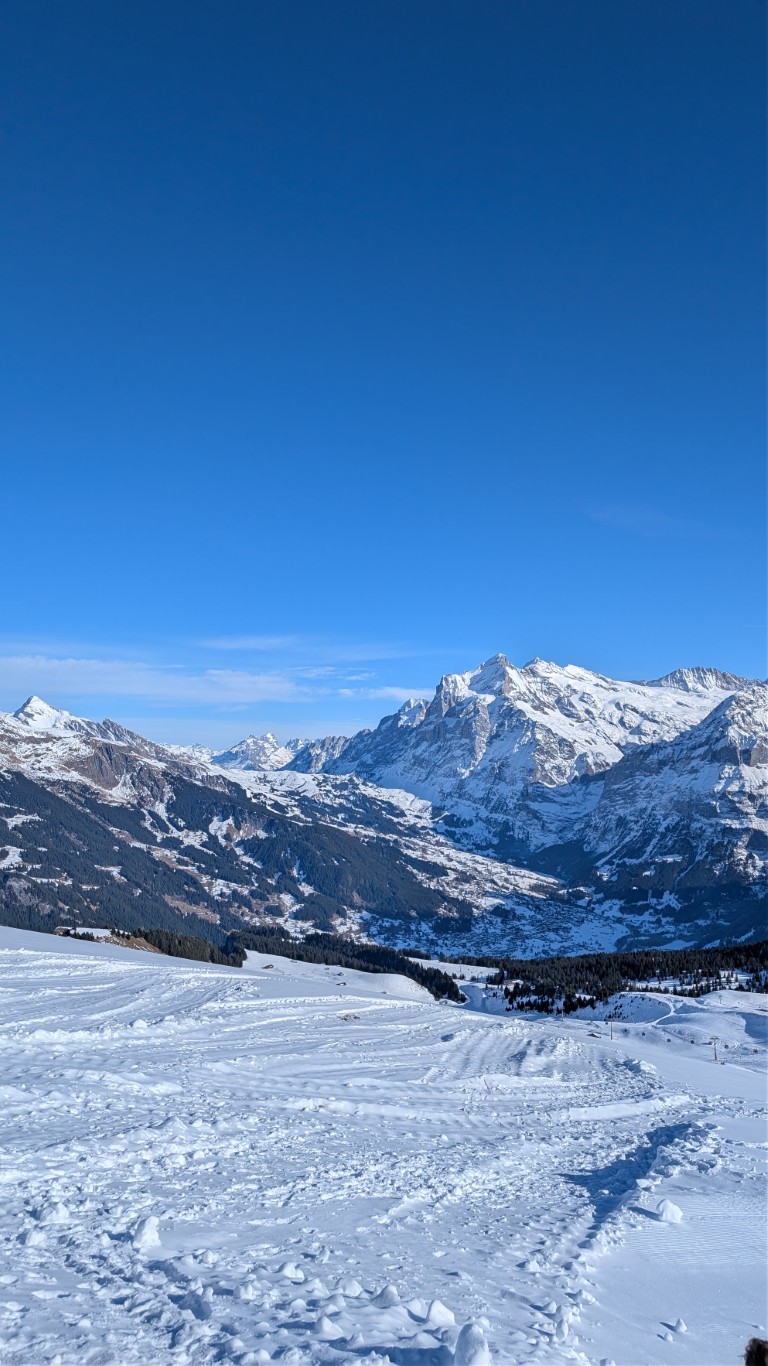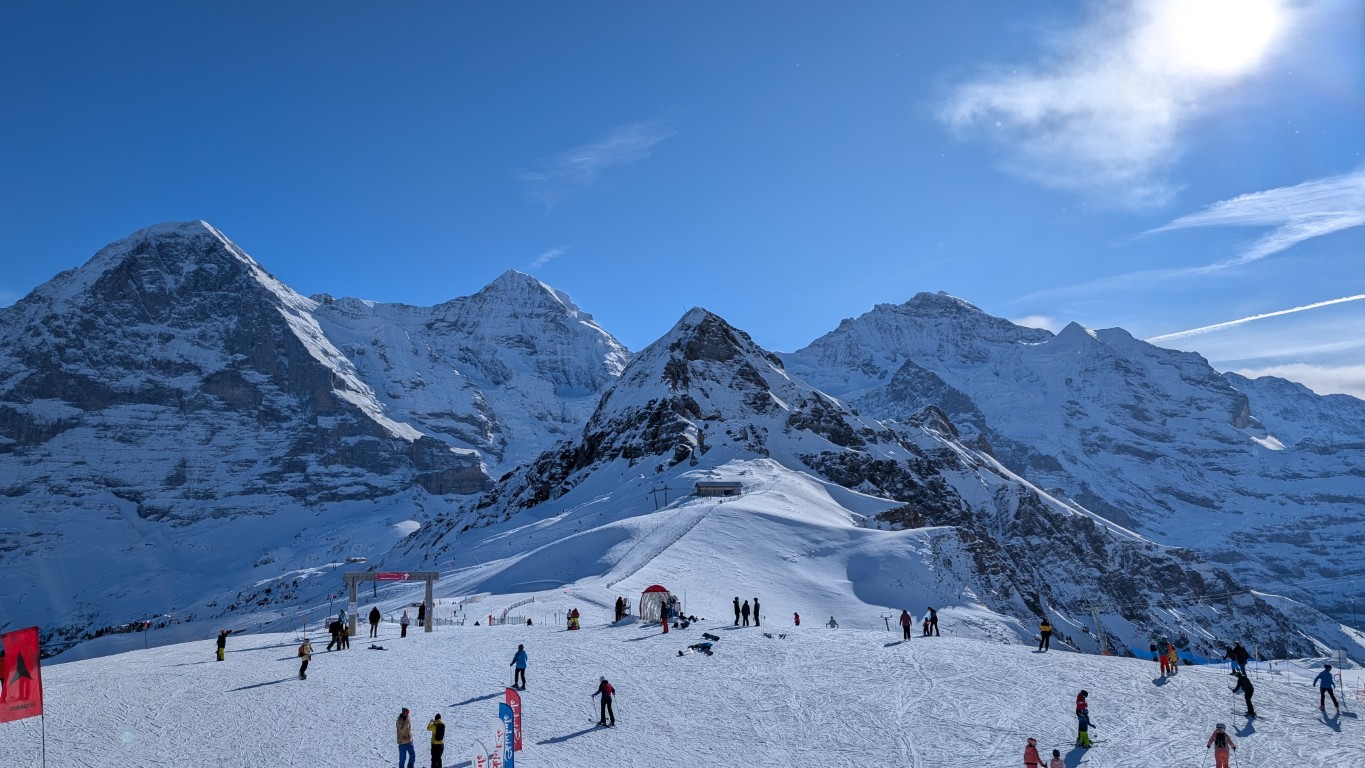
At 2342 meters above sea level, the Männlichen rises in the Bernese Pre-Alps – a peak that impresses less with its extreme height than with its spectacular location. Situated between Wengen and Grindelwald , it is considered one of the most impressive viewpoints in the Bernese Oberland.
Comfortable on the panoramic backrest
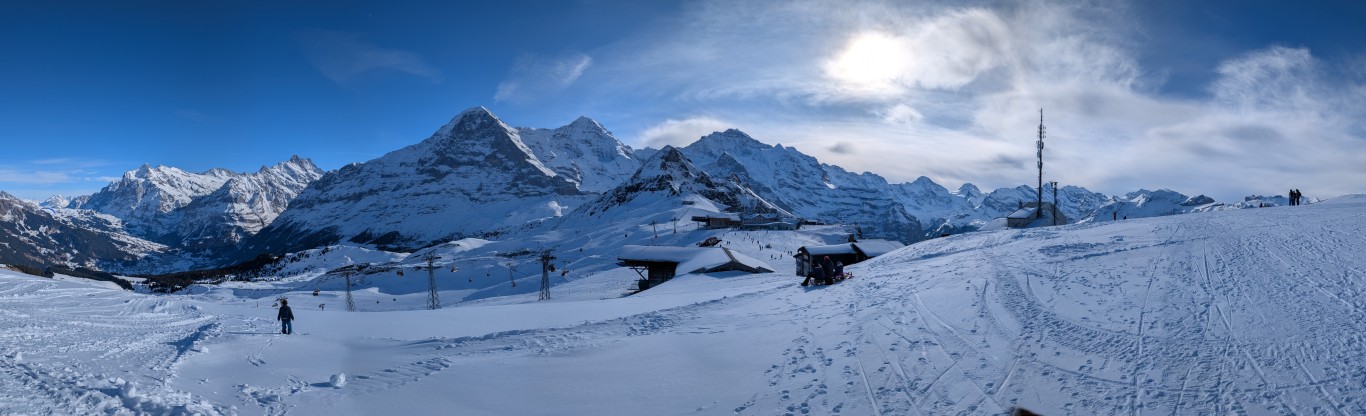
The Wengen–Männlichen cable car leads from Wengen, and the Grindelwald–Männlichen gondola lift leads from Grindelwald to an altitude of approximately 2230 meters. The mountain stations are located on a broad ridge south of the actual summit.
From there, the so-called Royal Walk leads to the highest point in about 30 minutes. The path is well-maintained and rewards hikers with one of Switzerland's most famous Alpine panoramas: the trio of peaks...
-
Eiger
-
monk
-
Virgo
Hardly any other place offers this iconic scenery in such a cohesive manner.
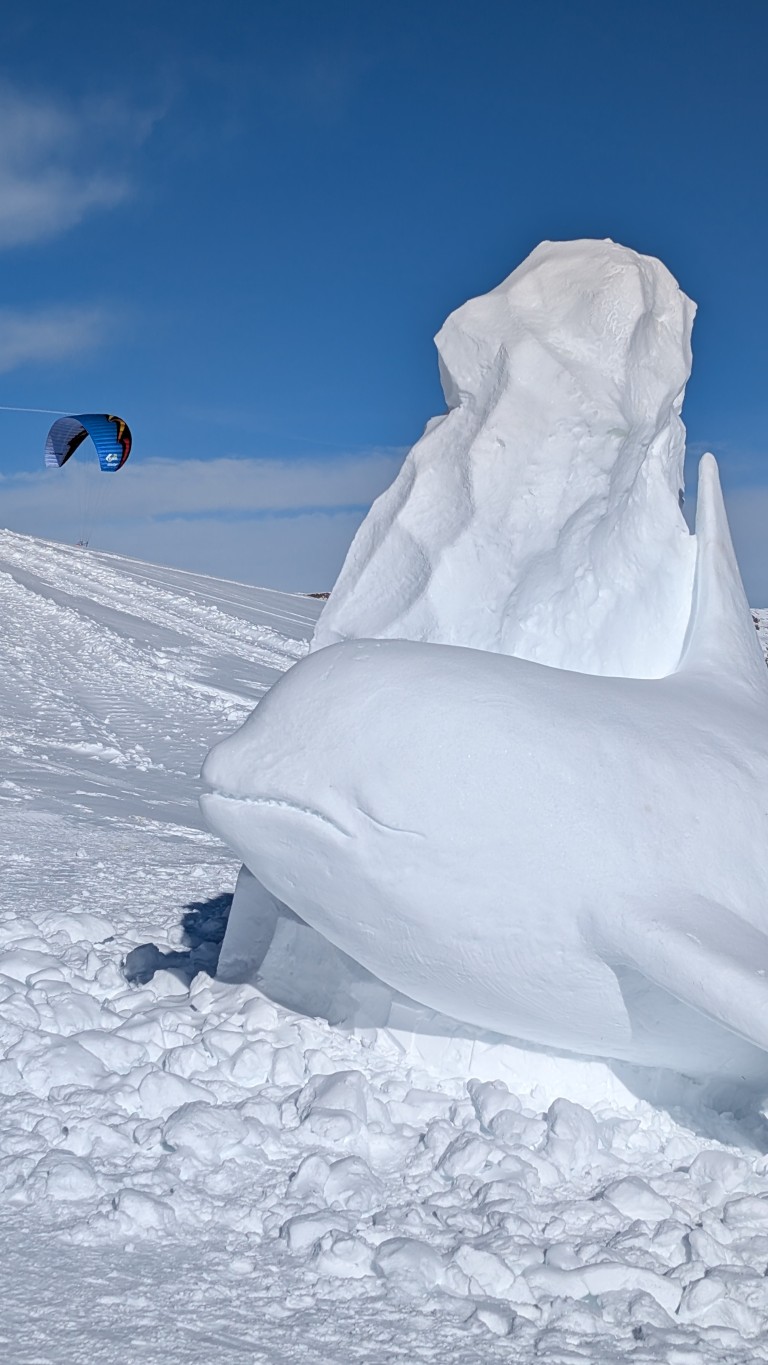
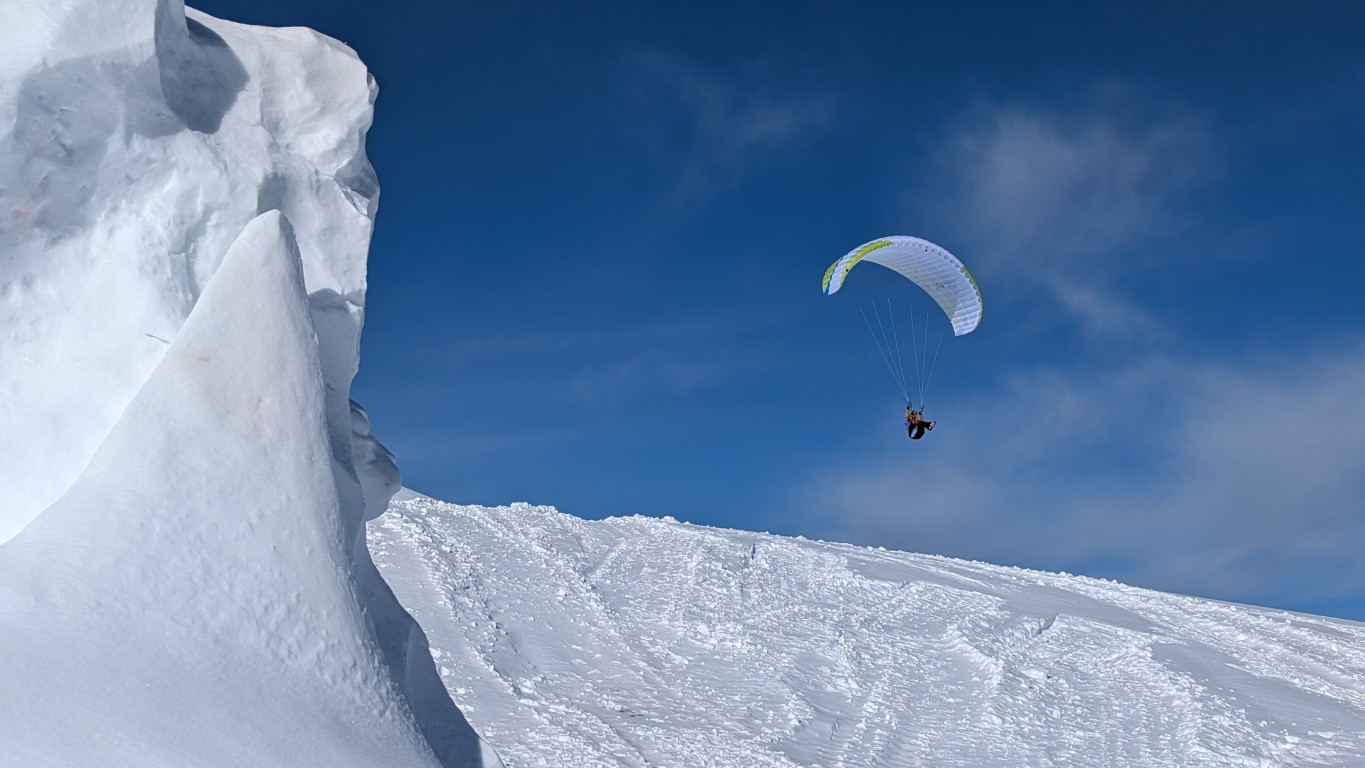
Summer and winter paradise
The Männlichen is the starting point for numerous hikes – for example towards Kleine Scheidegg or down to Wengen. The summit can also be reached on foot:
-
From Grindelwald in about four hours via a road
-
From Wengen, it takes about three hours via a steep mountain path with an altitude gain of over 950 meters over a short distance.
In winter, around 20 cable cars and lifts provide access to the Kleine Scheidegg–Männlichen ski area with over 100 kilometers of slopes. The Grindelwald–Männlichen gondola lift was even the longest gondola lift in the world when it opened.
Although neighboring peaks such as the Lauberhorn or the Tschuggen are higher, the entire chain bears the name of the Männlichen – a sign of its landscape dominance.
The Nellenbalm and the legend of the Grindelwald-Wallispass
High above Grindelwald, on the edge of the glacier world, lies the legendary Nellenbalm . A chapel is said to have once stood here – dedicated to Saint Petronella. A small bell bore the inscription “O Sta. Petronella, ora pro nobis” .
For a long time, it was said that an old mountain pass led from here into the Valais. But historical investigations show that there probably never was an actual glacier pass. The visible traces of the path served instead shepherds, loggers, and hunters who drove their animals to high alpine pastures such as Bäregg, Stieregg, or Zäsenberg.
Why did the legend originate?
In the Middle Ages, the high mountains were considered an eerie place – populated by natural forces and, it was believed, dark powers. Those who ventured into the wilderness sought refuge there. The chapel in Nellenbalm likely served less travelers to the Valais than those who had to ascend into the glacier region.
-
Shepherds with their livestock
-
Farmers on their way to remote alpine pastures
-
Hunters who followed the game
Before the ascent, they paused to ask for blessings and protection. During the descent in autumn, they returned, grateful if both people and animals had survived the dangers.
When the chapel disappeared during the Reformation and the glacier advanced far into the valley around 1600, only the memory remained. From this memory grew a story: of a mysterious crossing into the Valais, of Valaisans who had come across – and of a path that perhaps never truly existed.
Thus, the Männlichen not only combines spectacular present-day attractions with alpine leisure culture, but also landscape with legend. Between clear views and a fabled past, it reveals how closely nature and storytelling tradition are intertwined in the Bernese Oberland.