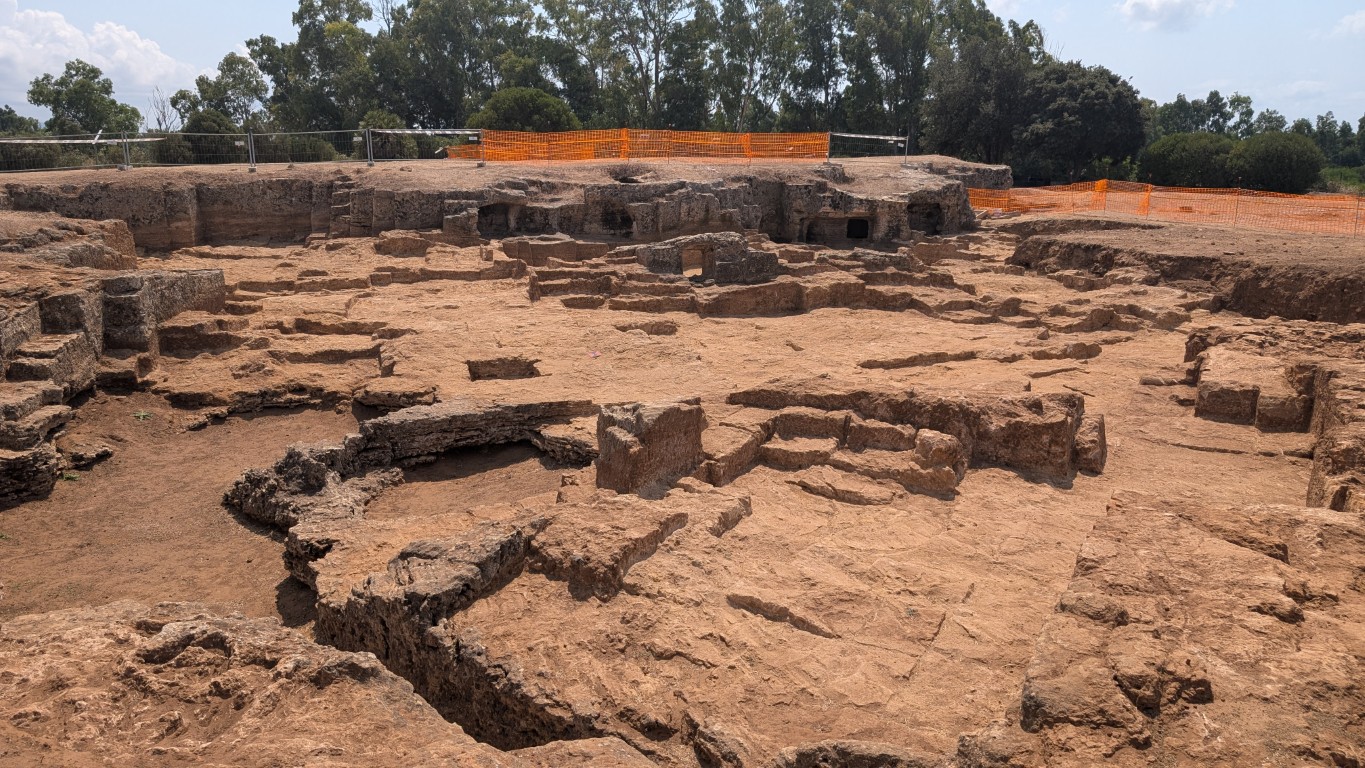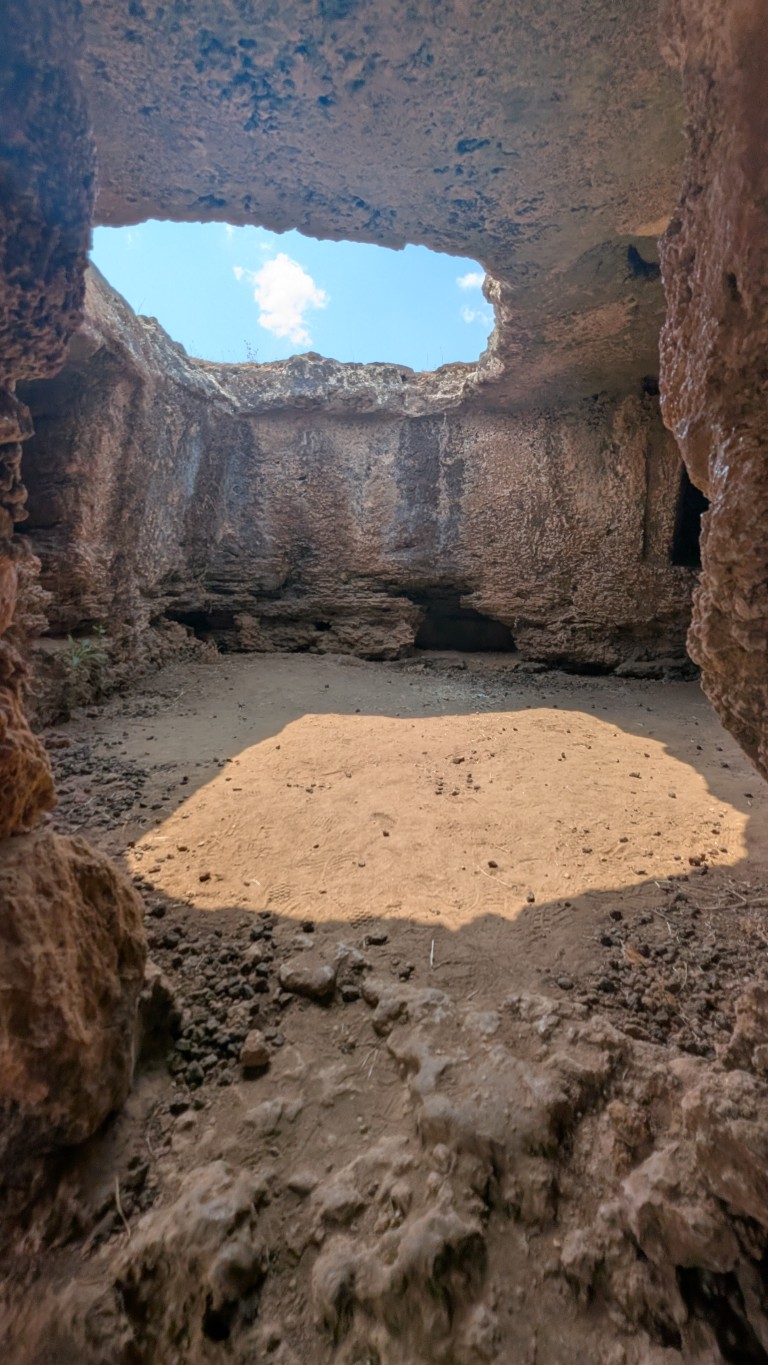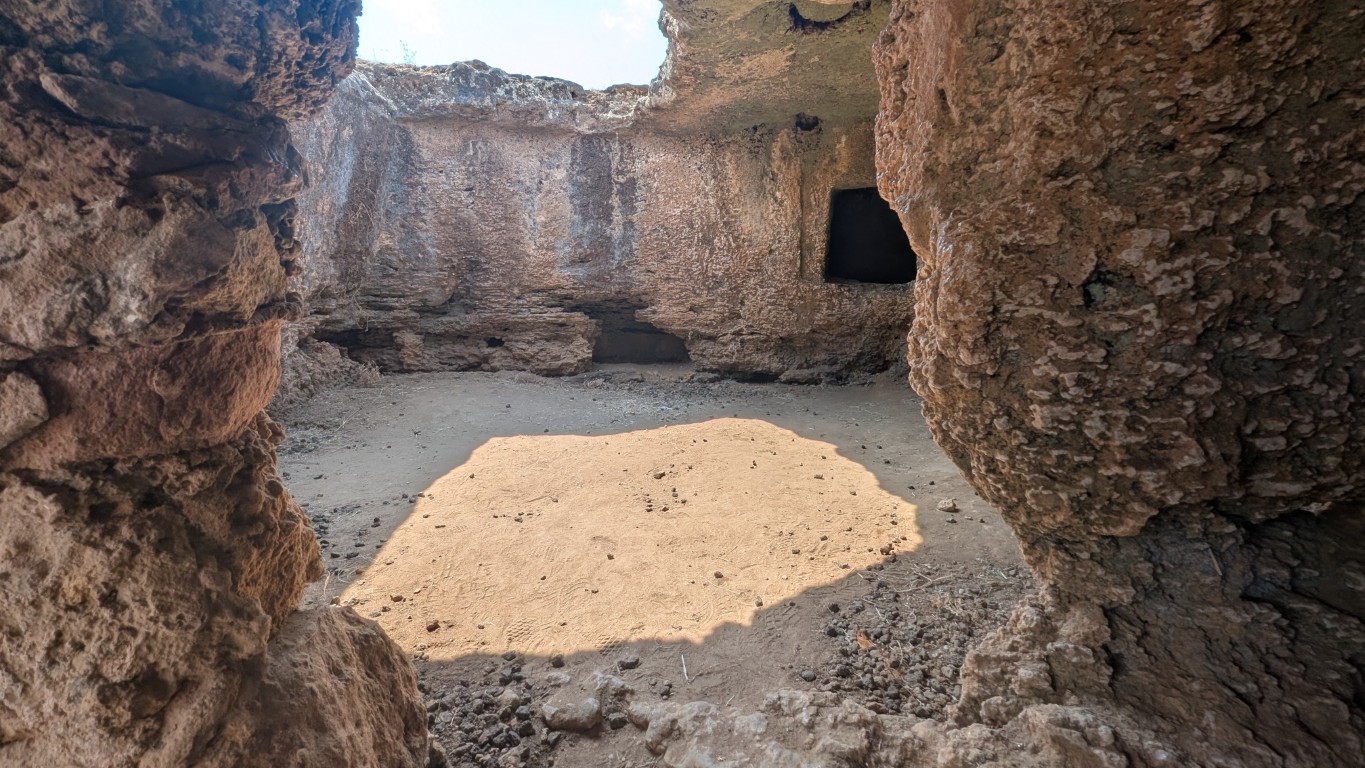
Just a few kilometers north of Alghero, hidden among vineyards and fields, a realm opens up that doesn't belong to the living. Here, in the necropolis of Anghelu Ruju, the stones whisper of a world where humans and gods, ancestors and spirits, were closer to one another than we can imagine today.
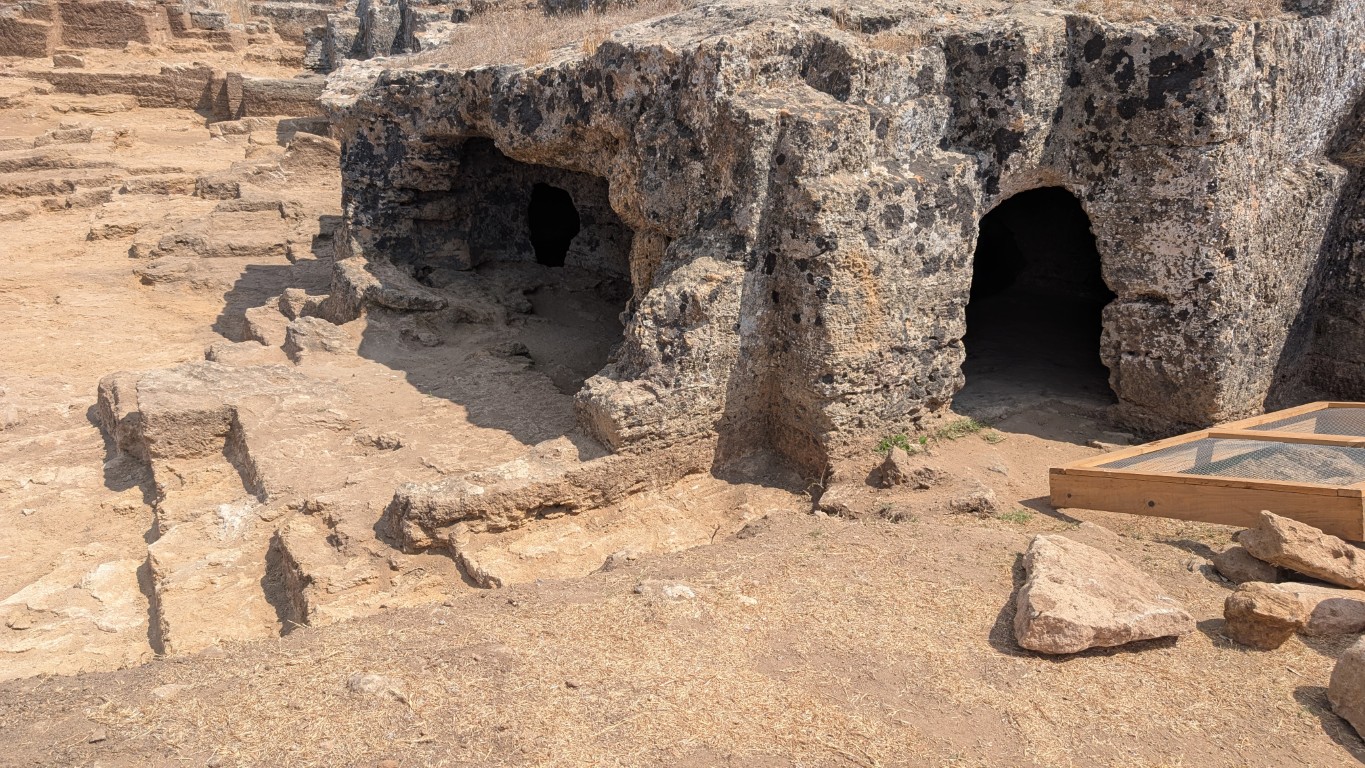
When these tombs were discovered by chance during the construction of a vineyard in 1903, no one suspected that they had stumbled upon one of the largest necropolis sanctuaries in the Mediterranean. Thirty-seven Domus de Janas, called "Houses of the Fairies," lie hidden in the limestone here, connected by shafts, stairs, and dromoi—not horizontal, as is common in Sardinia, but cut deep into the earth.
It is as if one were not entering a necropolis, but through gates into another reality.
Architecture of Shadows
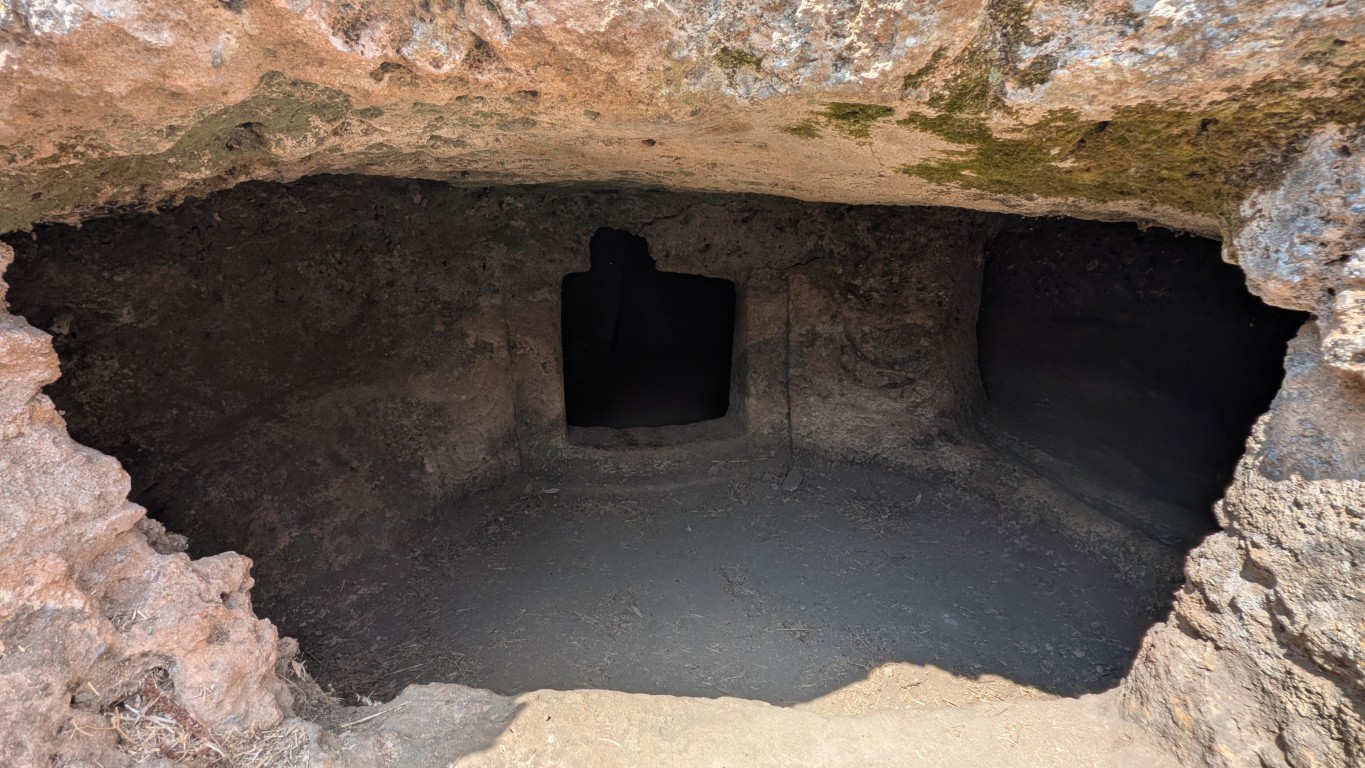
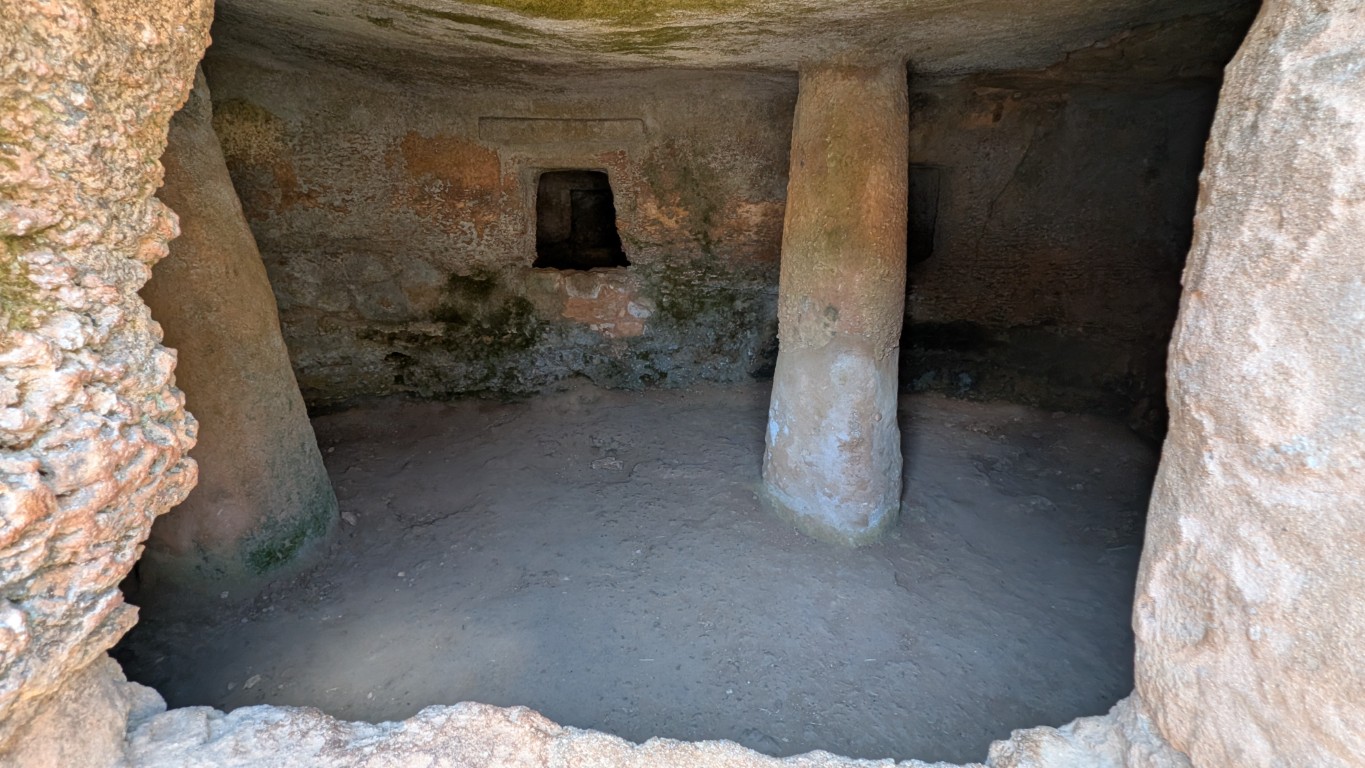
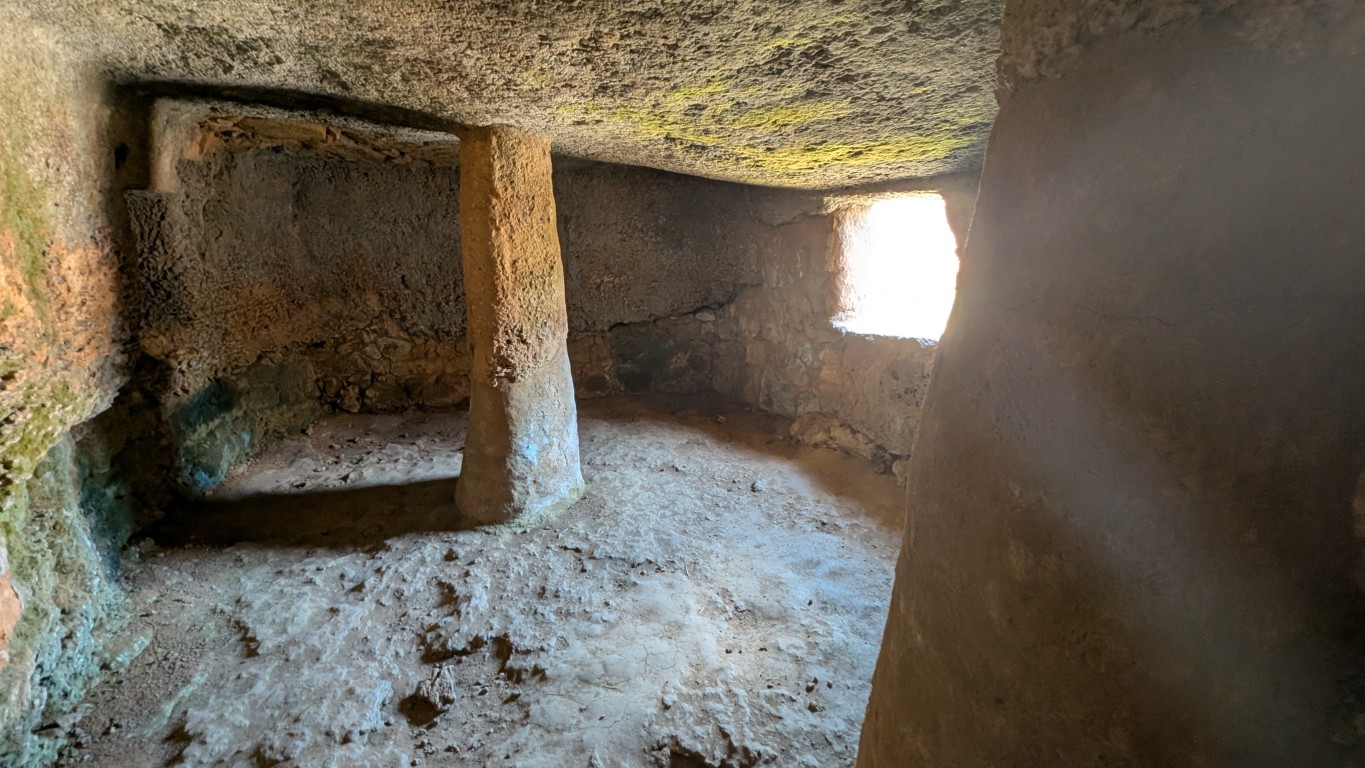
The subterranean spaces are not merely burial chambers, but carefully crafted reflections of the world of the living. Columns and pilasters support the weight of the stone, while cornices and architraves make the rooms appear like small temples.
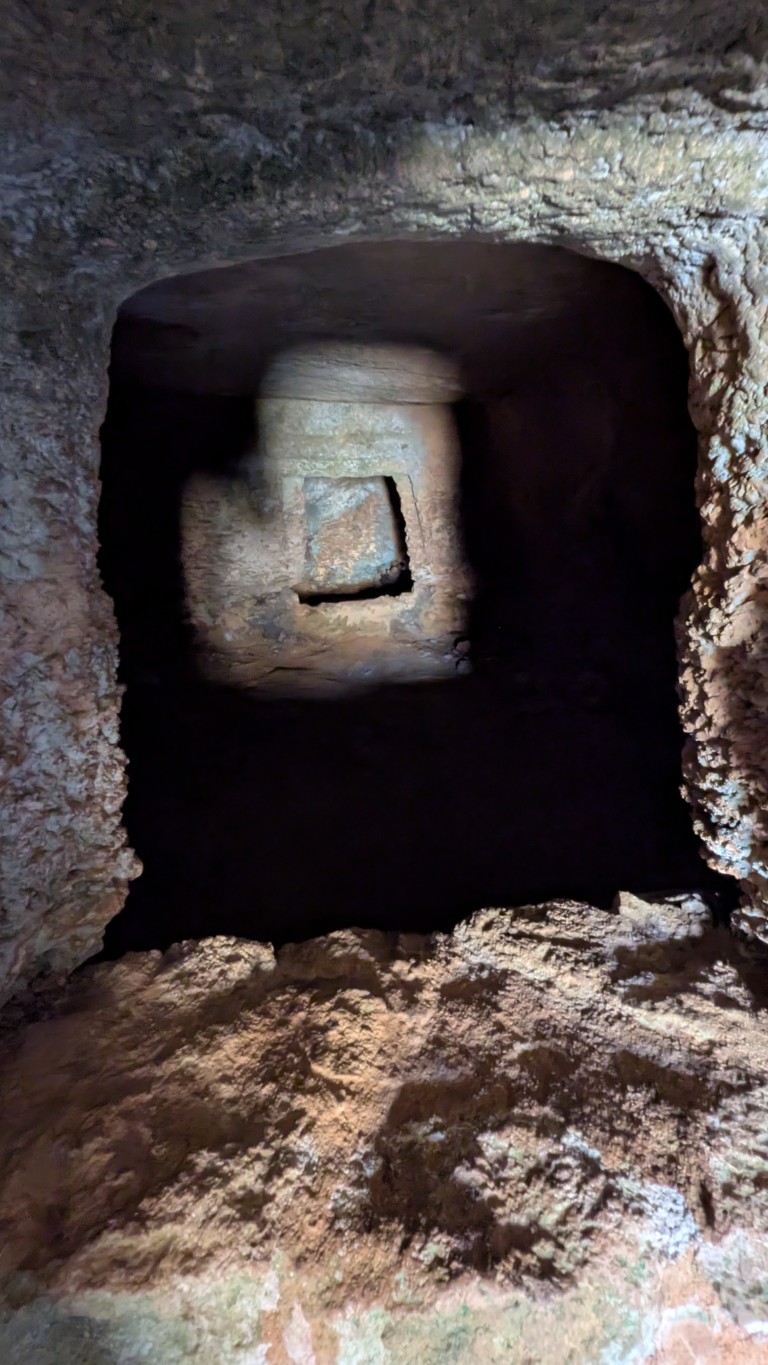
Particularly mysterious are the false doors set into the walls. Were they passages to the underworld through which souls could pass? Or were they symbols that the lives of the dead did not end here, but continued in another, invisible dimension?
Traces of red paint still shimmer on the walls—the color of blood, earth, and rebirth. And everywhere, like an ancient seal, the carved horns of a bull are visible: symbols of strength, fertility, and protection.
The realm of the dead – and its treasures
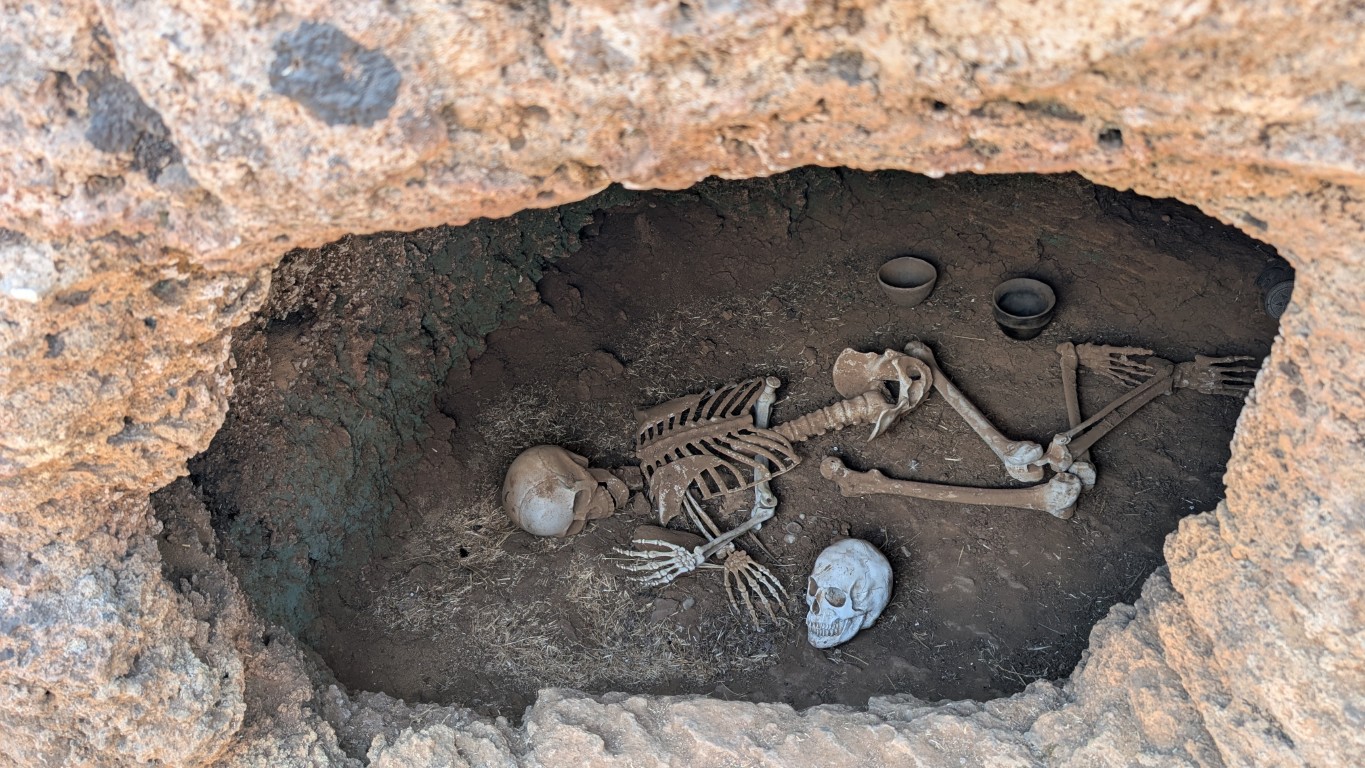
Between 3400 and 2700 BC, the people of the Ozieri culture laid their dead to rest here. Two to thirty bodies found space in each chamber—women, men, and children—united in the womb of the earth. Later, the Bell Beaker culture also used the necropolis. They left behind arm guards, finely decorated pottery, copper daggers, beads, and even silver rings—silent witnesses to long-distance trade, craftsmanship, and a world that was far more interconnected than we realize.
And yet the most precious thing that has survived here is not gold or silver, but the aura of mystery.
A place of threshold
Today, when you step through the gate that encloses the complex, you feel not as if you are in a museum, but as if you are standing at a threshold. The shadows of the chambers are cool, and the light seems to linger at the entrances, as if it doesn't want to penetrate too deeply.
It is easy to imagine people once coming here, making sacrifices, perhaps singing songs, perhaps remaining in silence – knowing that the line between the living and the dead is razor-thin.
The Anghelu Ruju necropolis is not only one of the largest prehistoric burial sites in the Mediterranean – it is a place of transition, a stone archive of belief, ritual, and myth. Those who come here enter not only an archaeological monument, but a realm still filled with unseen inhabitants.
And perhaps, if you gaze long enough into the darkness of a burial chamber, you will realize that these fairy houses belong less to the dead – but to the stories that never die.