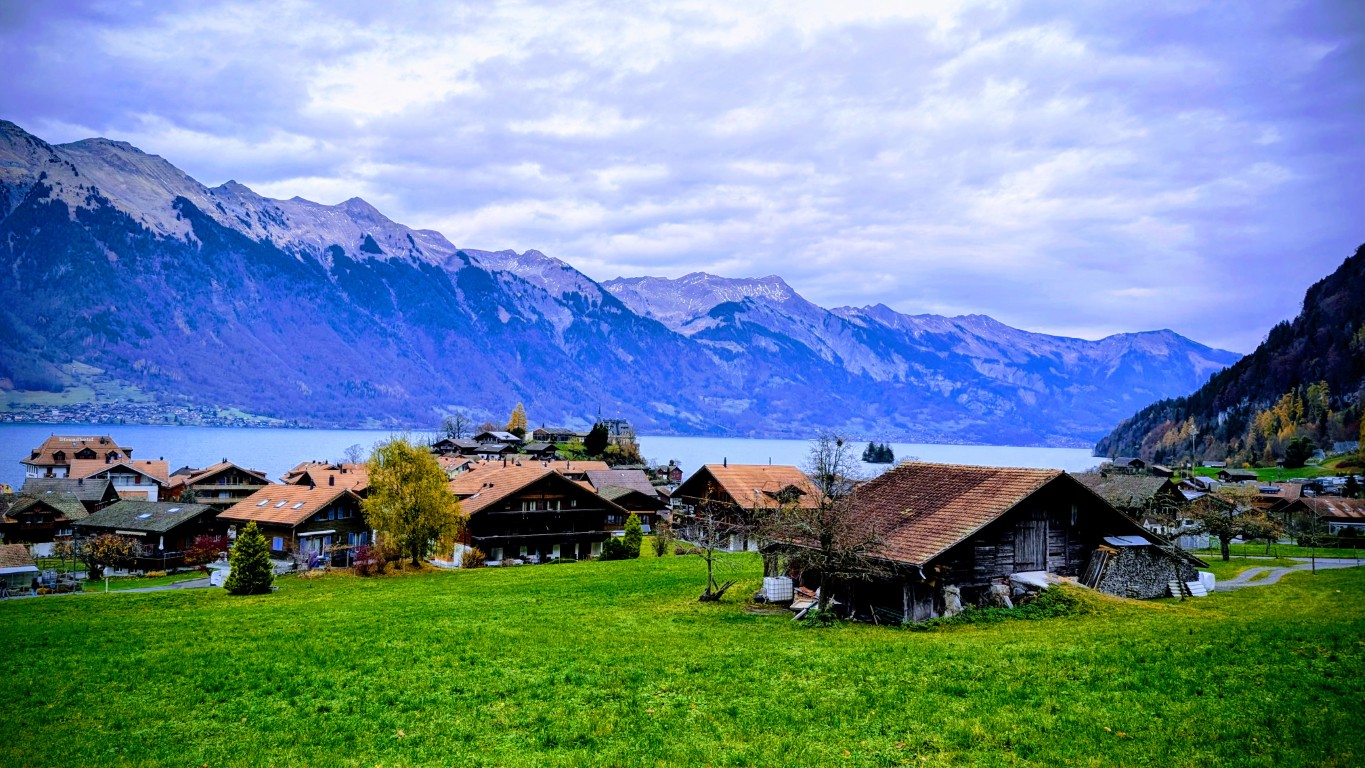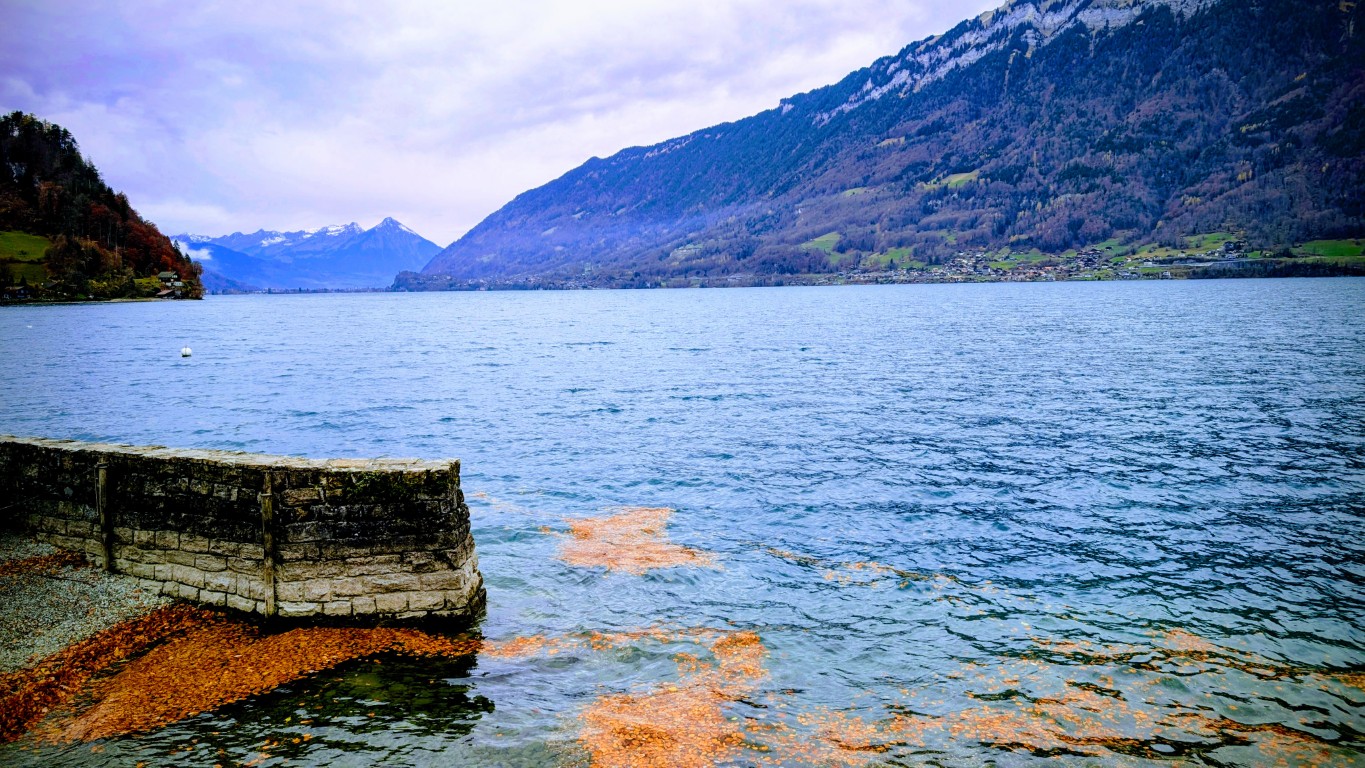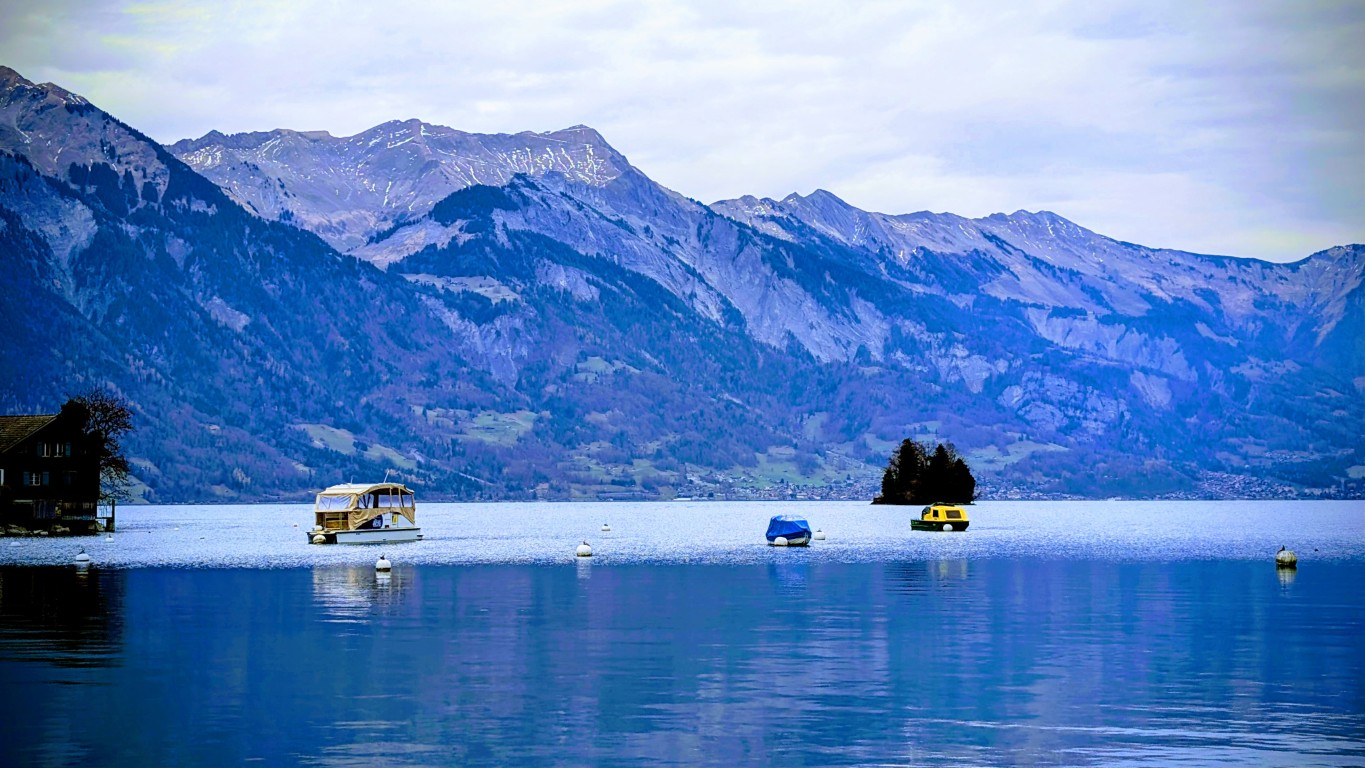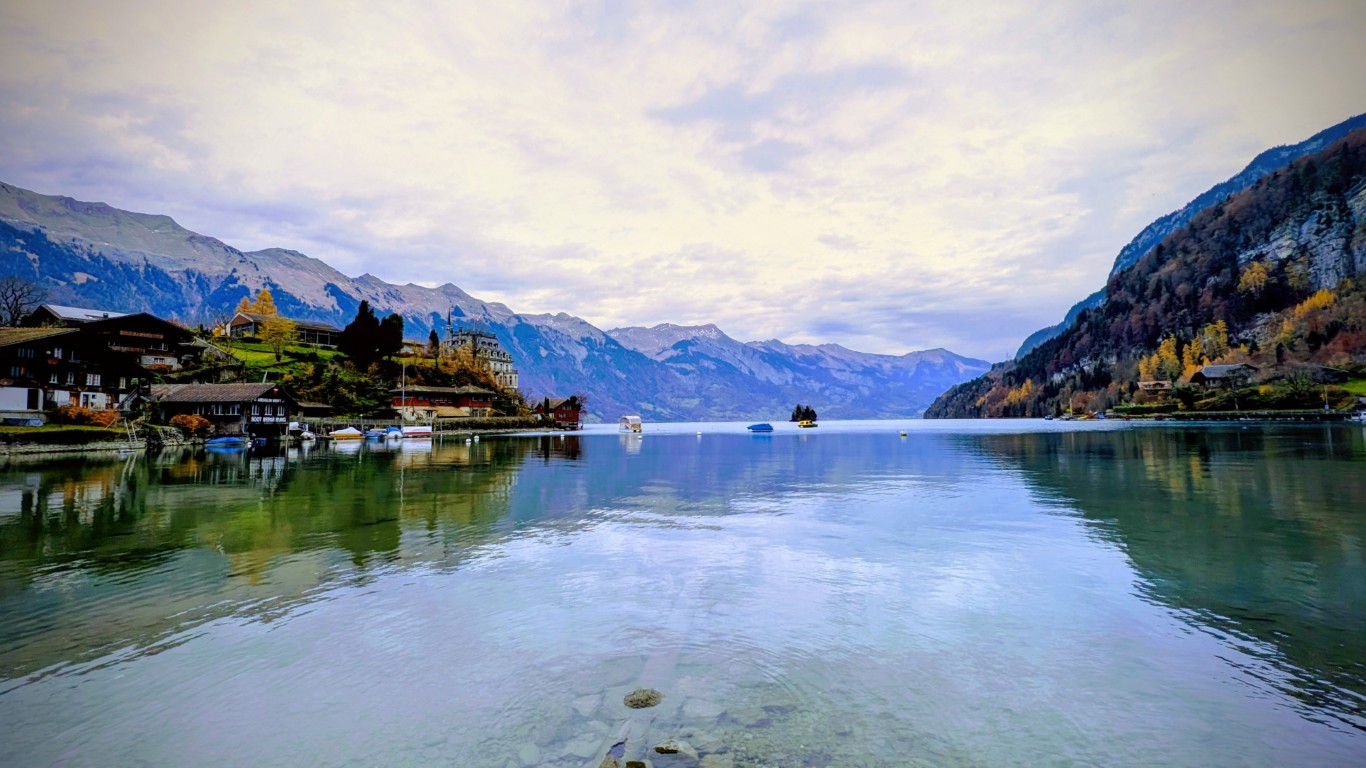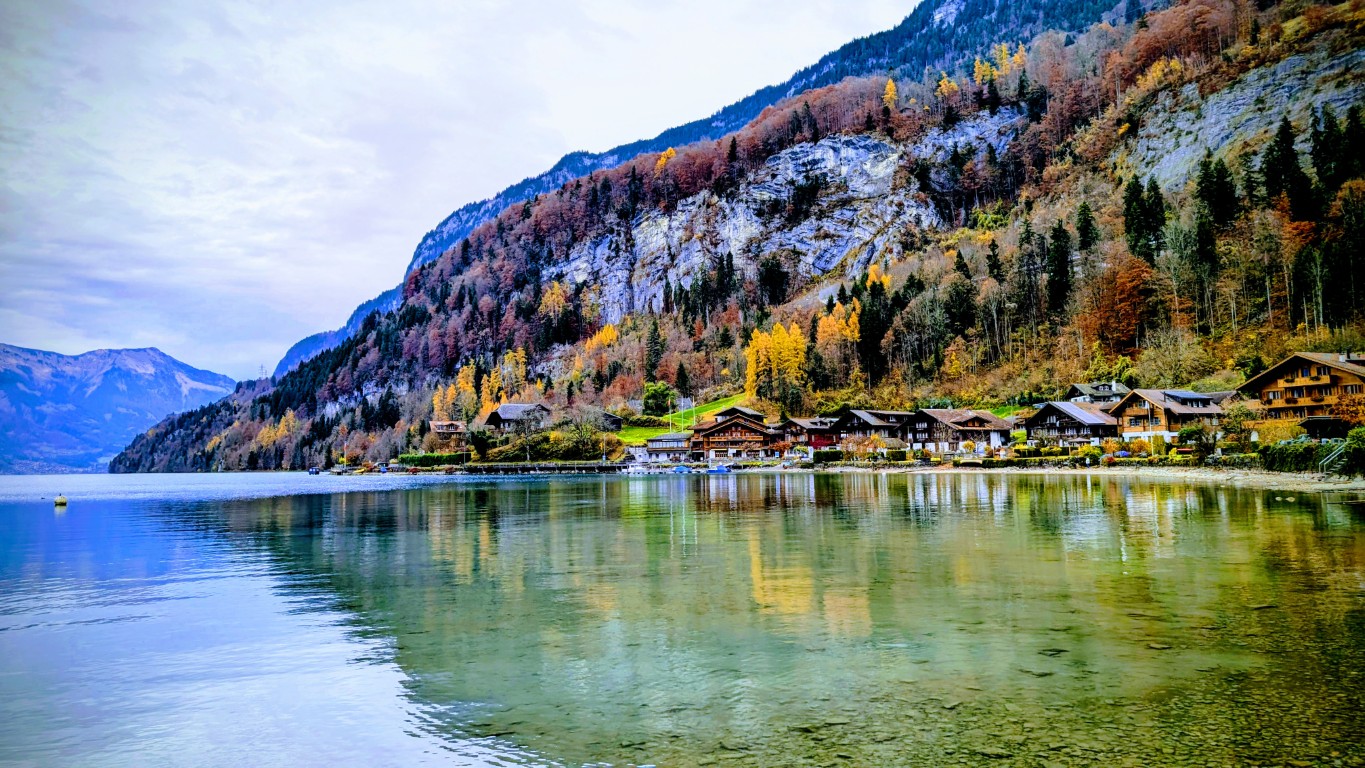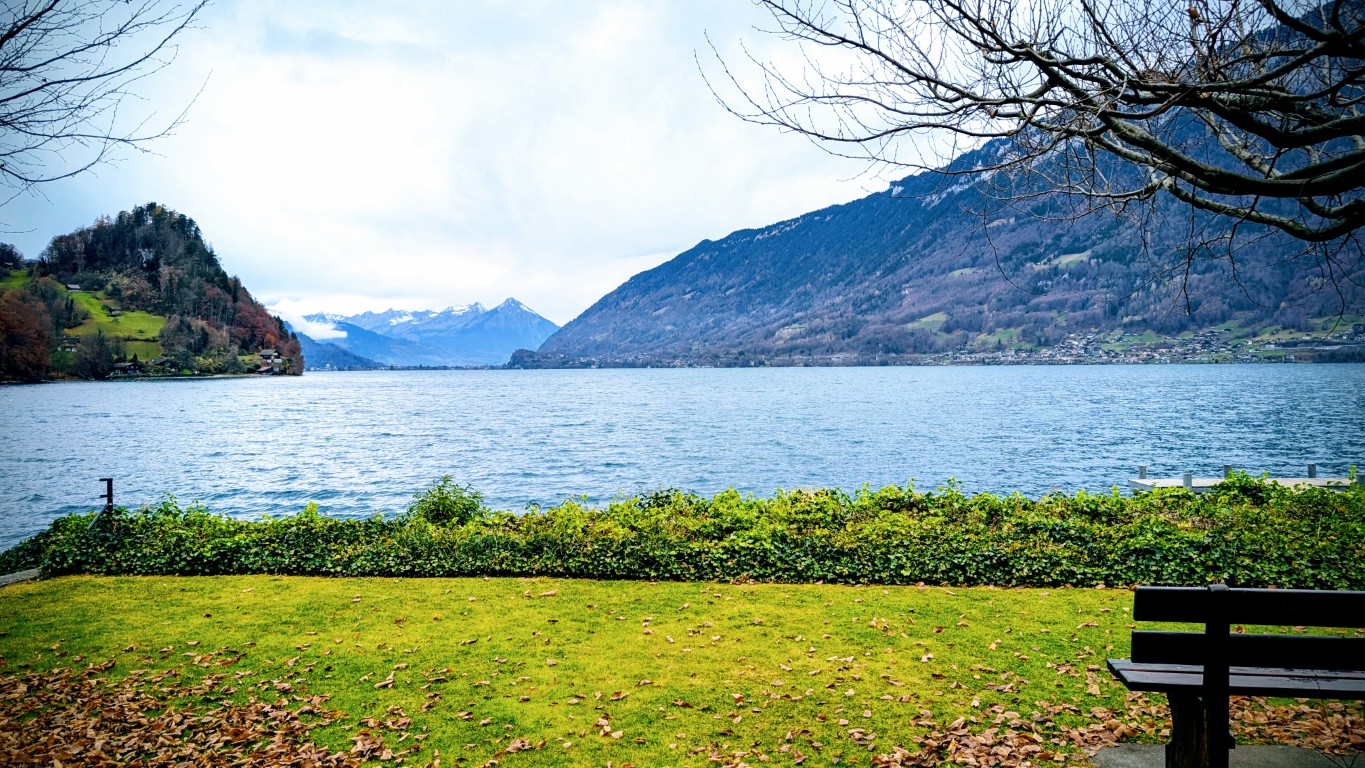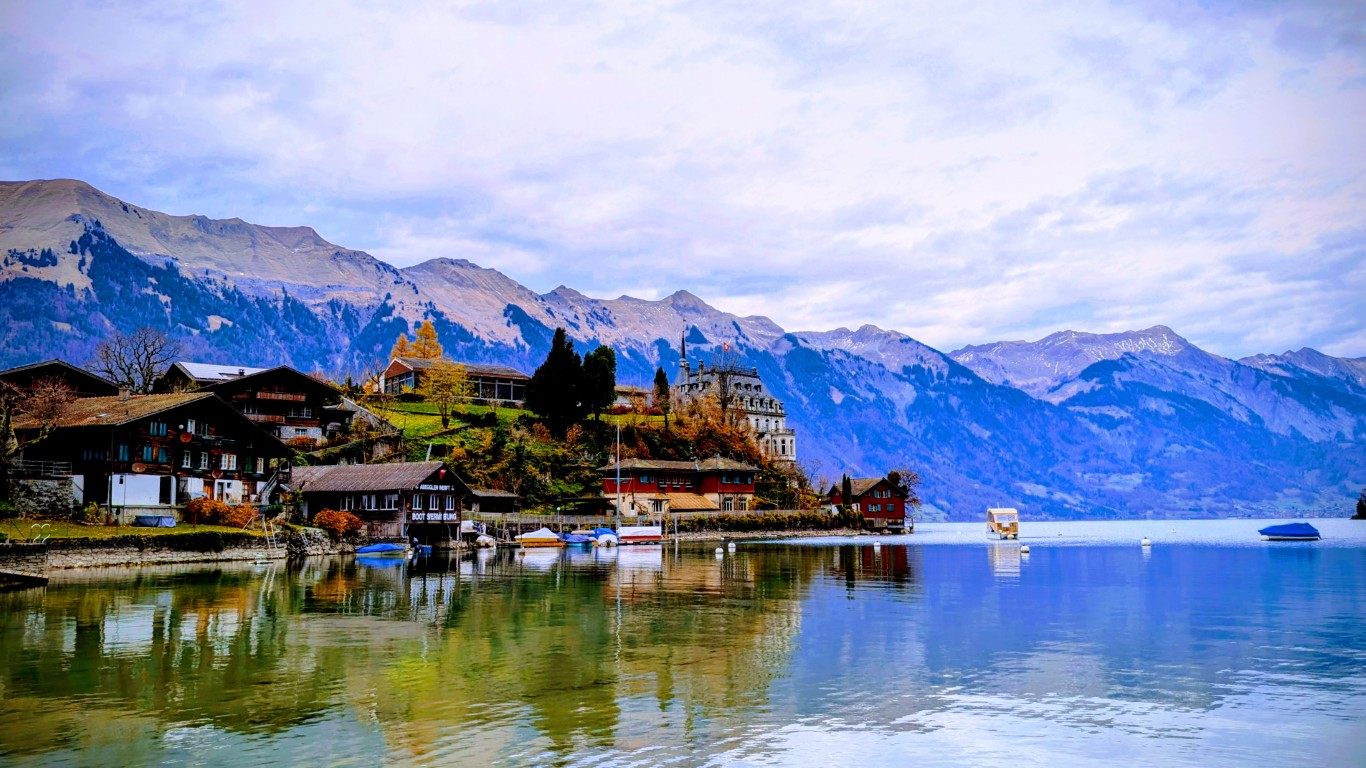
Anyone traveling through the Bernese Oberland will encounter many familiar names: Interlaken, Brienz, Grindelwald. But away from the main tourist routes lies a place that draws its magic precisely from its understated charm – Iseltwald. A small community on the turquoise shores of Lake Brienz, nestled amidst steep slopes, forests, and the panoramic views of the Alps. A place that touches you in a quiet way.
A village nestled between a lake and mountain peaks
Geographically, Iseltwald lies on a small delta on the southern shore of Lake Brienz. Until the 20th century, the village was hardly accessible by land – the easiest route was by water. It only gained its own exit with the construction of the A8 motorway. The highest point in the municipality is the Faulhorn, which, at 2,687 meters, towers majestically above the lake.
Despite its secluded location, Iseltwald belongs ecclesiastically to the parish of Gsteig near Interlaken. The population has fluctuated over the last few centuries – from 254 people in 1764 to 401 in 2023. It has remained a small village, but one with a rich history.
From monastery village to excursion destination
Iseltwald was first mentioned in 1146. From the early Middle Ages through the dispute over forest rights to the secularization of the Interlaken monastery in 1528 – the village was always part of larger political developments.
In the 17th century, there was even a glassworks, but it only lasted a few decades. With the opening of Lake Brienz to shipping in 1871, tourism came to the village. Hotels were built, followed later by guesthouses and restaurants. Today, day visitors are the main attraction.
A unique, modern facet of Iseltwald's history began with the South Korean series Crash Landing on You . Scenes filmed at the iconic boat dock made the location go viral internationally – so much so that an entrance fee was introduced in 2023. Since then, visitors, especially from South Korea and several other Asian countries, have flocked to this photo spot.
Sights between nature and history
Iseltwald is not a place of grand spectacles; it is a place of tranquility. And precisely for that reason, so impressive. Among the most beautiful sights are:
-
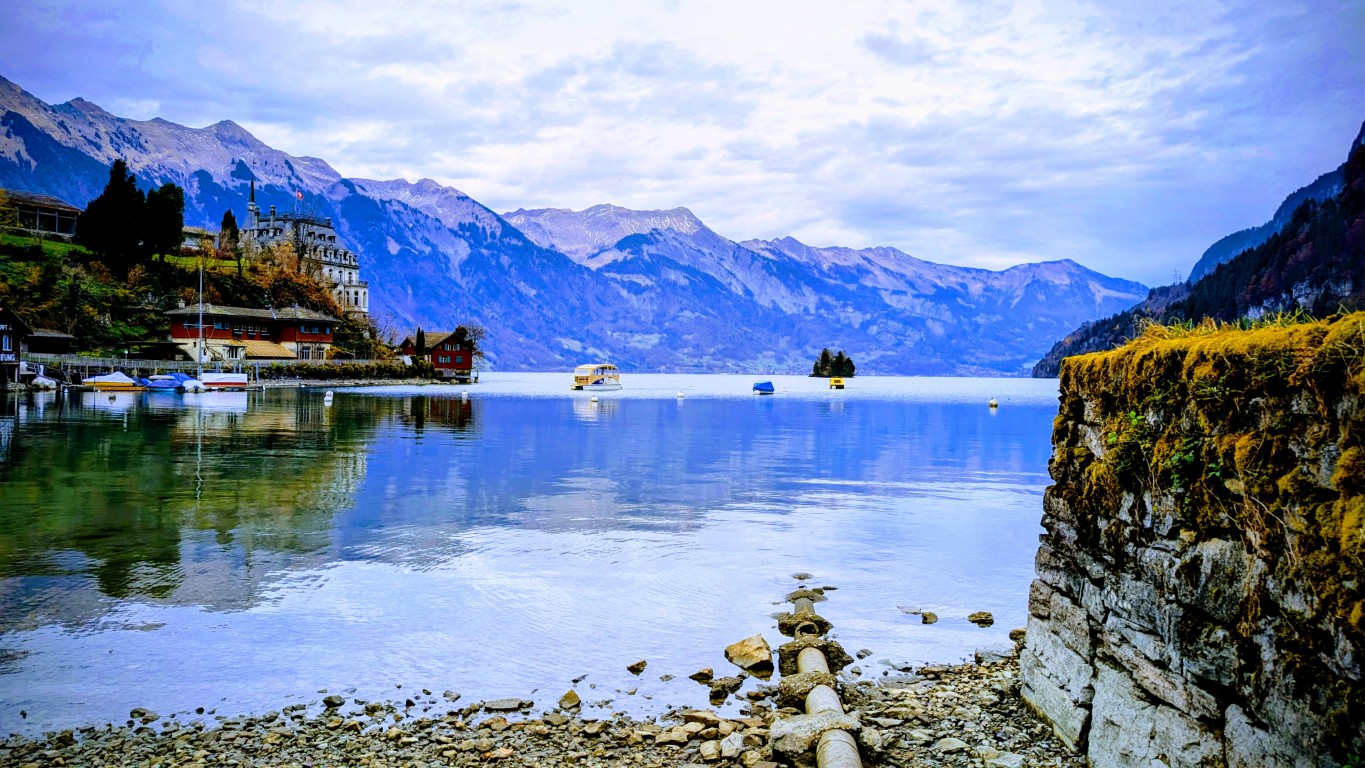
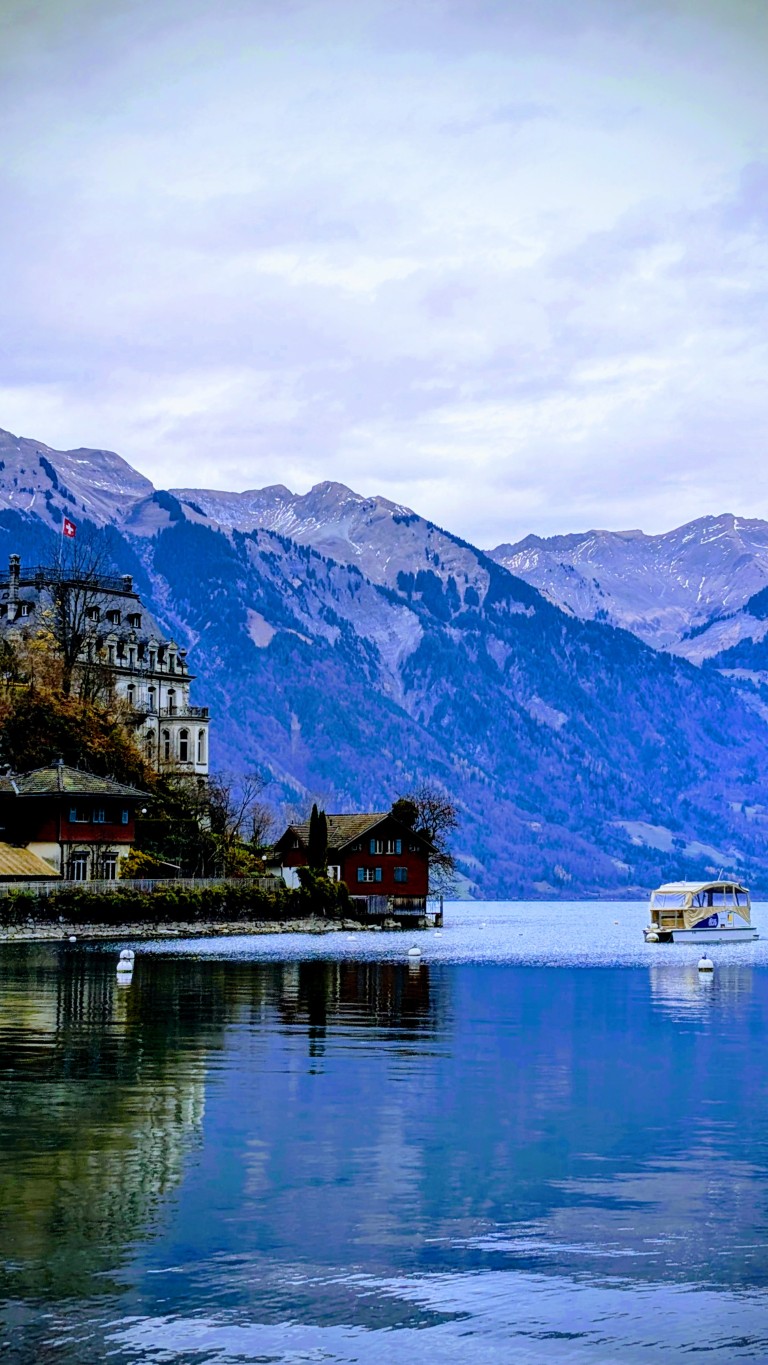
The peninsula with Seeburg Castle – a fairytale building that looks particularly impressive from the lake.
-
The Snail Island – a small, mystical promontory in front of the village.
-
Historic residential buildings , including the home of wood sculptor Christian Düppre.
-
The lakeside promenade – one of the most beautiful walking paths on Lake Brienz.
Walter Mittelholzer's aerial photographs from 1926 remind us how little the village's location has changed – Iseltwald still looks almost as pristine as it did back then.
The Legend of the Three Giants of Iseltwald
Every landscape has its myths. In Iseltwald, so the story goes, three enormous giants once lived. Clad in wolf and bear skins, they were famous throughout the highlands for their strength.
When a German emperor summoned the Oberland region to a campaign and only the three giants were sent, the trio promised to stand in for an entire army. Armed with thigh-thick wooden clubs, they went into battle and won almost single-handedly.
As payment, they demanded nothing more than two privileges: firstly, the right to bear the imperial eagle on the banner of their community, should Iseltwald ever provide one hundred fighting men; secondly, the right to pull three turnips on imperial soil near Bönigen – one in the hand, two in the belt – when, plagued by thirst, they passed the fields in summer.
The emperor granted their wish. And so, according to legend, they could often be seen eating the gigantic turnips on the road between Iseltwald and Bönigen – where the square by the barn is located today. However, Iseltwald has never been able to field the hundred-strong army in its history.
A place for those seeking authenticity
Iseltwald is not an overrun tourist destination. It is a place for people who appreciate the depth of a lake, want to feel the breath of centuries-old history, and find perhaps the most beautiful form of slowing down in a simple lakeside promenade.
A village that has become quieter – and precisely for that reason, ever more charming.