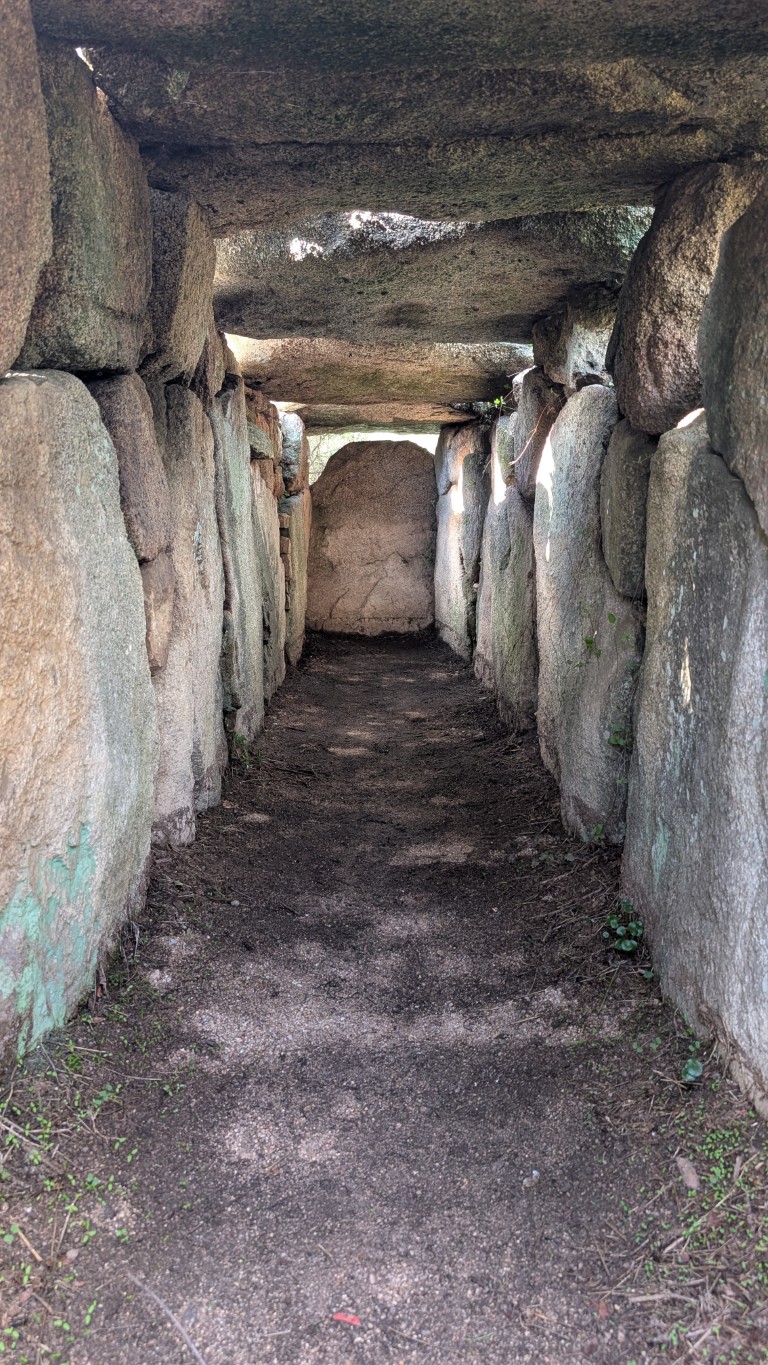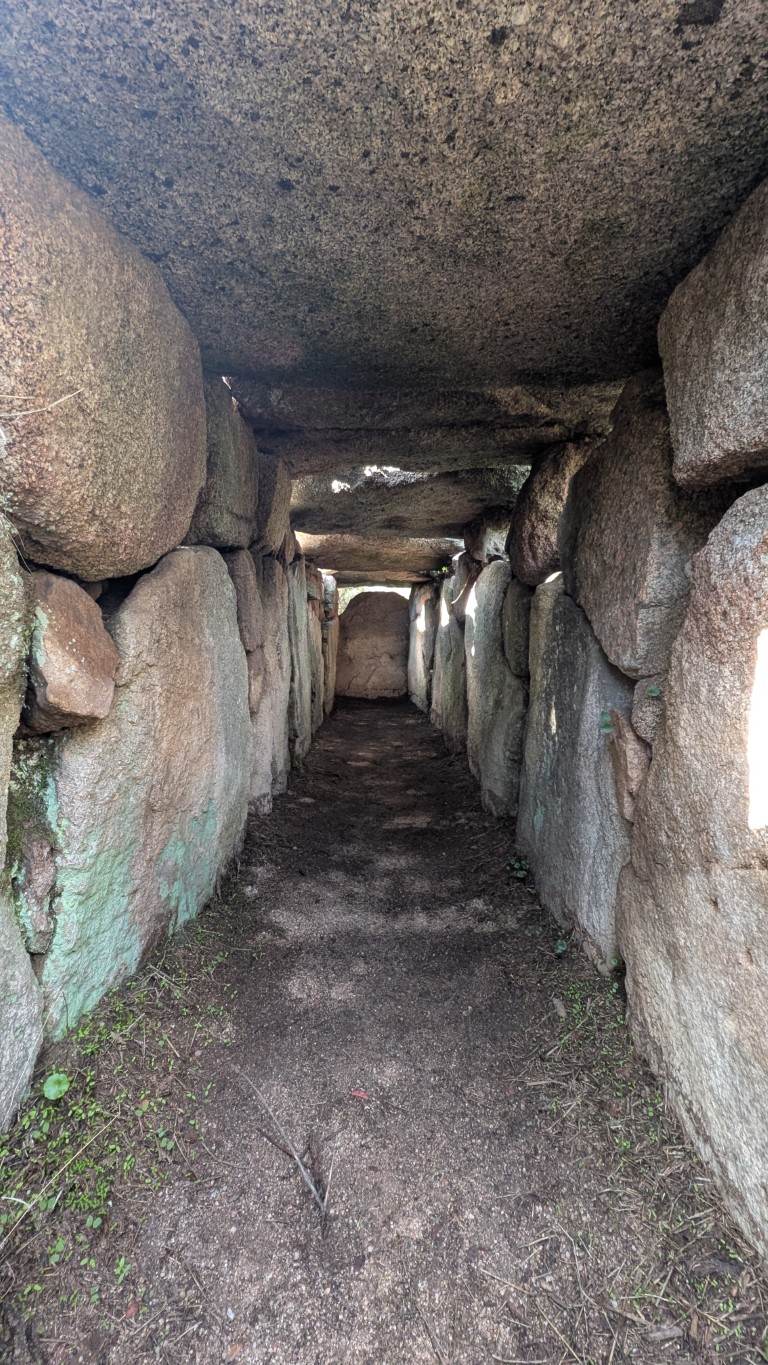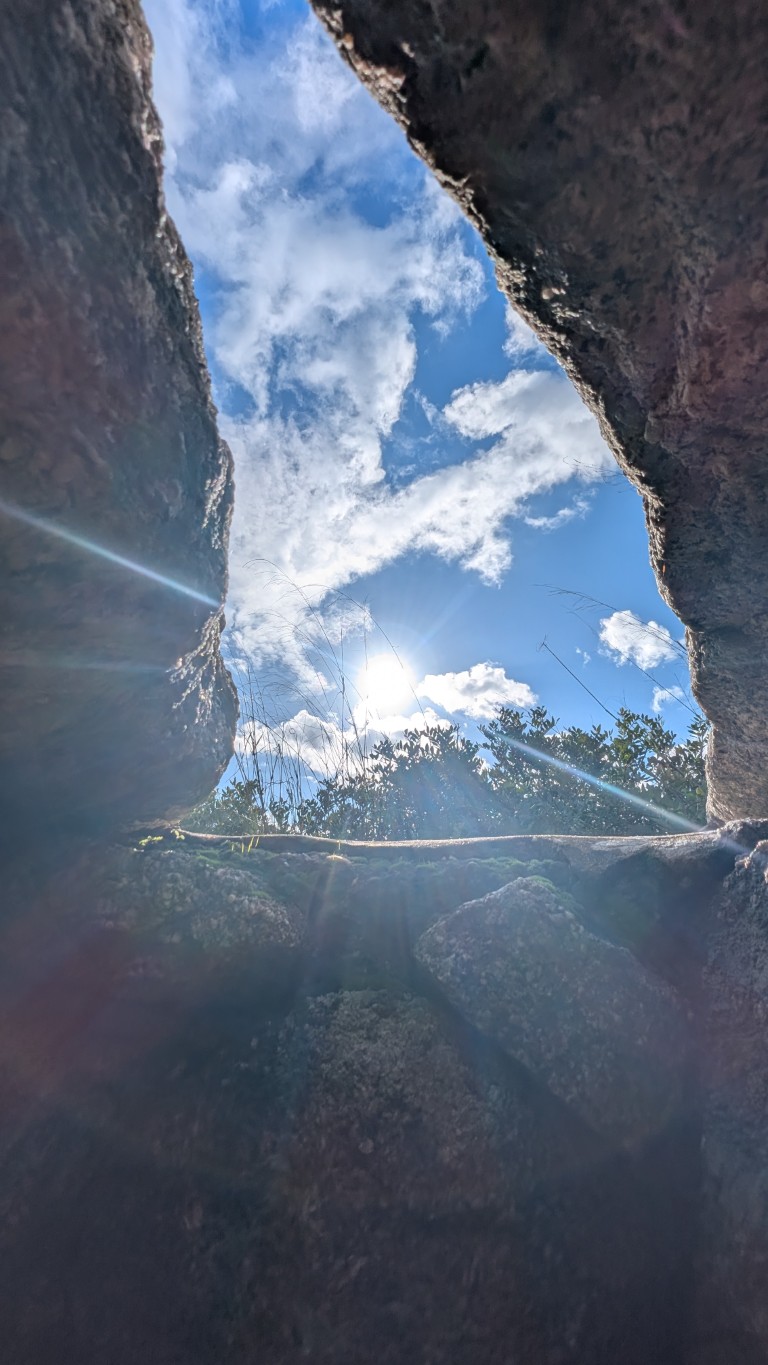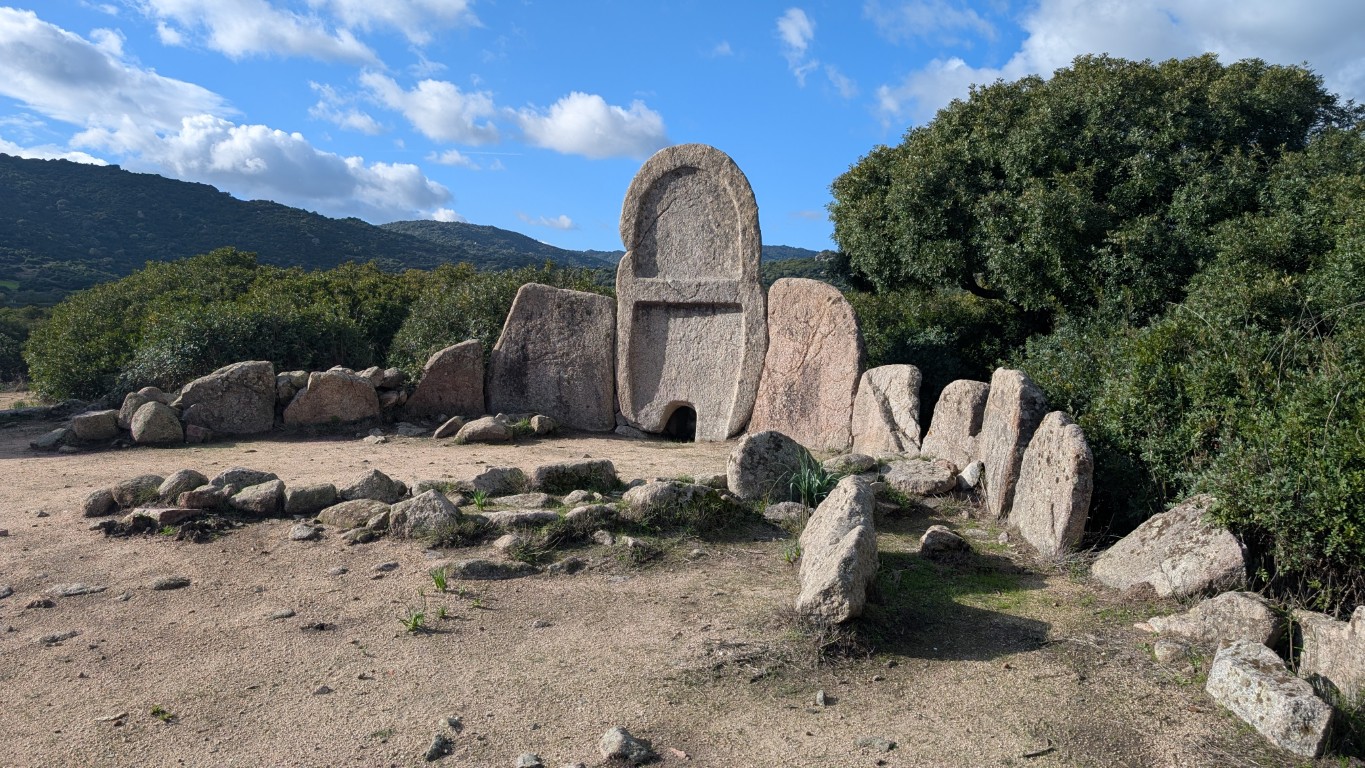
Among the most enigmatic relics of Sardinia's early history are the Giant's Tombs (Tombe dei Giganti). One of the most impressive examples is S'Ena e Thomes, located in the Dorgali area, nestled in a gentle plateau above the Rio Isalle valley. The monument is considered one of the most beautiful and best-preserved dolmen-like tombs of the Nuragic culture – powerful, monumental, and possessing an almost archaic presence.
Monumental architecture
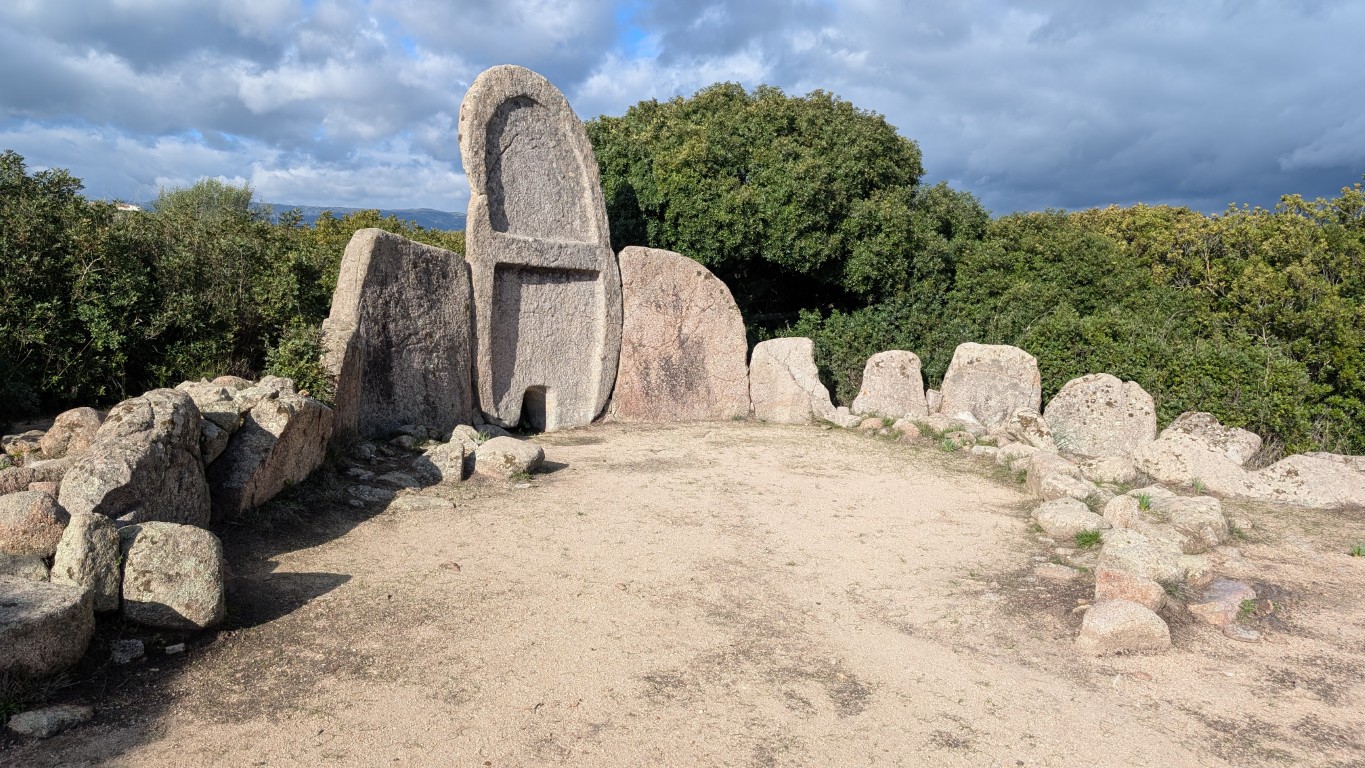
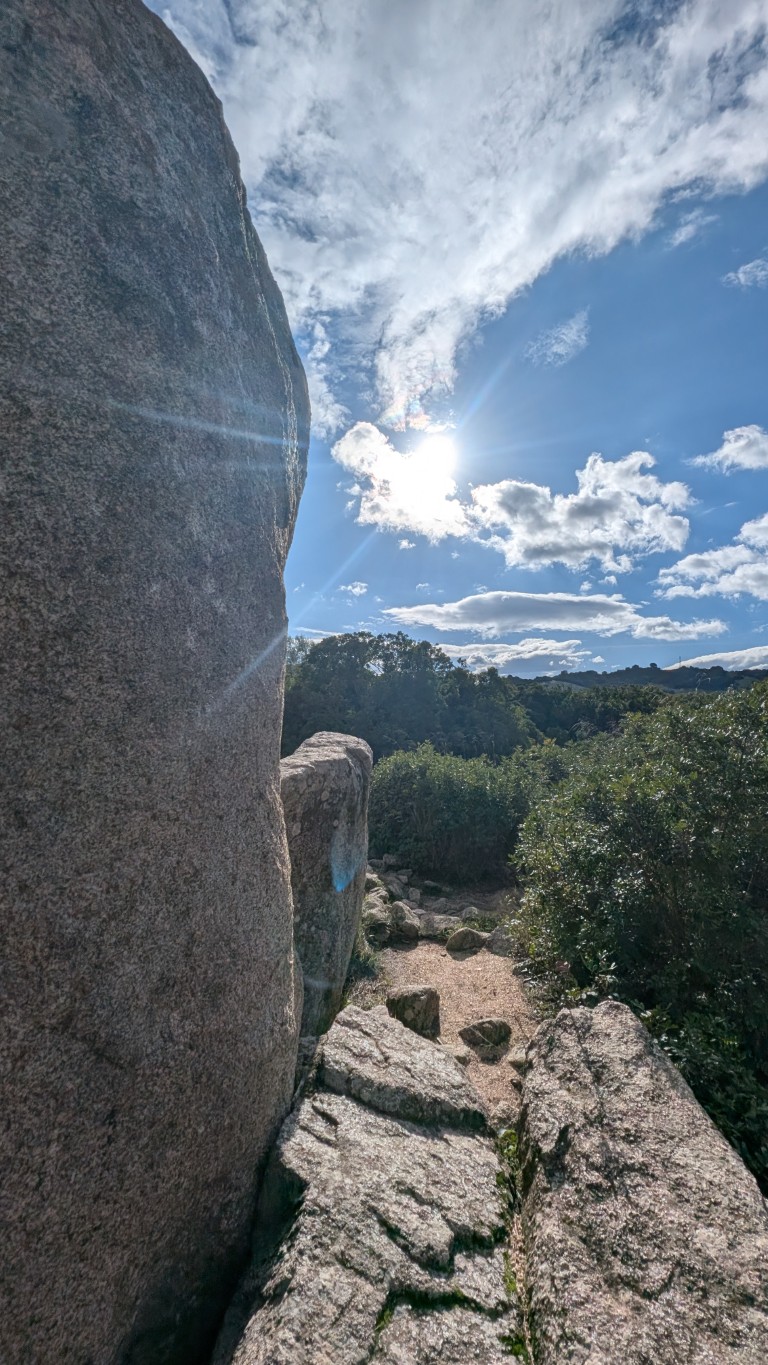
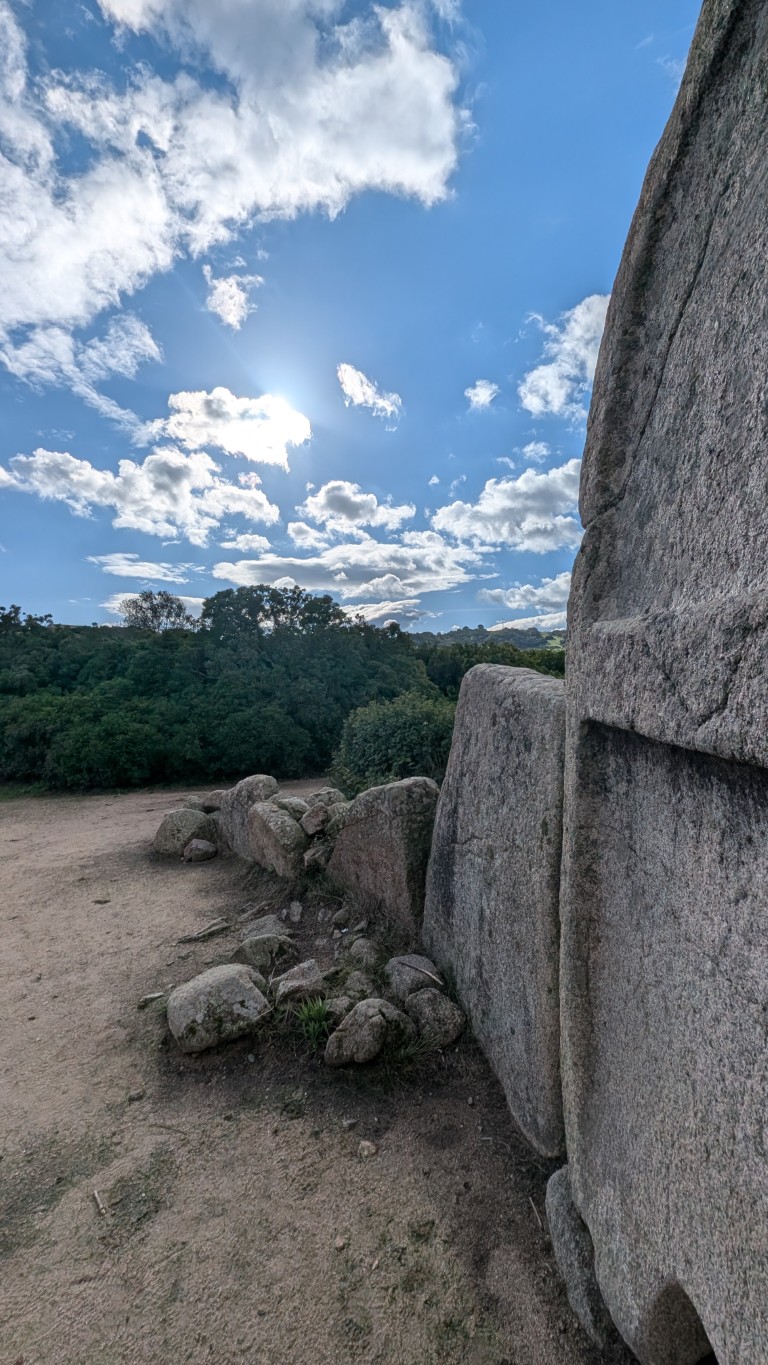
S'Ena e Thomes impresses at first glance with its size and harmony. The semicircular exedra, whose shape is often interpreted as stylized bull's horns—a central symbol of Nuragic spirituality—measures over ten meters in width. At its center rises the monumental stele, almost four meters high and with an estimated weight of around seven tons. These cyclopean dimensions vividly explain why these tombs have been called "Giants' Tombs" for centuries.
Despite its age, the site is in remarkably good condition and gives a very clear idea of how it must have appeared almost four millennia ago.
Function and meaning
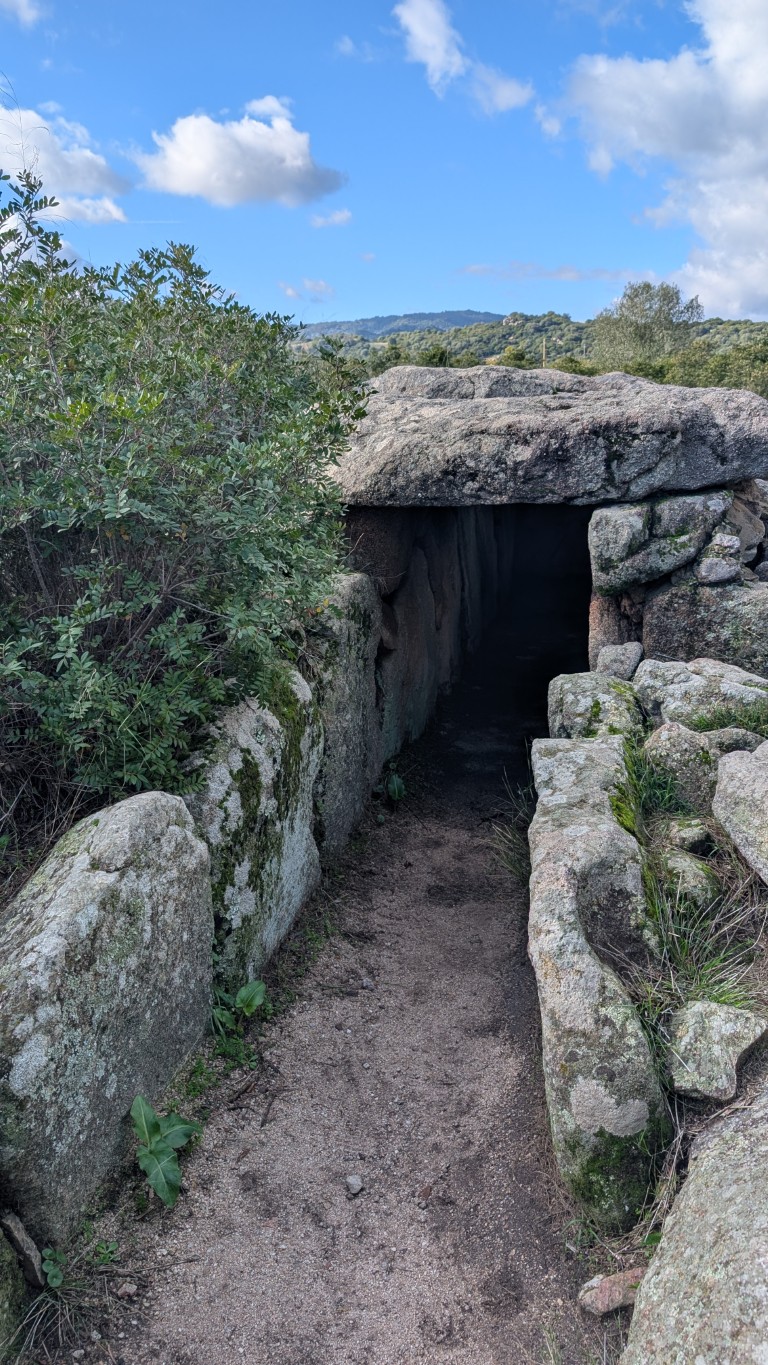
Contrary to many popular legends that associate S'Ena e Thomes with mythological beings or giants, giant tombs were collective burial sites. Archaeological research suggests, however, that they were not cemeteries in the modern sense. Rather, burial in such monuments was probably reserved for a small, privileged elite of Nuragic society—possibly religious or political leaders.
The strong spiritual aura of the place has given rise to numerous myths over the centuries, which are still part of the local storytelling tradition today.
Orientation and timing
A unique feature of S'Ena e Thomes is its orientation. While most giant tombs face southeast, this monument points precisely south. Some researchers suspect a connection to the sunset at the summer solstice, which could indicate an astronomical-ritual significance.
The structure is dated to the Early Bronze Age (c. 1800–1600 BC). Archaeological investigations, which began in the late 1970s, unearthed ceramic fragments from various periods. These prove that the site was used for a very long time – probably even into the Middle Ages.
A landscape filled with silence
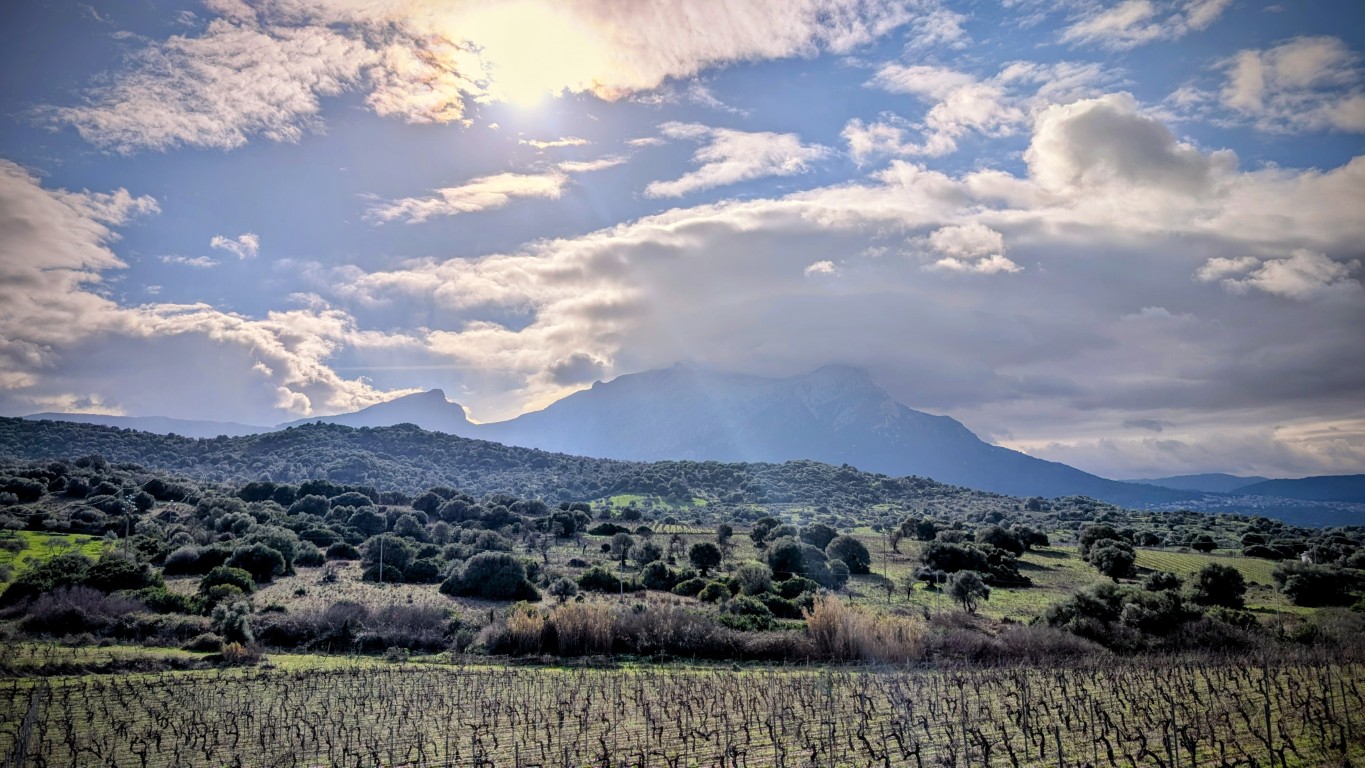
The location of S'Ena e Thomes significantly enhances its impact. Surrounded by unspoiled nature, expansive meadows, and the open landscape of inland Sardinia, the tomb lies far removed from modern infrastructure. This seclusion lends the place a special tranquility and reinforces the feeling of standing in a location of profound historical and spiritual significance.
A visit with added value
S'Ena e Thomes is not a spectacular monument in the loud sense, but a place that slowly reveals itself – through silence, vastness, and history. Those who wish to discover Sardinia beyond its coasts will find here a key to understanding the Nuragic culture and its complex relationship to death, community, and the cosmos. A visit can be ideally combined with regional traditions, especially when combined with cultural events in the Barbagia region.