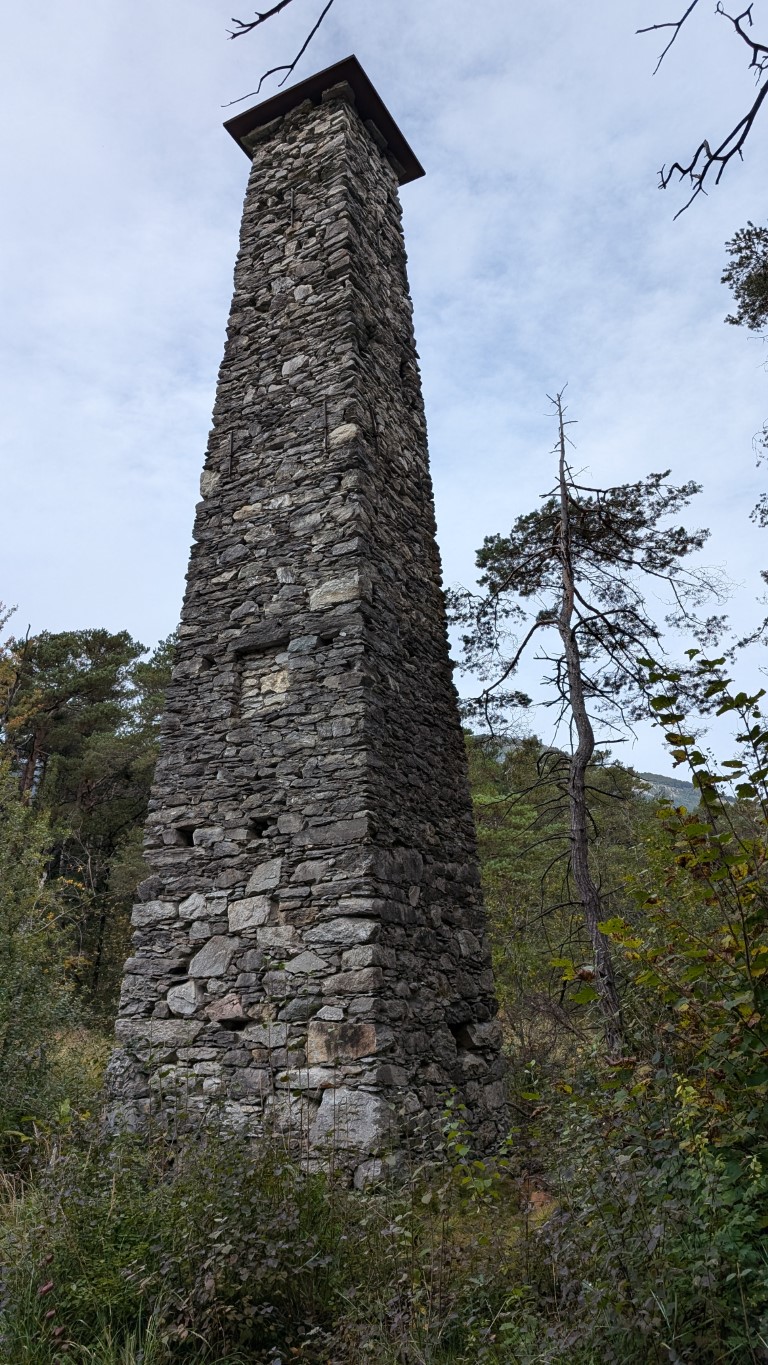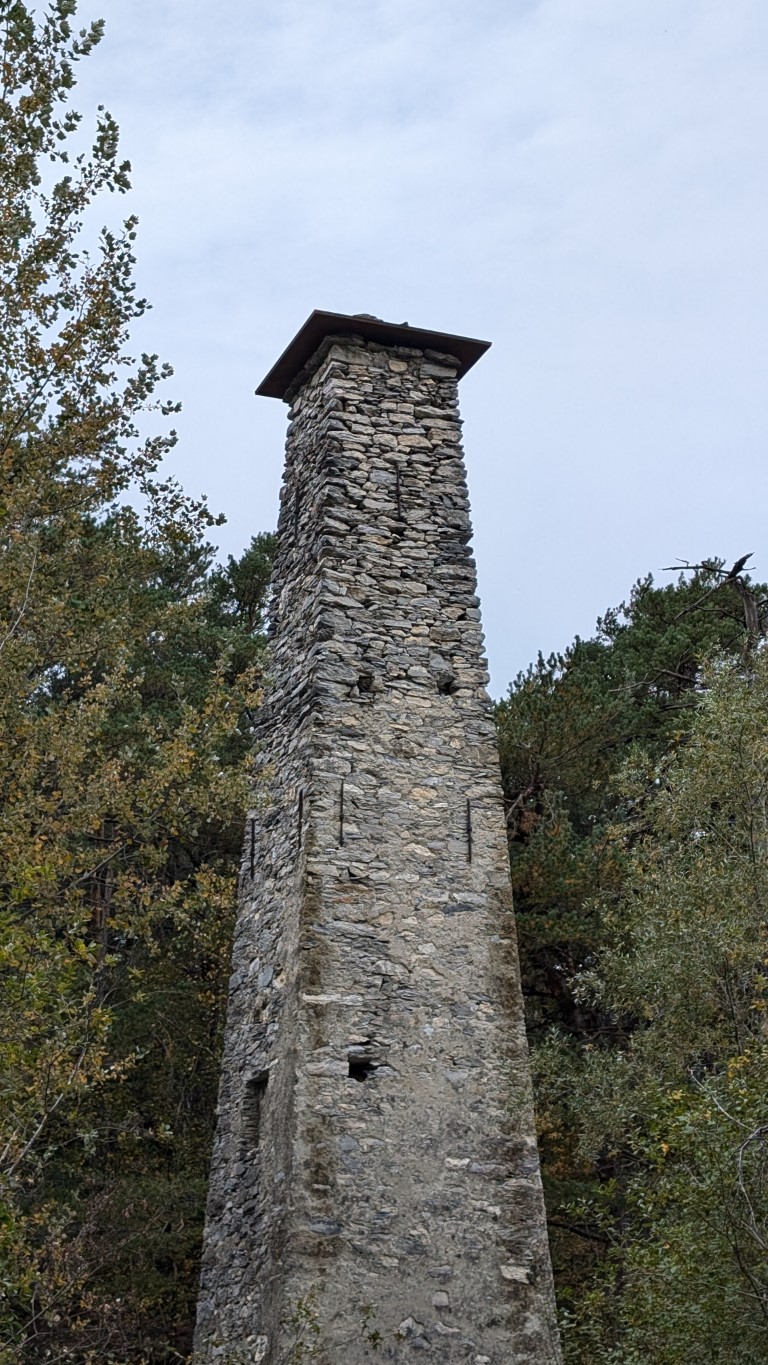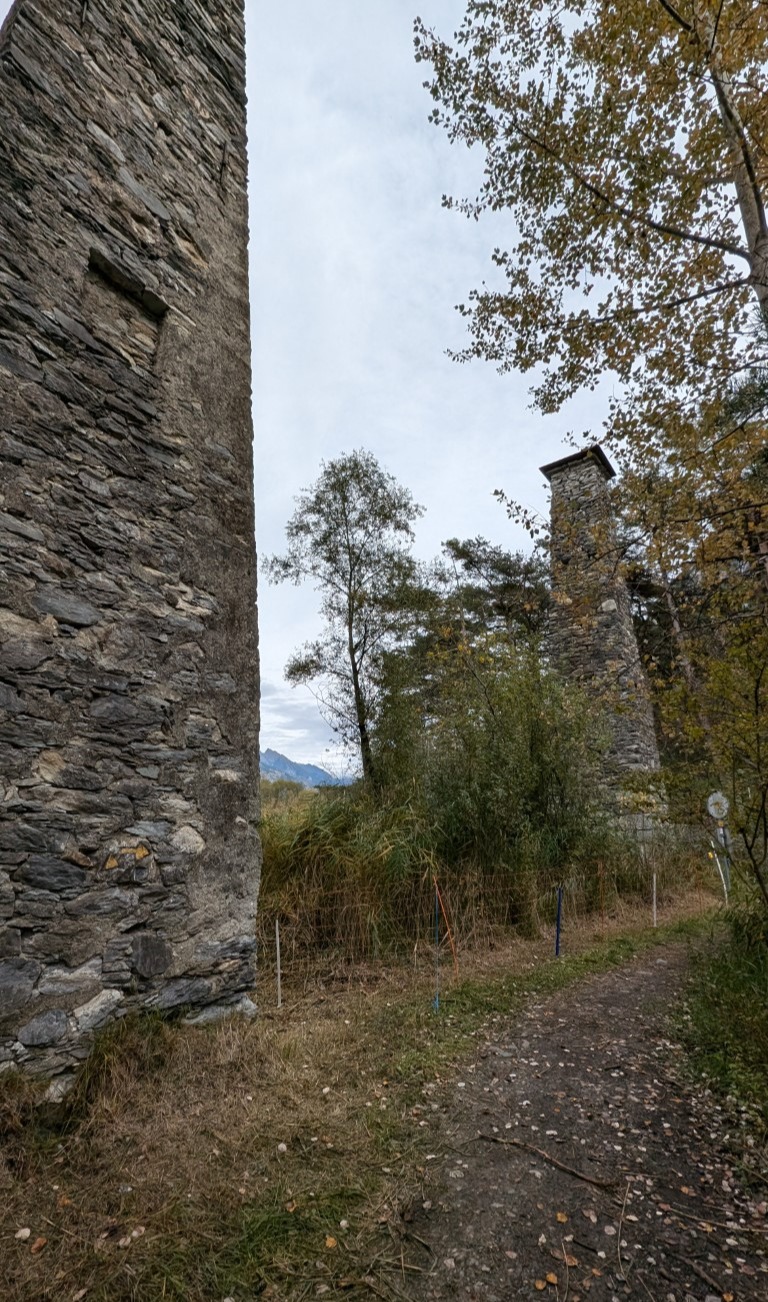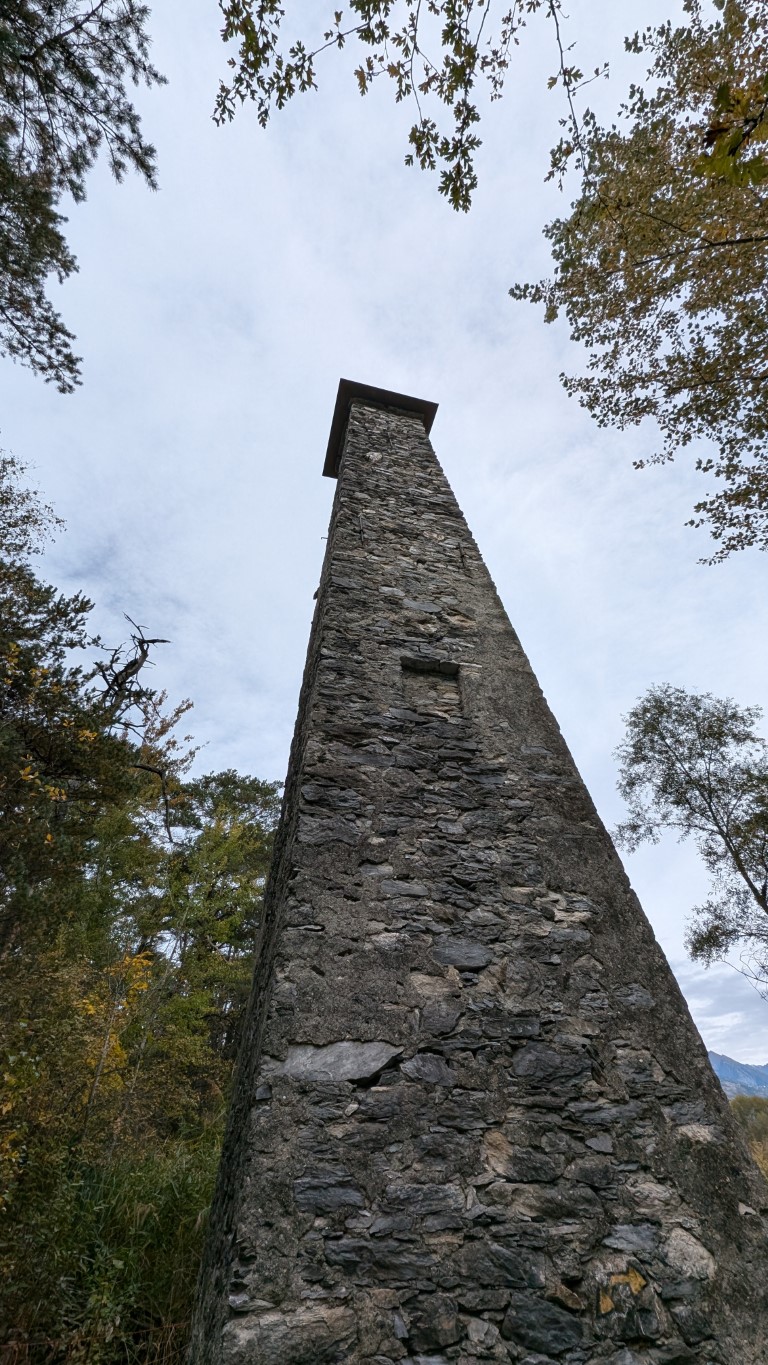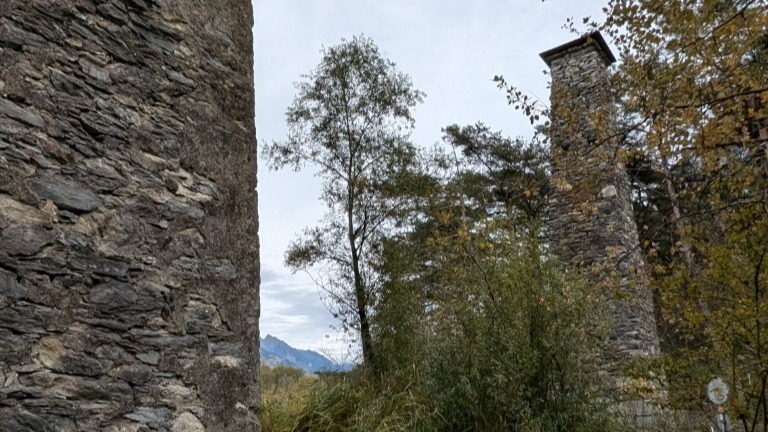
Deep in the Lower Pfynwald, hidden on the south-eastern edge near the village of Leuk, two stone pillars rise into the sky. They stand there, silent and mysterious, witnesses to a time long gone. The place, characterized by pine forests and the ancient remains of a massive rockslide 9,000 years ago, captivates hikers and adventurers alike. But what is the story behind these strange buildings? What stories do they tell?
The silent dominance of the towers
The pillars, which are only about 15 meters apart, are square and raised like an obelisk. At a height of around 16 meters, they dominate the gently rolling hills, which are interspersed with small lakes and swampy areas. It seems as if they were relics of an ancient civilization or witnesses to a lost project. Their construction is as fascinating as it is simple: built from local slate and a few hewn blocks, they nevertheless display an elegant regularity. From the foundation to the top, the pillars taper so that their upper ends are only about 80 to 90 centimeters wide. A flat roof made of slate rests on each of the tops, as if someone had deliberately shrouded any further significance of the building in mystery.
Water, the lifeblood of the forest
Some may wonder why these lonely pillars are standing here, in a place that at first glance seems so inconspicuous. But a closer look at the landscape and historical documents sheds light on their possible purpose. The pillars could once have been part of a sophisticated water supply system. The remains of a possible water channel, which can be seen in a notch on the hill to the north-west of the pillars, suggest that water from the Rhone was once channeled through the forest here.
This Illwasserleite, as it is called in historical records, supplied the surrounding land with valuable water and was probably of crucial importance for the region's agriculture. The slate-rich soil of the Pfynwald allowed very little water to pass through, which encouraged the formation of small lakes and marshlands. The pillars could therefore have played a role in this complex system - perhaps as bases for aqueducts or as part of a technical installation that has long since disappeared into the mists of history.
Untold stories carved in stone
The pillars themselves also speak of an eventful past. On their west side, at a height of around 7 to 8 metres, there are recesses that could once have held inscriptions. But these inscriptions have long since disappeared, leaving only the empty frames. What might they once have told us? Were they inscriptions documenting the construction, or perhaps clues to the architect of this strange construction?
There is hardly any written evidence about the construction or the exact use of the towers. Although research by historian Nadine Hugo uncovered a private purchase contract from the 19th century that identifies the towers as part of the Pfyn water channel, much remains unclear. It is assumed that the Werra family, who owned the surrounding Pfyngut until the early 20th century, may have initiated the construction of the pillars. However, the pillars themselves appear younger than their historical counterparts on the Rhone, which places them in the period of classicism - a style that was popular between the end of the 18th and the middle of the 19th century.
Weathering and Mystery
But time has also taken its toll on these stone guardians. The northern tower shows significantly more signs of weathering than its southern counterpart. But the towers were recently renovated at great expense. Where recesses and brackets once held perhaps complex machines or devices, today only traces remain. The square and rectangular openings, as well as the iron tie rods at heights of 10 and 13 meters, suggest a sophisticated use - but what exactly remains a mystery.
The anchors and remains of a possible iron suspension could indicate that the towers were once functional buildings. It could have been an early form of water treatment or a technical construction whose exact use is no longer accessible to us today.
The Pfynwald: More than just nature
Today, the towers in the Pfynwald are a mystery that fascinates researchers and adventurers alike. They stand as silent proof that great things were once achieved even in the most remote corners of Switzerland. The State Archives of the Canton of Valais may still hold other documents that could shed light on this dark chapter of history. But one thing remains certain: the pillars in the Lower Pfynwald will keep their secrets for a long time to come and inspire the imagination of those who step into their stone shadows.
The landscape that surrounds them tells of a time when people struggled with nature and tried to control its vital resources. Today, the silent obelisks bear witness to this struggle - and invite us to unravel their history piece by piece. Who knows what secrets are still hidden in the archives?
Access
The Pfynwald is freely accessible. Parking at the Ermitage is free.