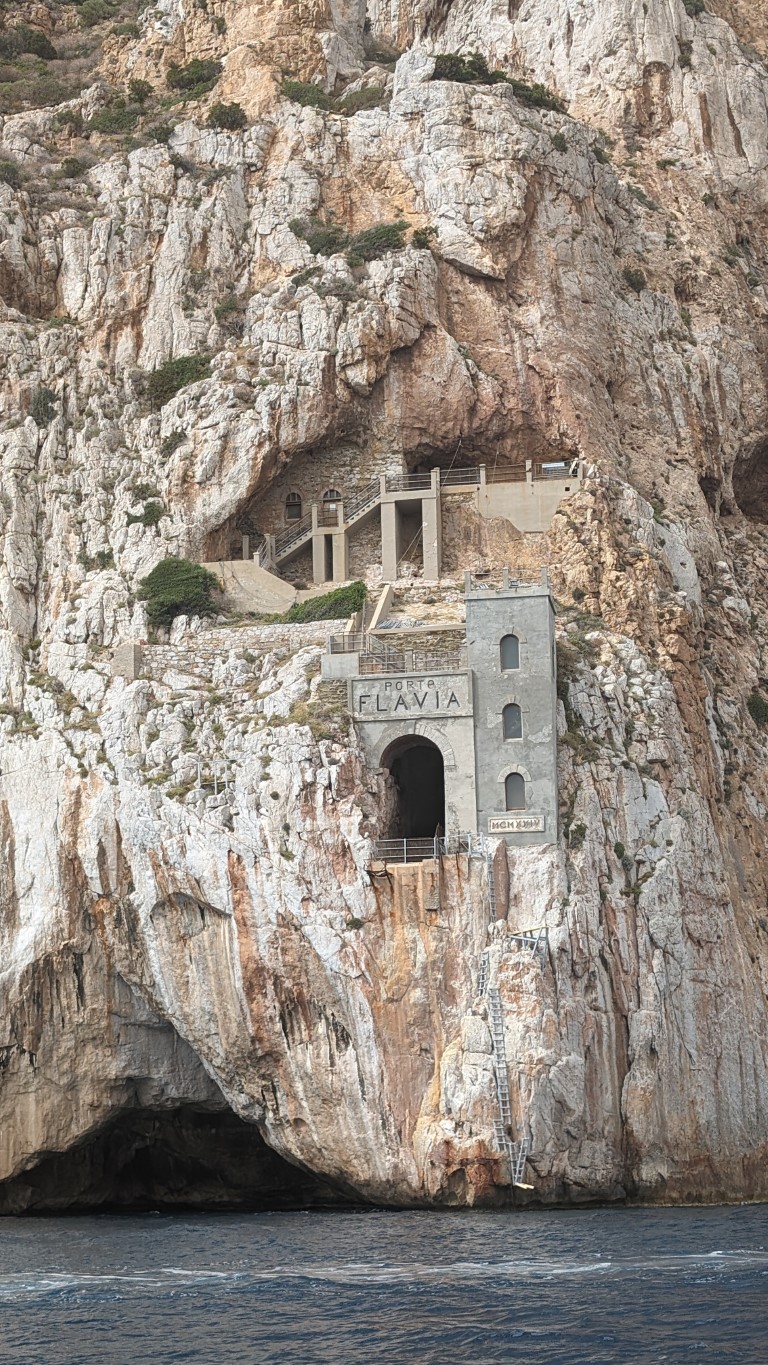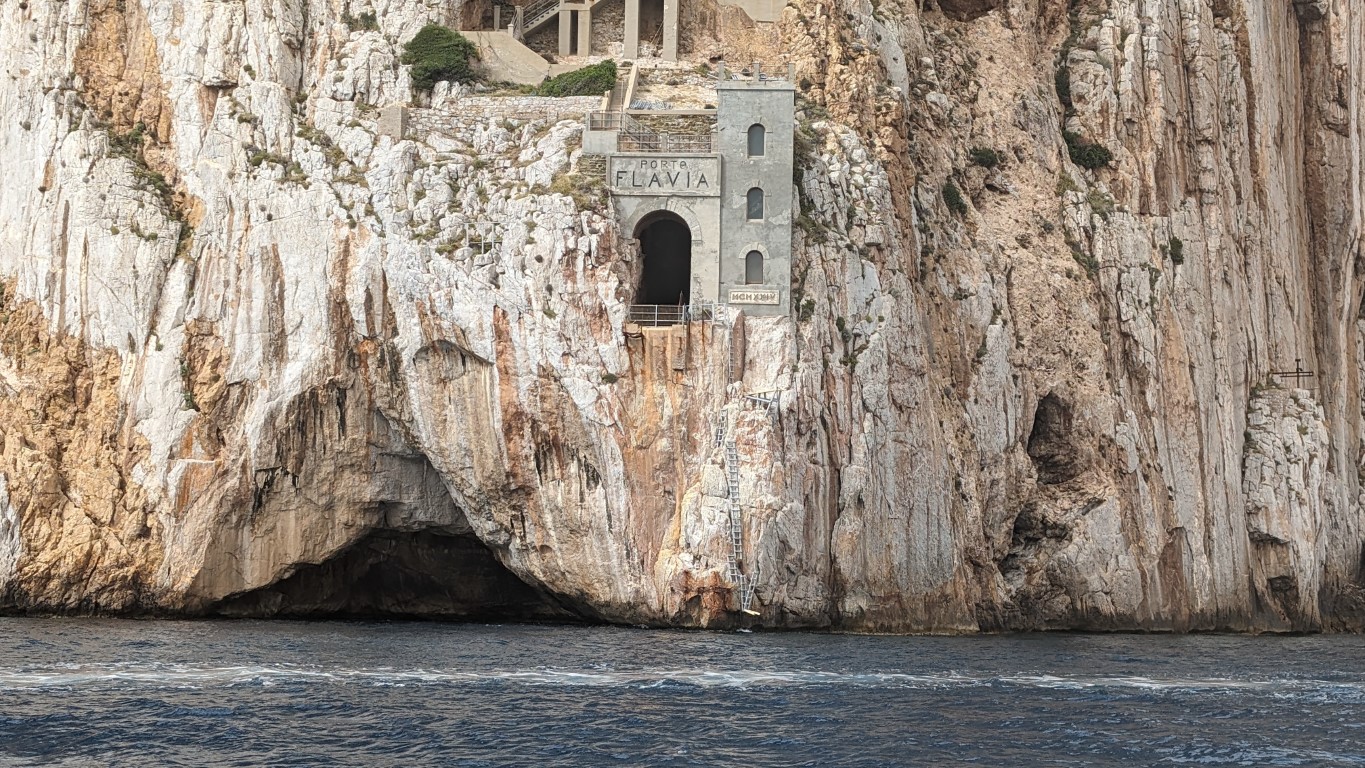
On the wild southwest coast of Sardinia, where the cliffs plunge directly into the deep blue of the sea and the wind smells of salt and the past, lies a place that breathes history: Porto Flavia, a masterpiece of engineering carved into the mountain that seems like a forgotten gateway to an underground world – mysterious, monumental, almost surreal.
Today, Porto Flavia belongs to the municipality of Iglesias, near the former mining settlement of Masua, which has since been transformed into a quiet, sun-drenched bathing bay. But anyone who thinks they'll only find the sound of the sea and sand here will quickly be disabused of this notion: High up in the cliff, a window opens – like the eye of a giant – and looks out onto the open sea. This is where the path of lead and silver, born deep in the Sardinian rock, once ended.
Although not a mine itself, Porto Flavia was a revolution for mining. It served as an innovative loading port, designed in 1924 by Cesare Vecelli, a Venetian engineer who affectionately named this engineering marvel after his daughter – Flavia. What sounds romantic was, at the time, a milestone in logistics: two tunnels hewn into the rock, nine gigantic silos, 600 meters long – and an extendable conveyor belt that transported the ore directly to waiting cargo ships. No more laborious transfer to small boats, no more transport across the open sea to the island of San Pietro. With Porto Flavia, mining had entered the industrial age.
But the roots of this story go deeper. As early as the 17th century, valuable metals were mined here in Masua, often under merciless conditions. A young, curious Gabriele D'Annunzio visited the mines in 1882 as a reporter for the Cronaca bizantina – and described the lives of the workers in dark, poetically bitter tones, with a power that still resonates today.
The heyday didn't last forever. With the decline of the mining industry in the 1960s, the machines fell silent, and Porto Flavia fell into a deep sleep. But as befits a building of such beauty and historical significance, it was not forgotten: At the end of the 20th century, the complex was extensively restored and opened to visitors.
Today, you can walk through the silent tunnels, pass the massive silos, see the salty light filtering through the famous window—and imagine how ships once lay beneath this cliff, ready to carry Sardinia's wealth to the wider world. Porto Flavia is not a museum—it is a stone memory, a technological cathedral that resonates like an echo of the past amidst Sardinia's rugged beauty.
Anyone standing here can feel: The mountain speaks. And the sea listens.