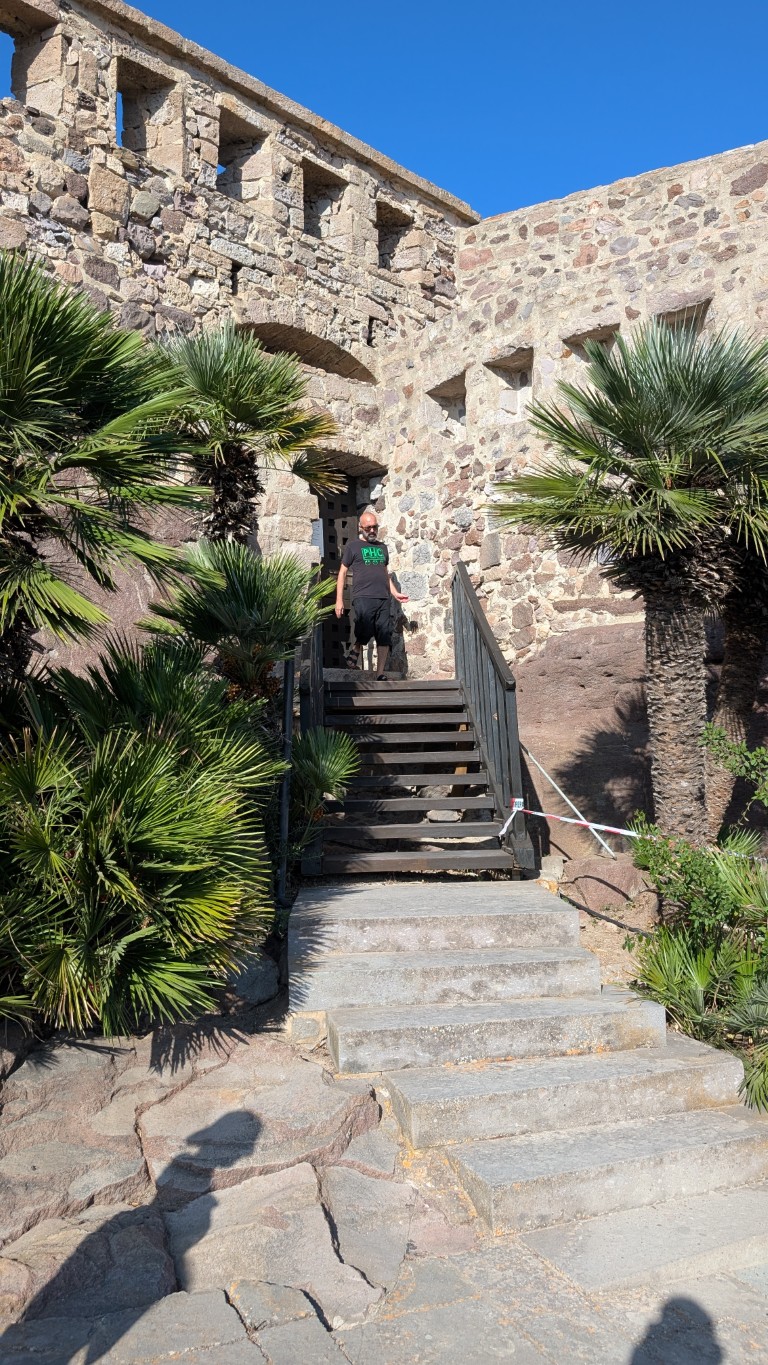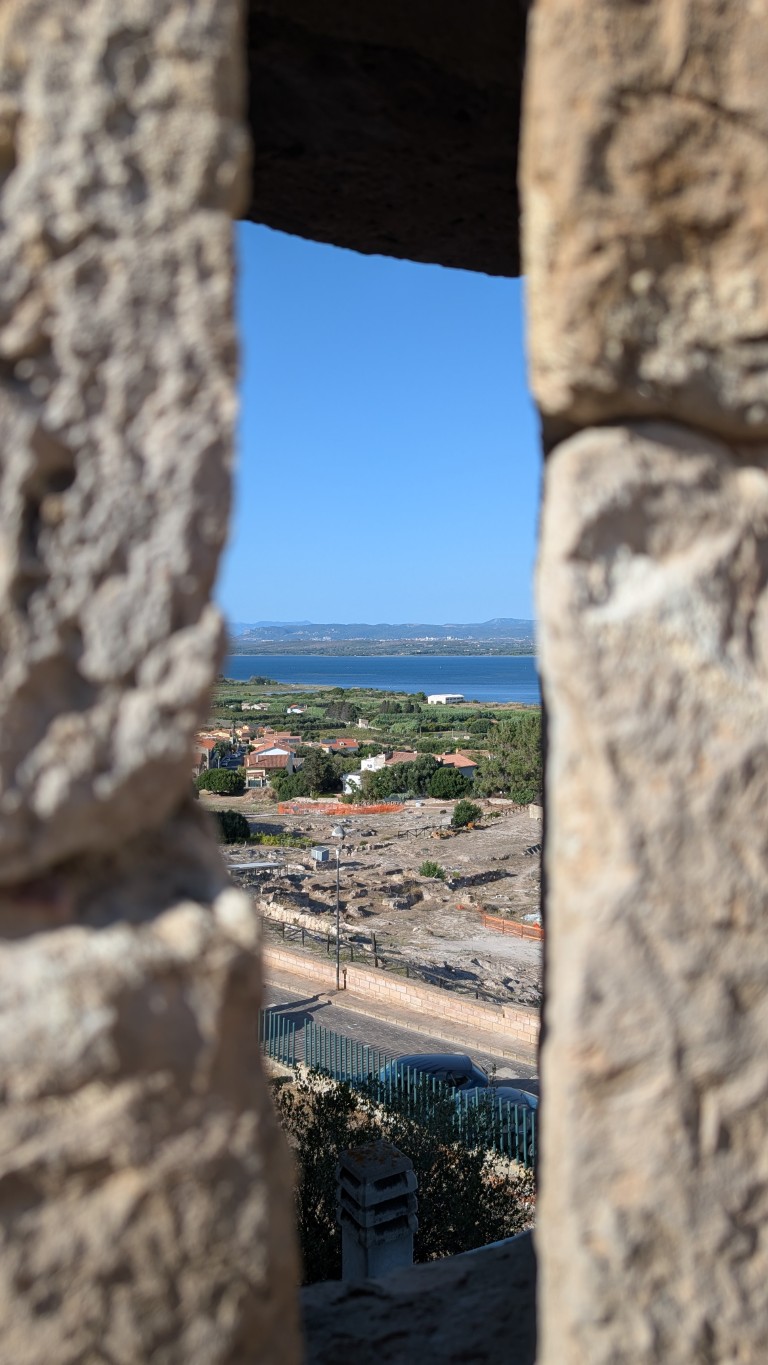
High above Sant'Antioco, where the view sweeps across the lagoon and the Gulf of Palmas, rises Su Pisu . Today, the small fortress appears quiet and almost romantic. But for millennia, this place was a stage for power, defense, and change.
For before cannons stood here, a nuraghe already towered into the sky at the same spot.
One hill, many lives
The hill of Mont'e Cresia is one of the oldest inhabited sites in Sant'Antioco. Around the 15th century BC, the Nuragic people likely erected a massive tower here, constructed of trachyte blocks. On the slope leading towards the necropolis of Is Pirixeddus, archaeologists also discovered traces of an associated settlement.
Centuries later, the world changed. The Carthaginians came to Sardinia, the nuraghe was dismantled, and a polygonal defensive tower was built on its remains. It was part of the fortifications of Sulci and was probably connected to the monumental north gate of the ancient city.
Thus, the same rock repeatedly became the site of defense.
Lions, walls and a sunken city
Two monumental lion statues once stood nearby. Today they can be seen in the museum. In Roman times, they adorned the podium of the amphitheater – another example of how the significance of this place has constantly changed.
With the Roman conquest of Sardinia in 238 BC, the Carthaginian fortifications were dismantled. Building materials were reused, and the former defensive site became part of the Roman city.
Then it became quiet.
Centuries of fear
For many centuries, Sant'Antioco was subjected to pirate attacks. The recurring raids even led to the island remaining largely uninhabited for a long period.
Resettlement only began in the 18th century. But the memory of the danger remained.
When the coasts of Sardinia once again needed protection from attacks by North African pirates at the beginning of the 19th century, the old strategic hill became important again.
The construction of the fort was planned in 1812. Su Pisu was built between 1813 and 1815 – ironically, on the remains of the old Punic fortification.
Thus, a Nuragic sanctuary and defensive tower, a Punic fortress, and a Roman-influenced site eventually became a Savoyard bastion.
The last resort
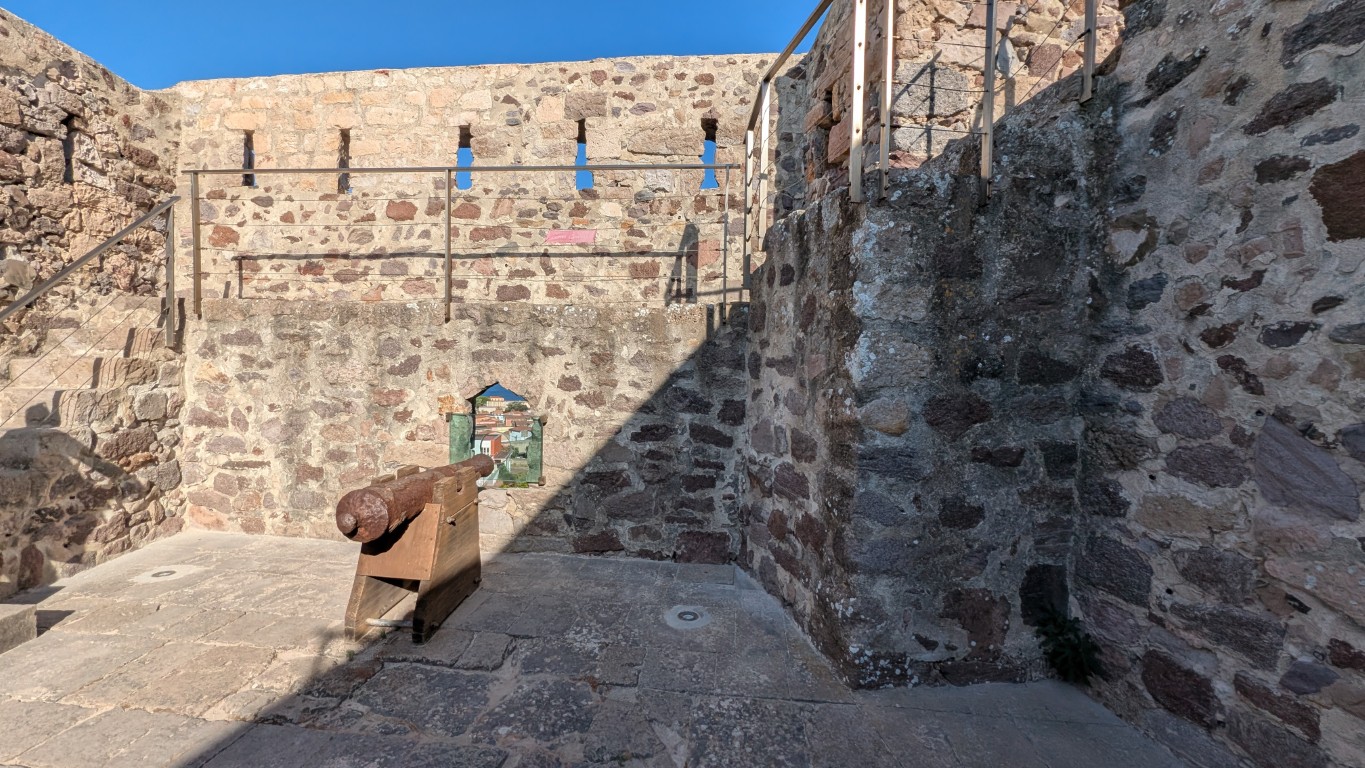
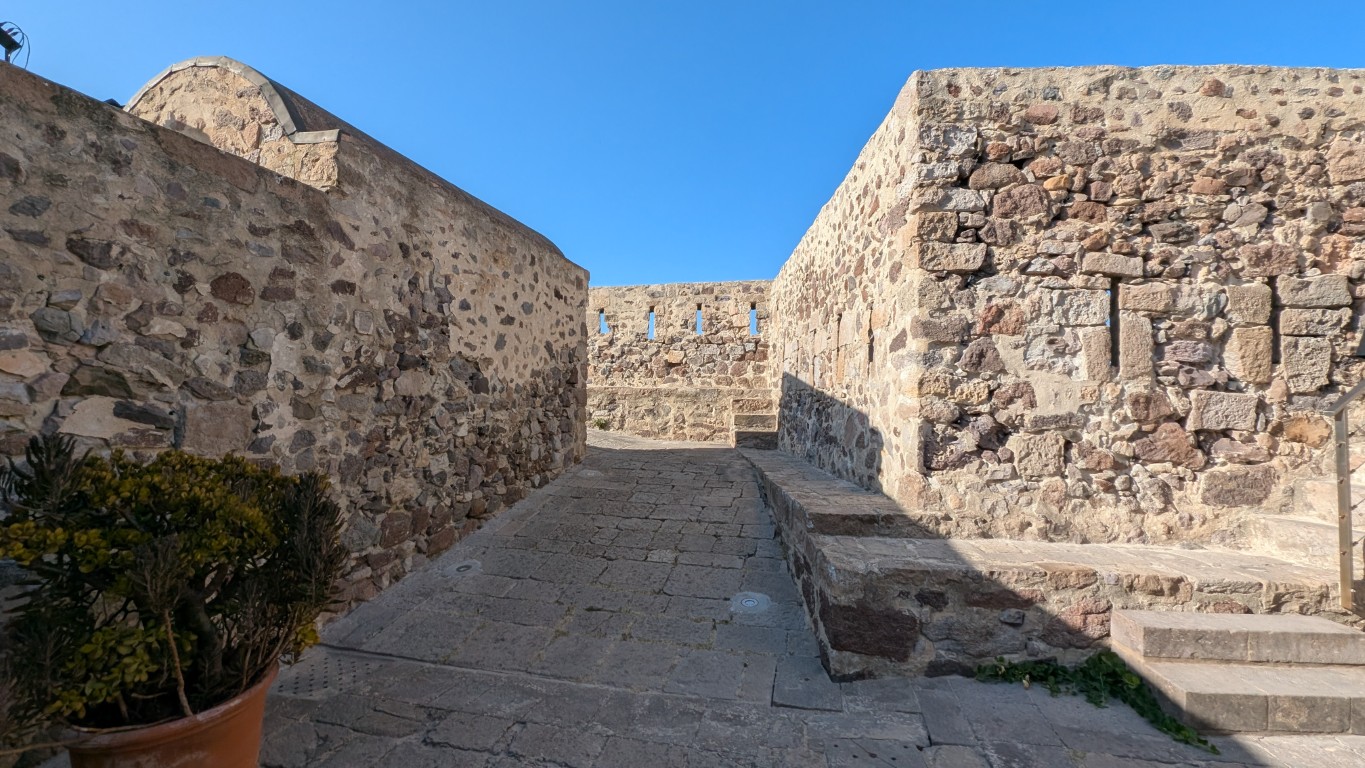
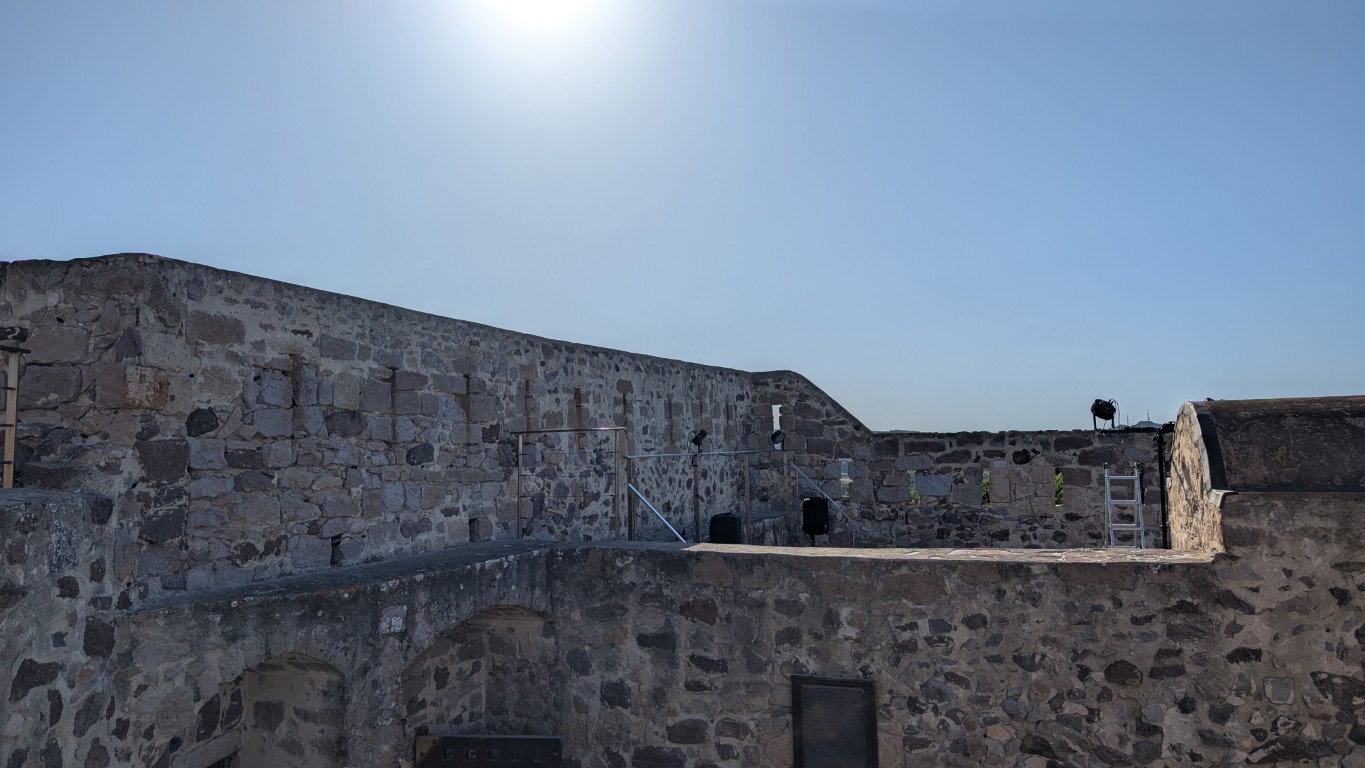
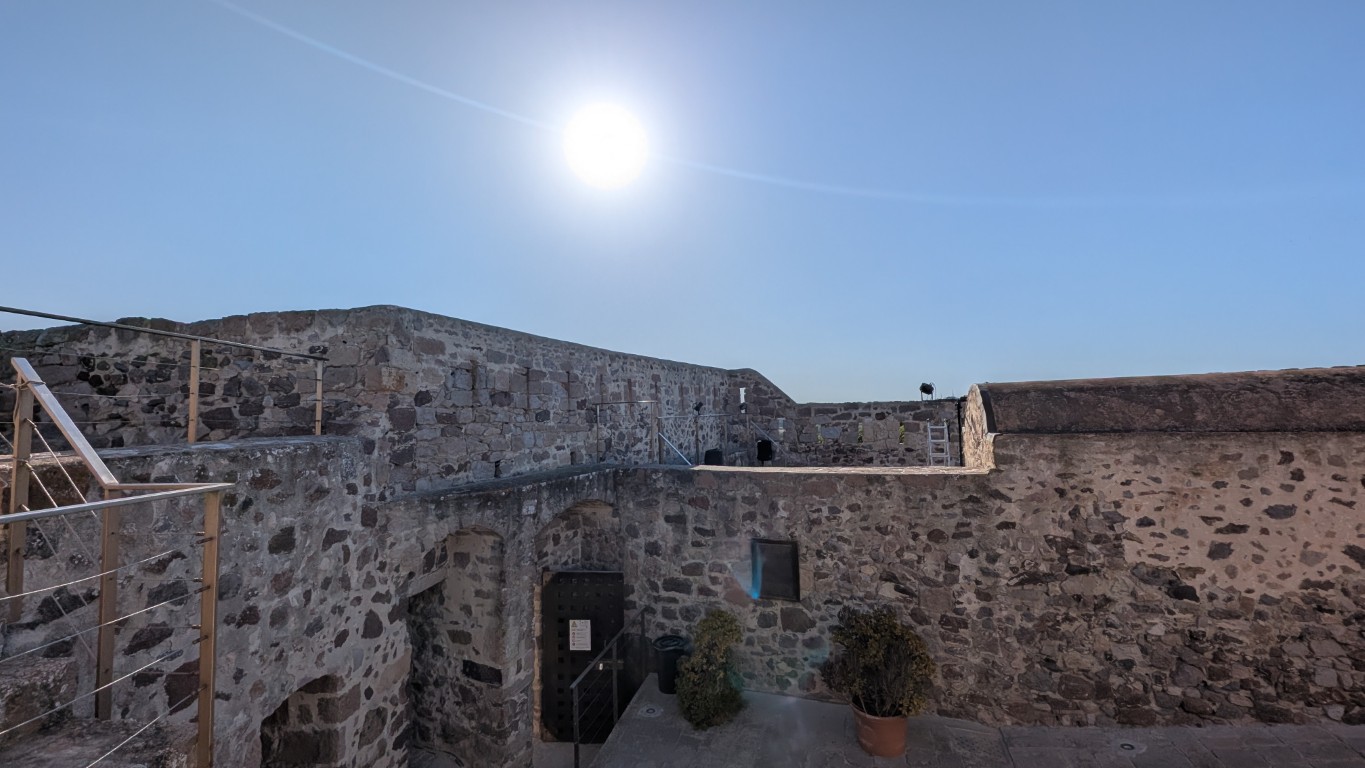
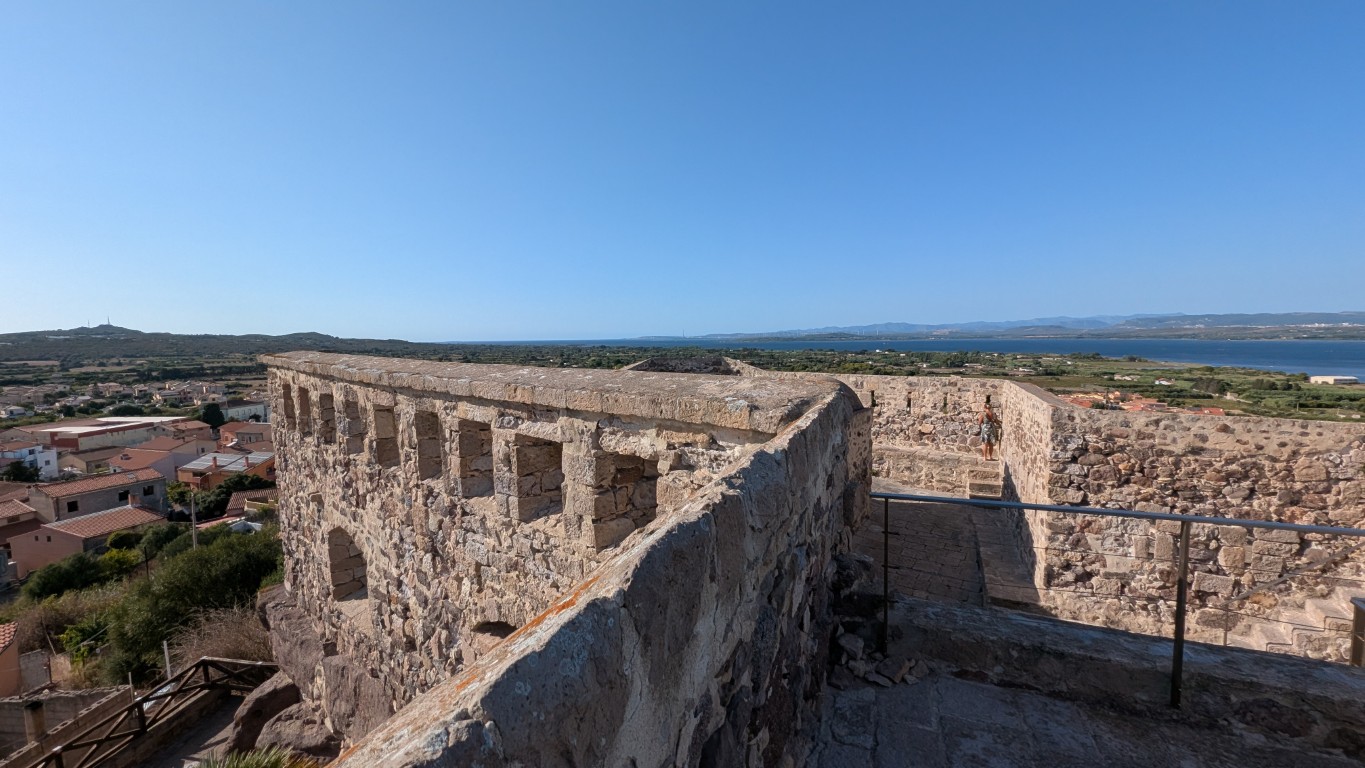
The fortress was intended to provide protection for soldiers and the civilian population. Its walls were equipped with loopholes and guard walks, and cannons could be aimed towards the sea.
Inside, the small, barrel-vaulted powder magazine can still be found today. Weapons and ammunition were stored here. A cistern beneath the inner courtyard collected rainwater – vital if a fortress had to rely on itself for an extended period in an emergency.
There was probably once a drawbridge at the entrance. A guardhouse with loopholes secured access.
And then there's the look.
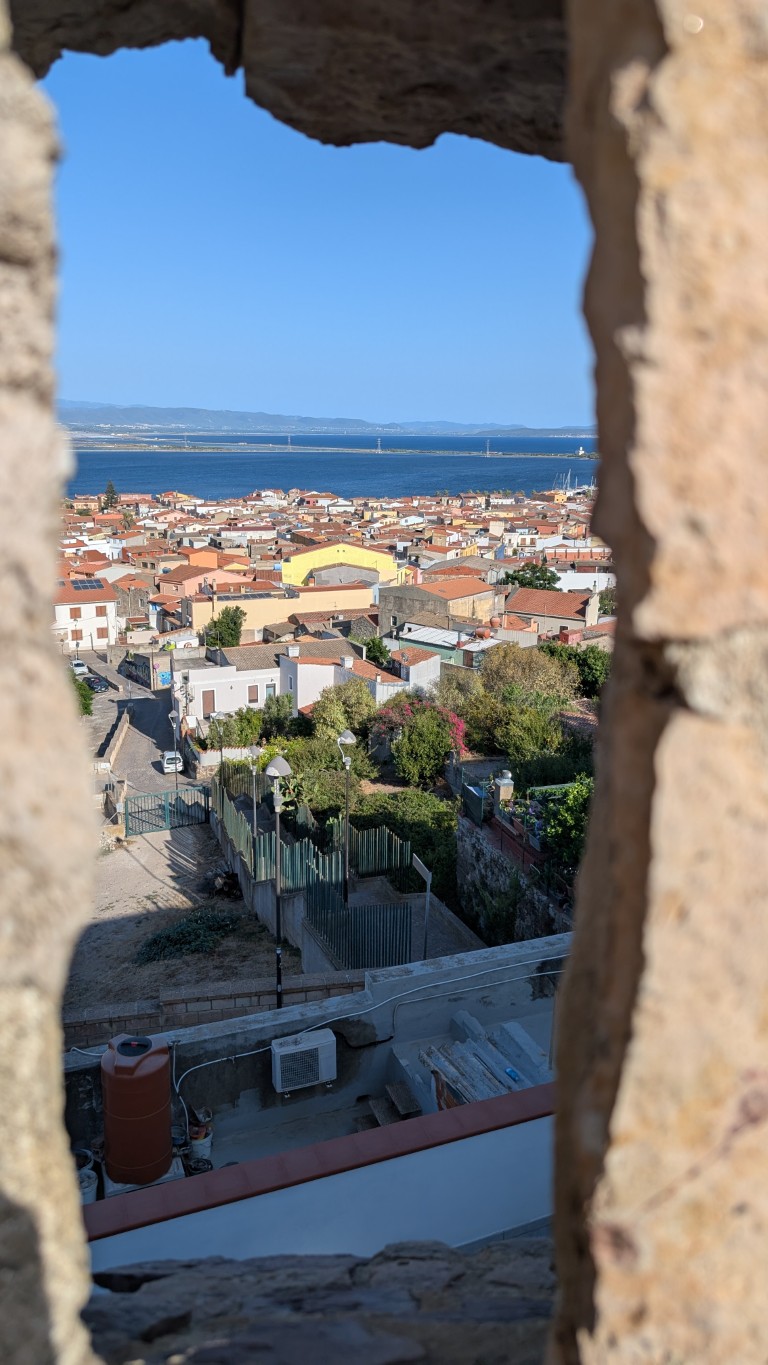
From the walls, the landscape opens up far across the lagoon and the Gulf of Palmas. You stand in a place where people observed the horizon more than 3000 years ago – for different reasons, but with the same view.
The final attack
Su Pisu was only militarily active in this form for a few years. But in 1815, the reason for the fortress's construction became clear: during the Bey of Tunis's last raid, it served to defend the island.
After that, it gradually lost its military significance.
What remains is a place where the history of Sardinia can be read almost layer by layer: Nuragic, Phoenician, Roman and Savoyard people left their mark on the same hill.
A place between times
Perhaps the secret of Su Pisu is not a single discovery, but the fact that this place has been reinvented time and time again.
The Nuragic people built their tower here. The Carthaginians incorporated it into their fortress. The Romans demolished the old walls and reused their stones. Centuries later, the Savoyards rebuilt a fortress – following the traces of what had stood here before them.
The stone remained. The people changed. The threats changed. Only the view across the sea remained the same.
Anyone standing on Su Pisu today isn't simply standing on an old fortress. They are standing on a piece of Sardinia where more than three millennia of history have been layered upon one another.