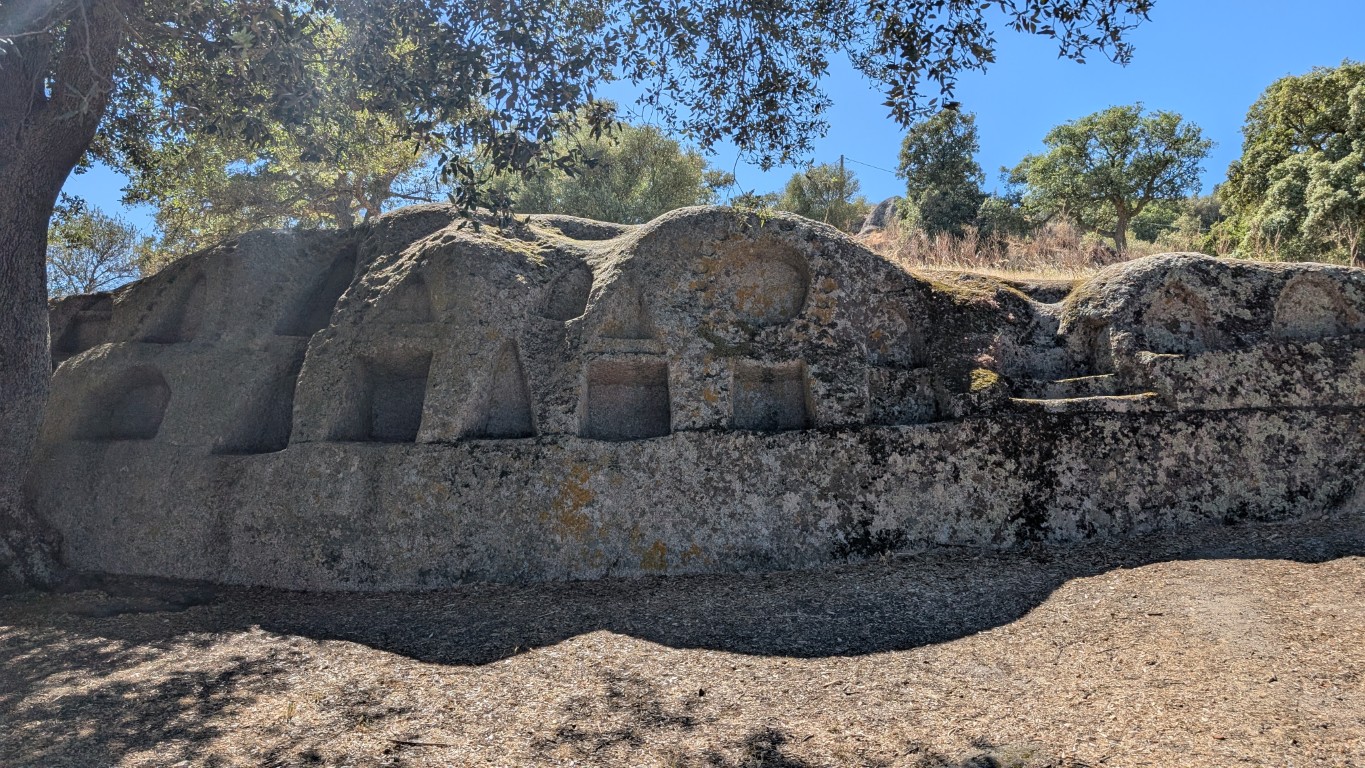
Just a few kilometers north of Oschiri, on a gentle hill in the Gallura region, lies a place that defies any clear interpretation. The Sito rupestre di Santo Stefano is not a classic monument, not a clearly defined temple, and not a definitively established place of worship. Rather, it is a landscape of stone – a stage for human rituals, beliefs, and unexplained symbols that has evolved over millennia.
Here, prehistoric burial worlds meet medieval traces, rock carvings meet sacred architecture, and archaeological certainty meets open questions.
The stone threshold
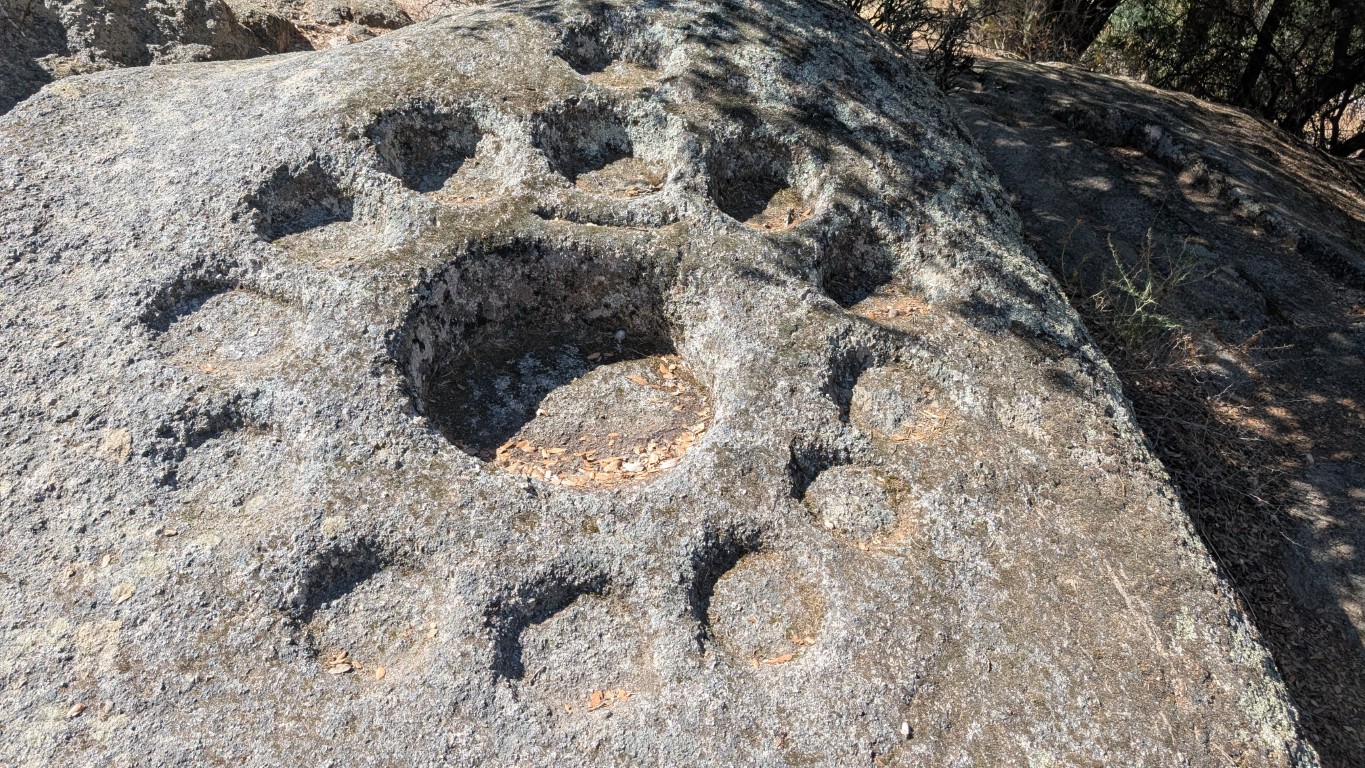
Even the location seems deliberately chosen: A slight rise, about 243 meters above sea level, opens up a view over the surrounding area. In the middle of this landscape lies a large granite slab, roughly ten meters long, which was long referred to as the "altar".
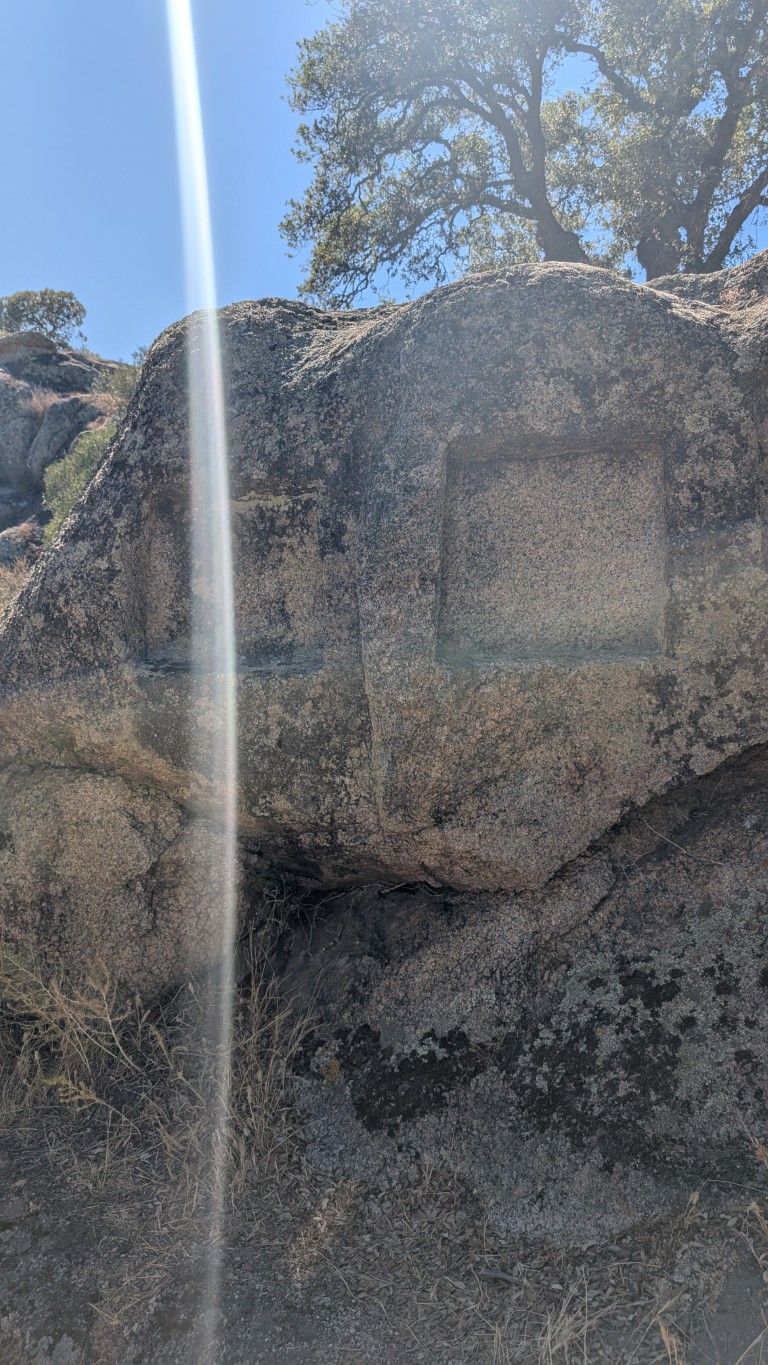
But this term falls short. The surface of the rock slab is covered with geometric depressions: triangles, squares, circles – precisely carved, seemingly arranged in an order that we no longer fully understand.
Twelve and nine of these symbols are grouped in rows, supplemented by individual, prominent points that may mark cardinal directions or represent symbolic reference systems. A central boss appears to be oriented exactly north.
Whether calendar, ritual surface, cosmic model or something completely different – the stone remains silent.
And it is precisely this silence that makes him so impressive.
Between ritual and riddle
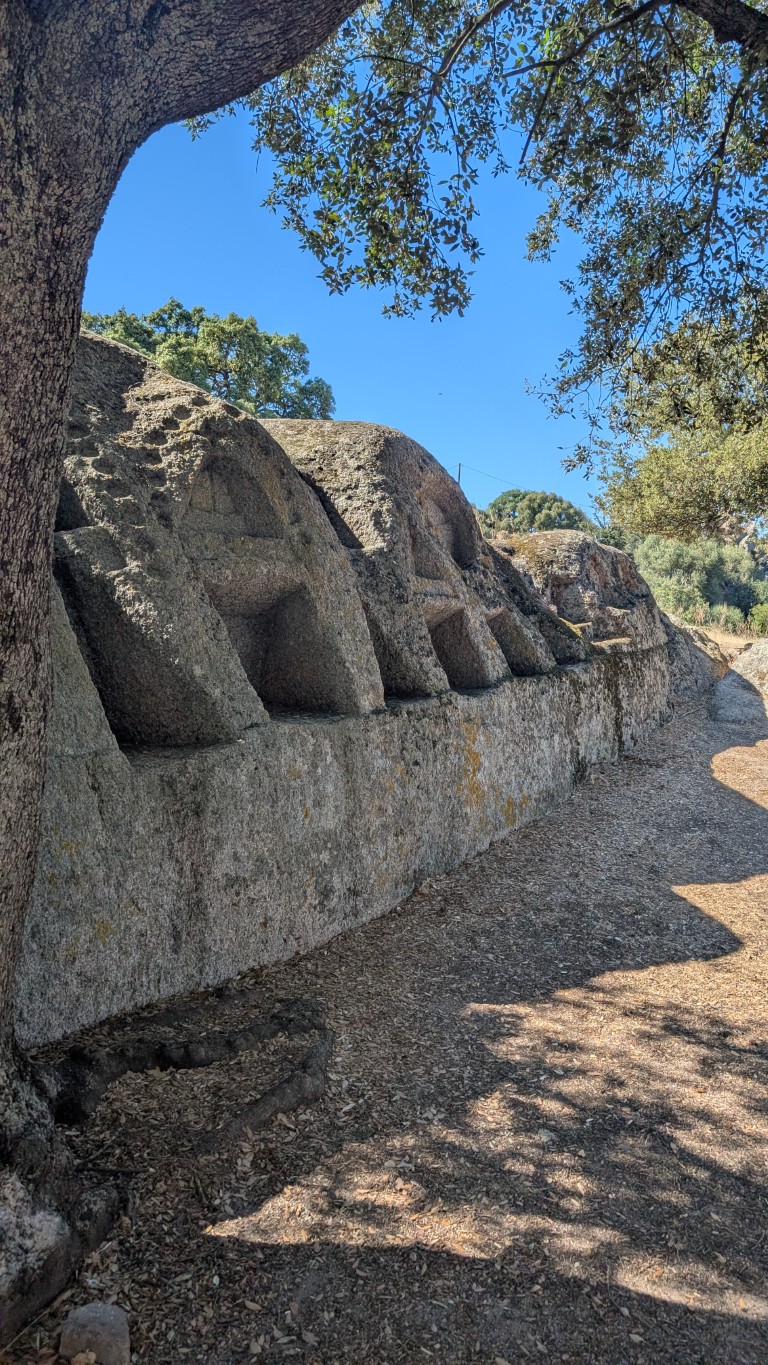
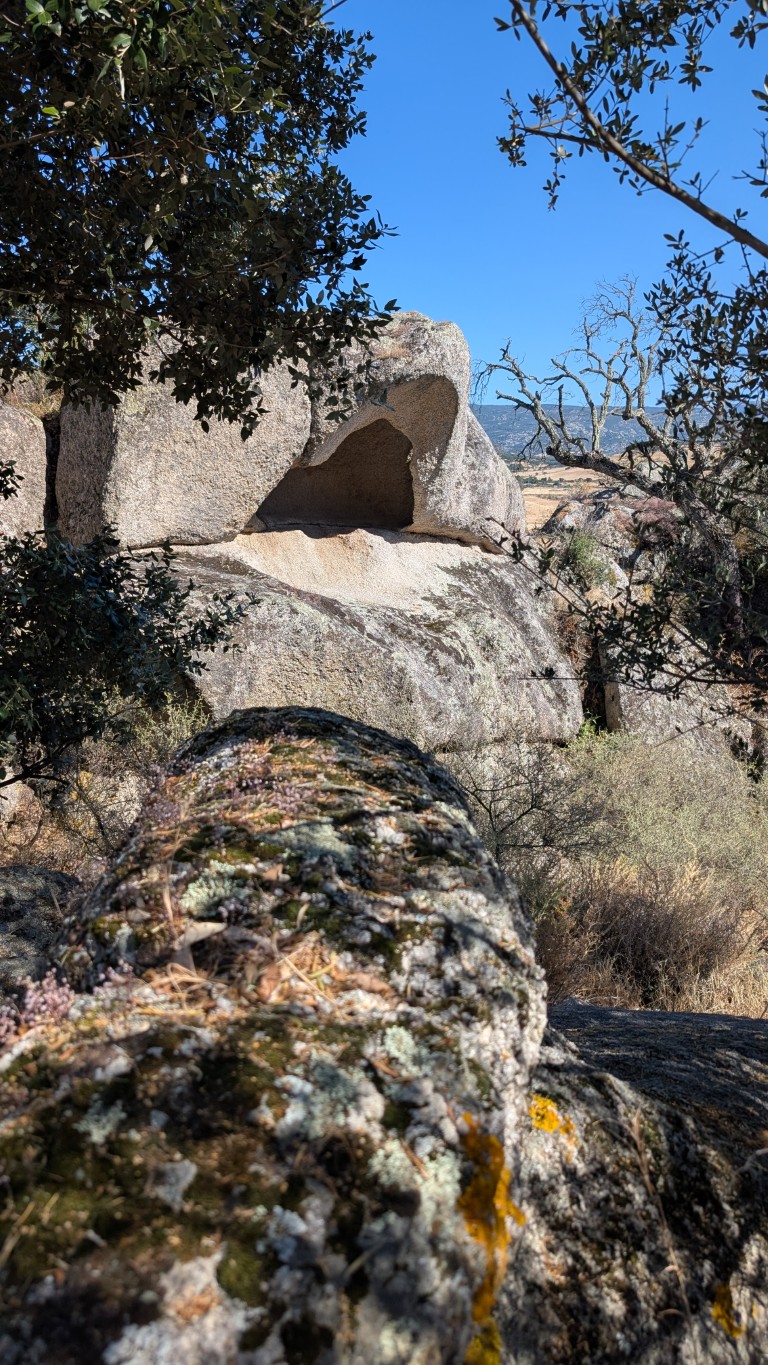
A complex archaeological ensemble unfolds around the central rock slab. Further sunken structures, small niches, and rock carvings indicate that this site was used over a long period – possibly reinterpreted time and again.
A flat rock surface was probably used for offerings or ritual acts. In the minds of early cultures, it may also have served as a transitional space – a place where communication with the invisible world was possible.
Yet every interpretation remains fragmentary. The lack of systematic excavations leaves room for speculation – and therein lies the special aura of this place: it is not closed off, but open.
The World of the Domus de Janas
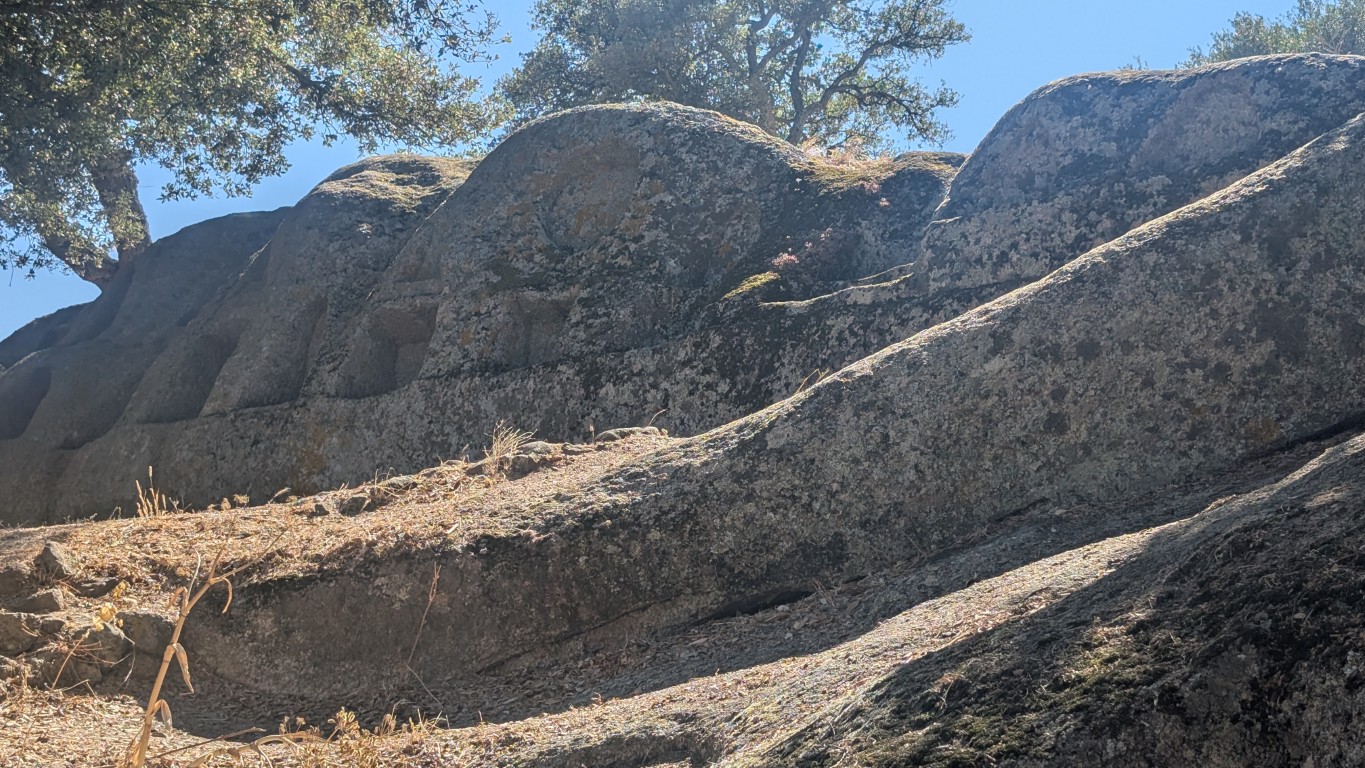
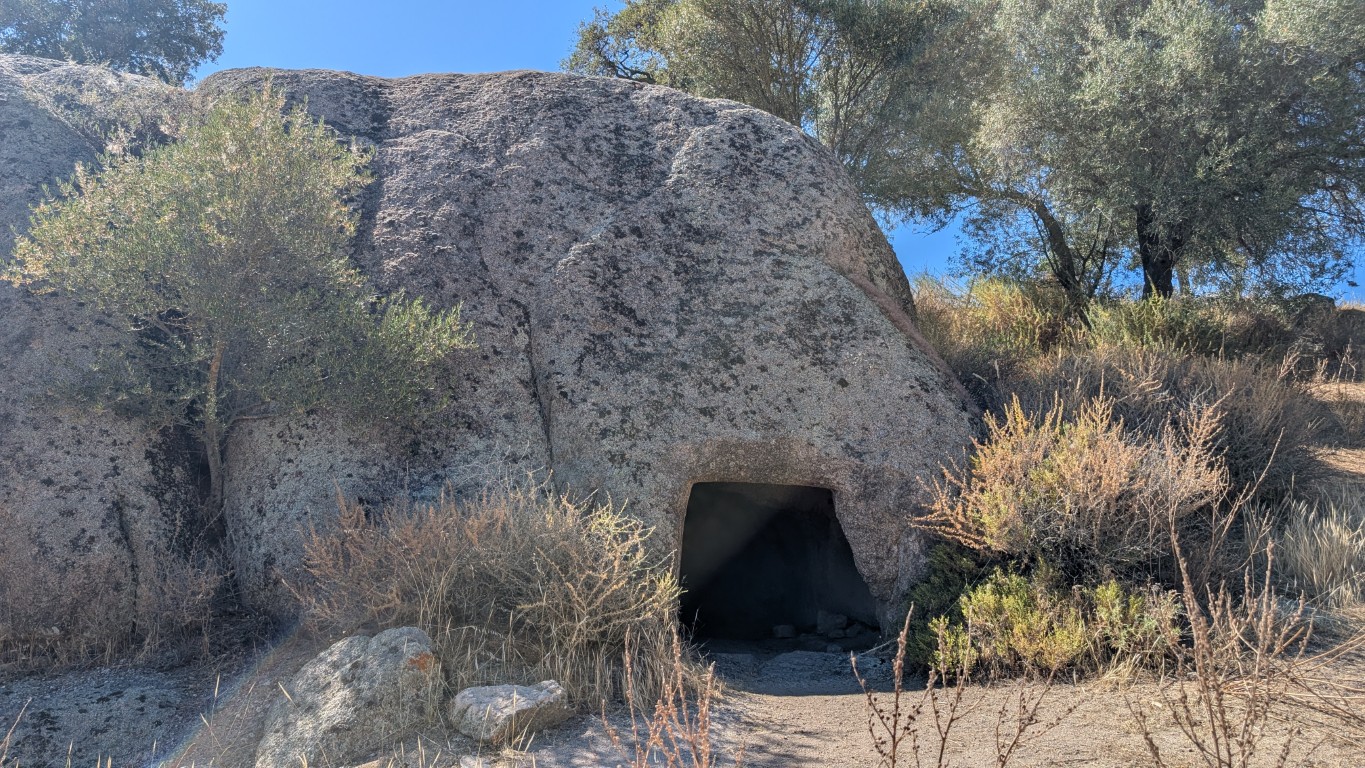
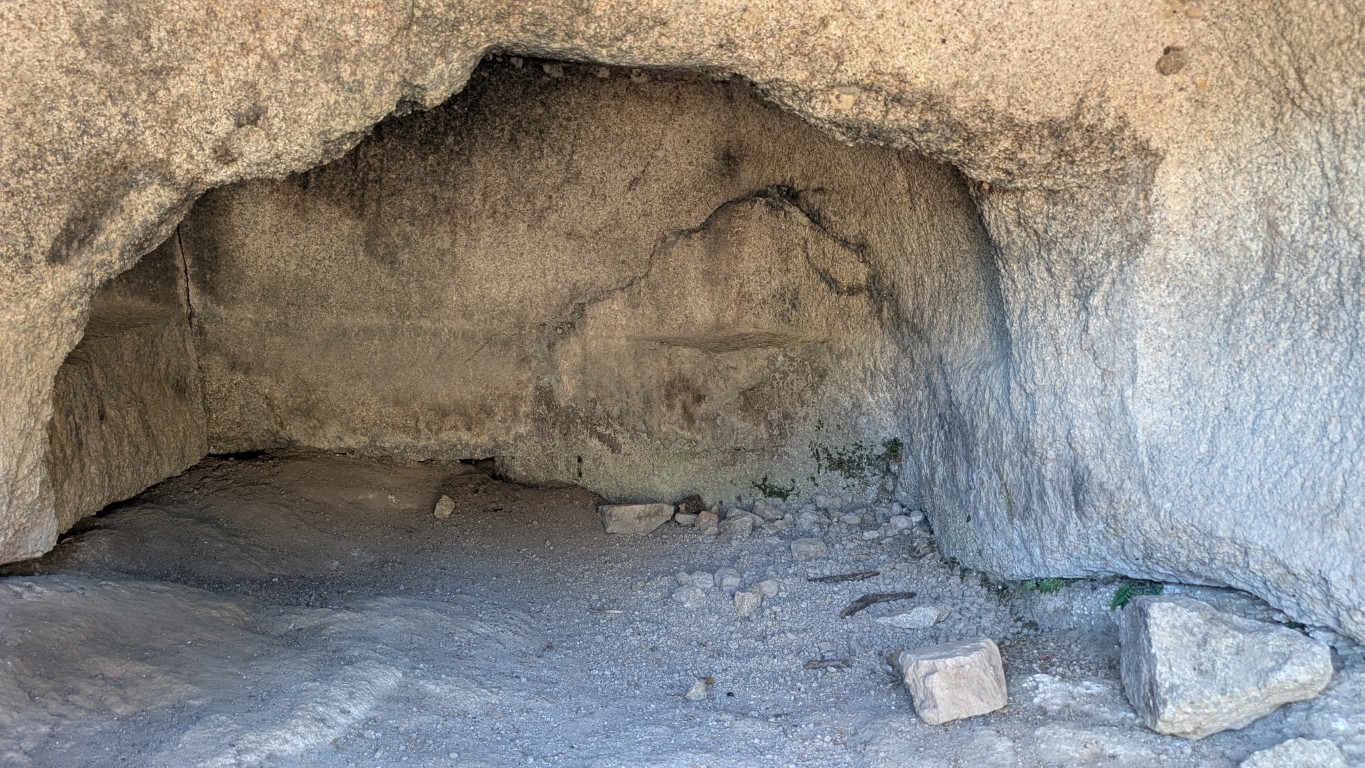
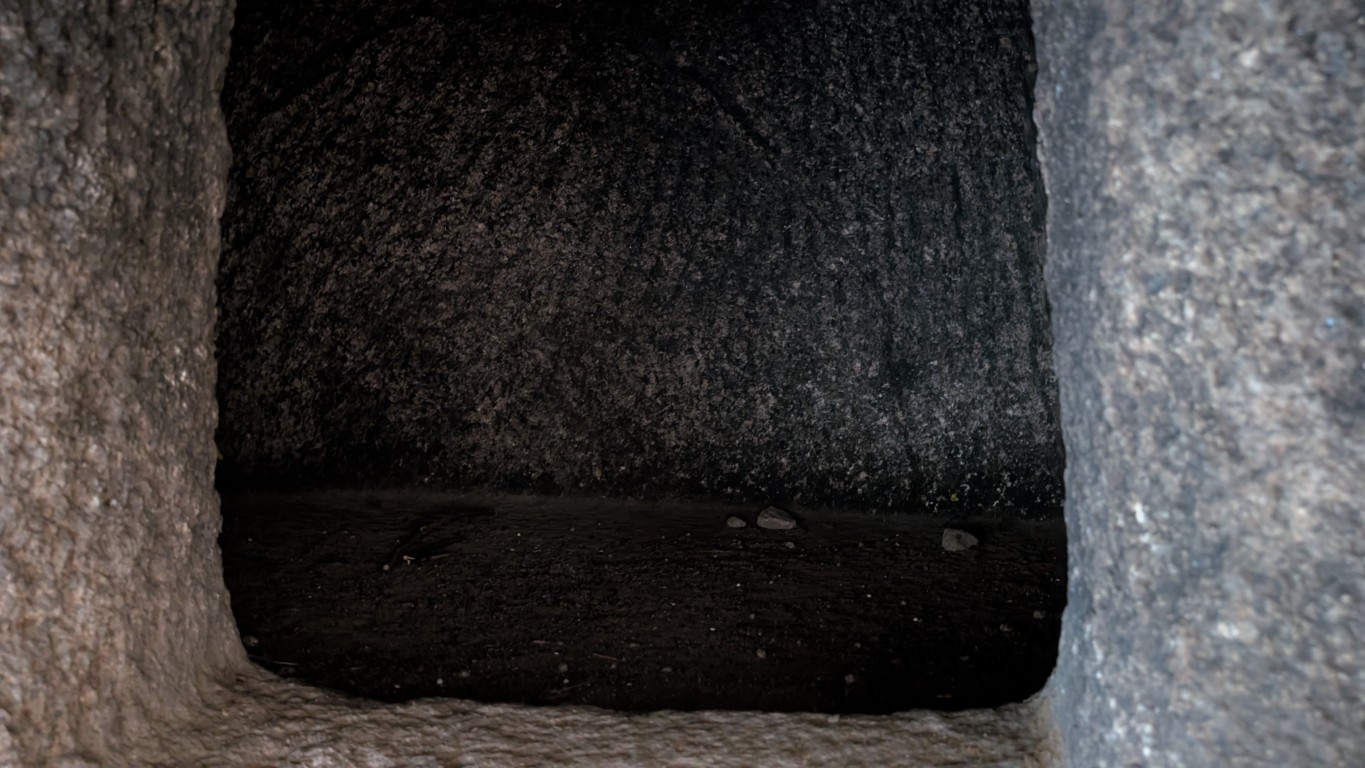
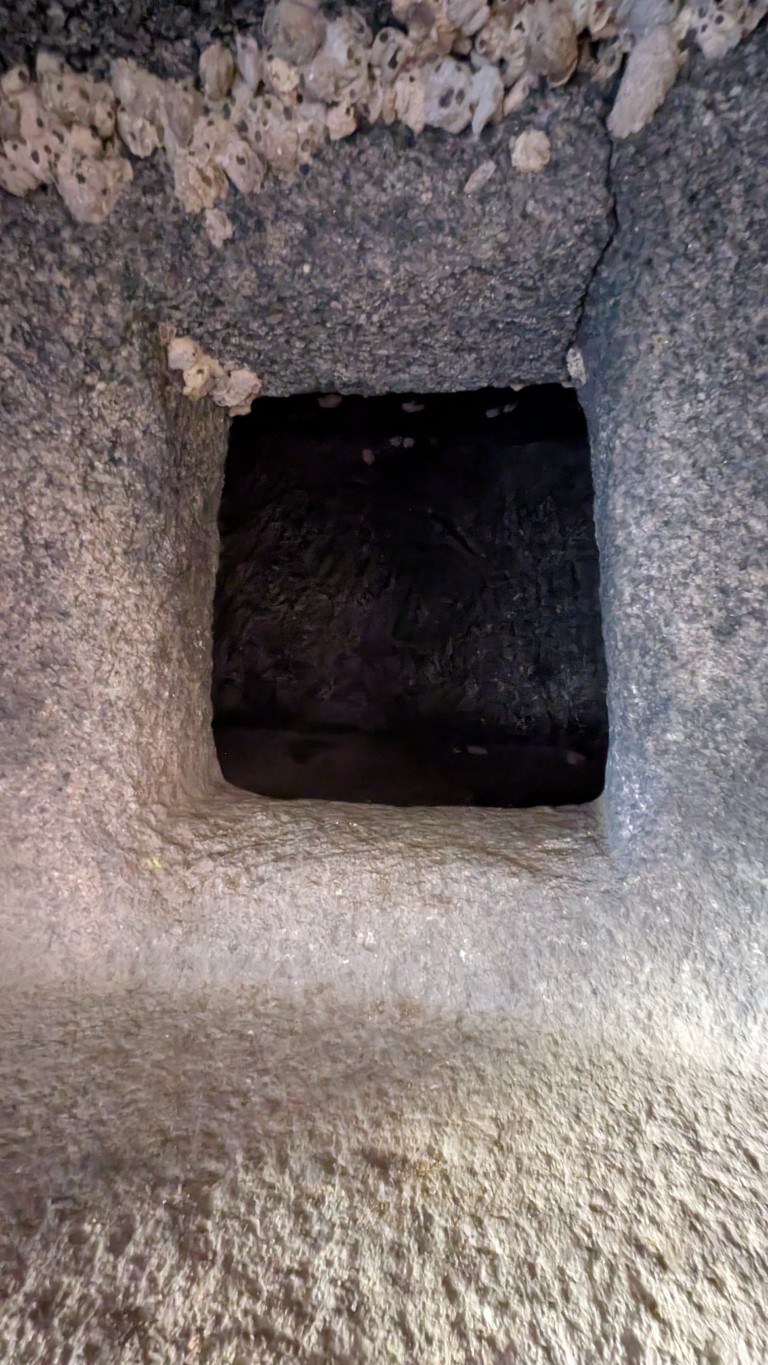
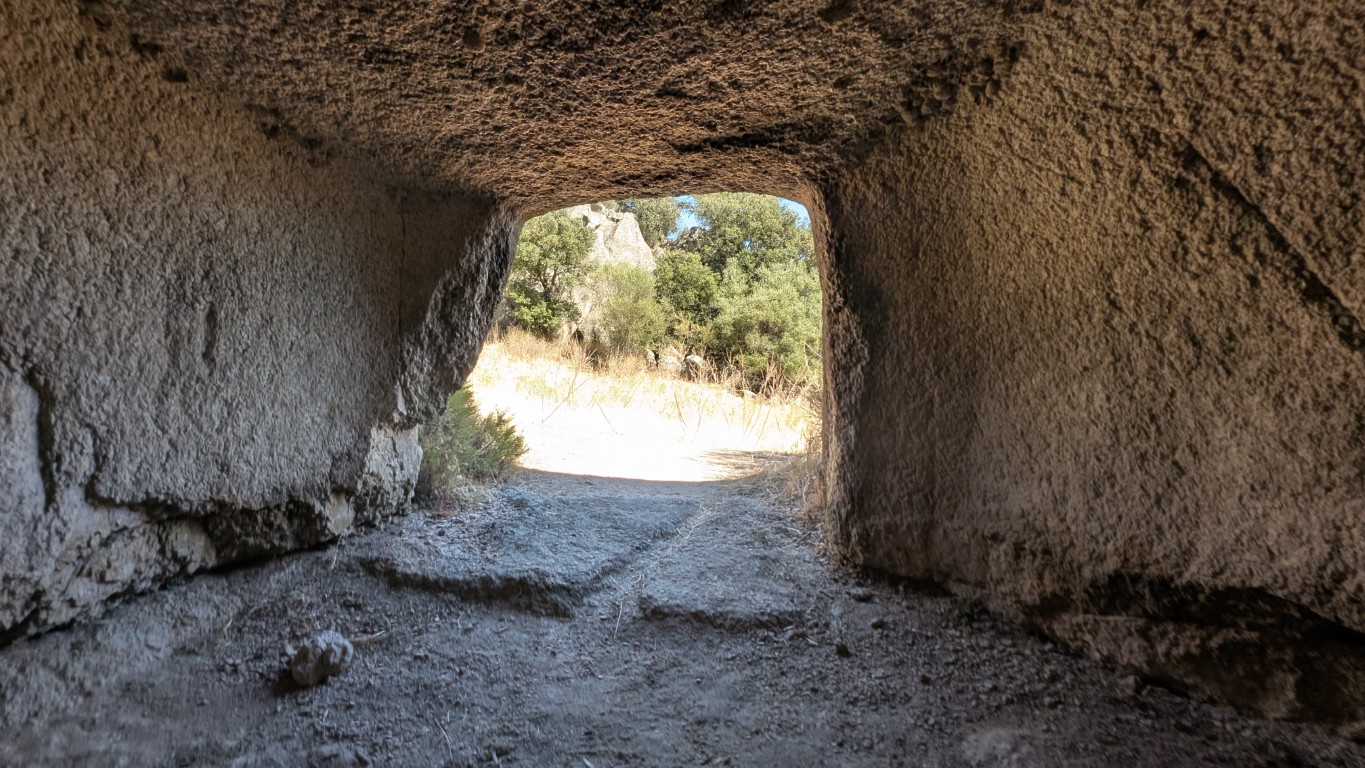
Not far from the rocky plateau, another layer of the past opens up: five to six so-called Domus de Janas, burial chambers hewn into the rock from the Neolithic period.
These “fairy houses,” as they are called in Sardinian tradition, originate from the Ozieri culture (c. 3500–2700 BC). They are silent testimonies of a society that laid its dead to rest deep within the rock, thus creating for them a place between life and the afterlife.
The proximity of these tombs to the enigmatic rock slab reinforces the impression that Santo Stefano has been a place of transition for millennia – between the world and the underworld, between man and myth.
Overlapping symbols
The layering of different eras is particularly fascinating. Some of the incised symbols were apparently later Christianized by incorporating crosses into the existing forms. In other cases, they may even have originated at the same time.
This creates a palimpsest-like place where each generation has inscribed its own meaning into the stone. Pagan symbols, early Christian signs, and possibly even older, unknown markings exist side by side here – not as contradictions, but as layers of a long cultural memory.
A place without a final answer
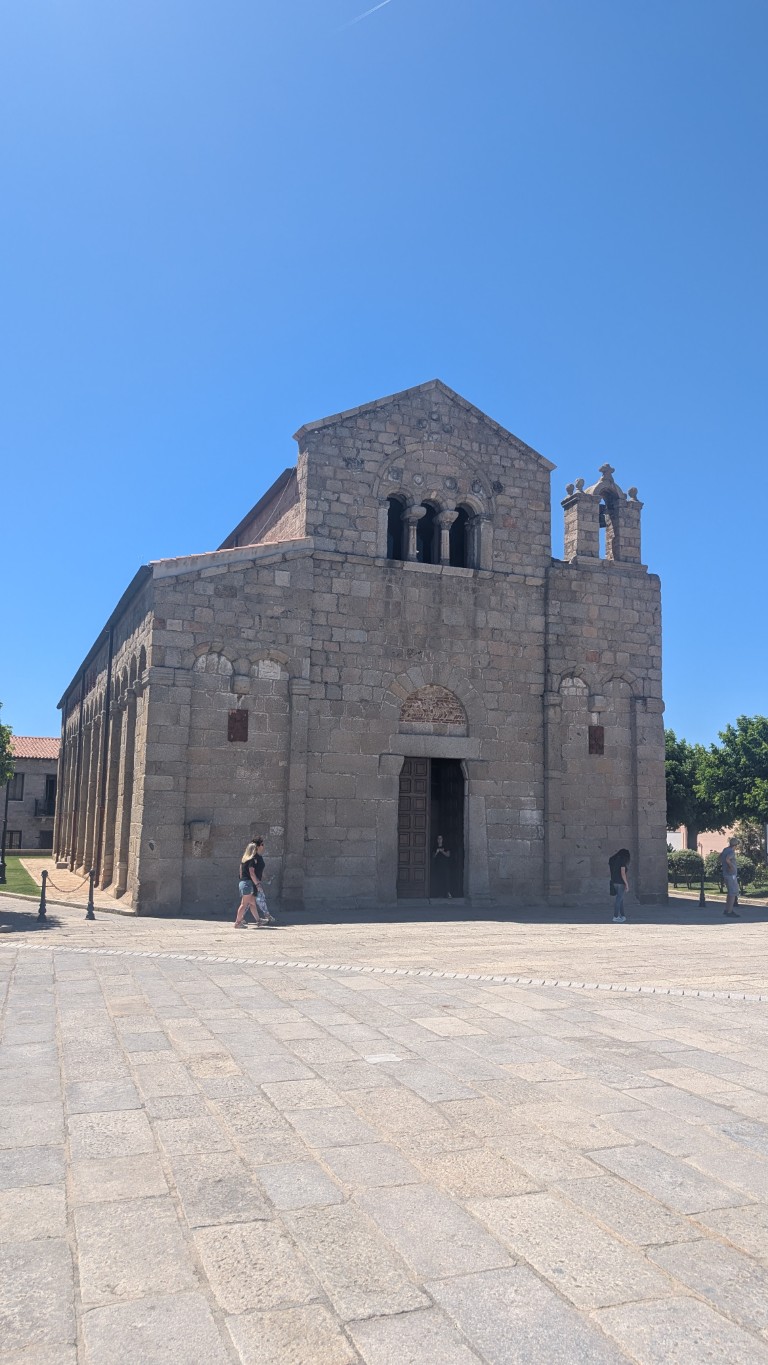
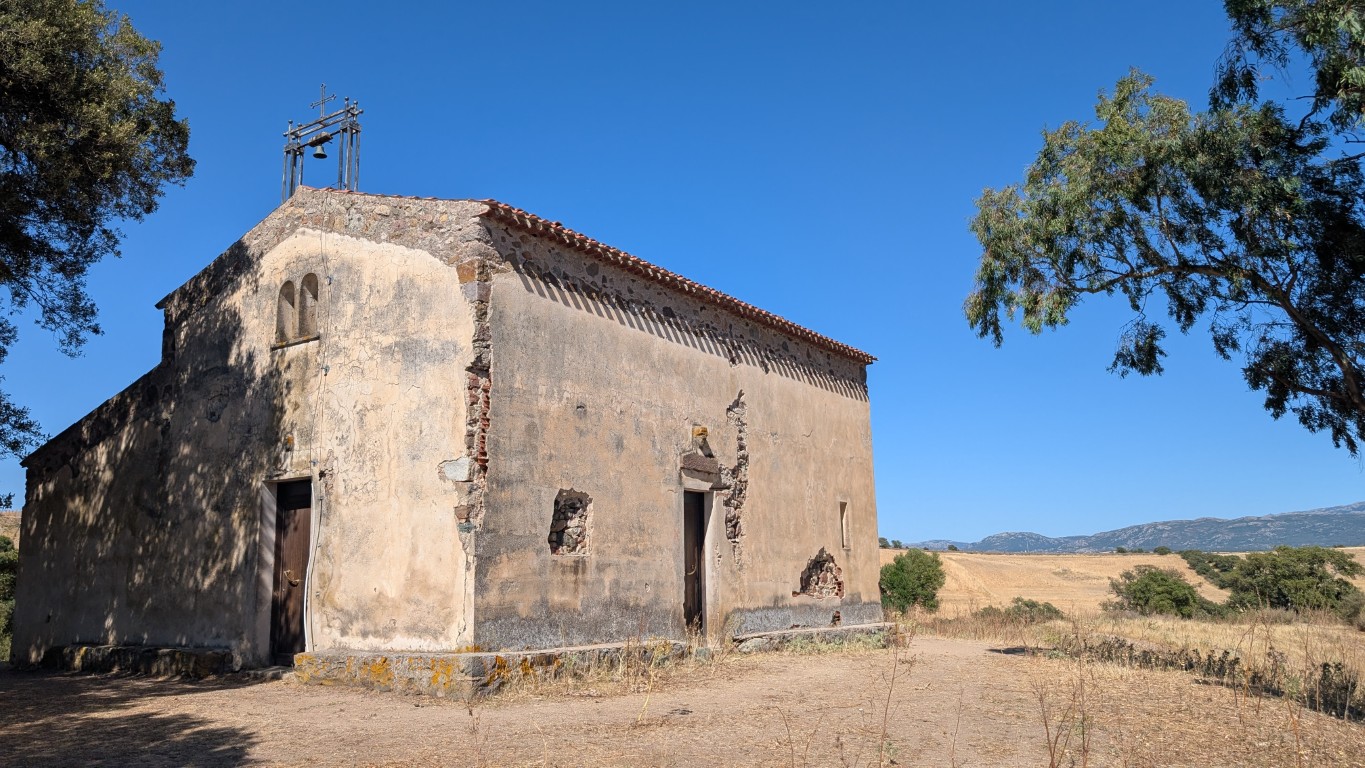
The Church of Santo Stefano, located opposite the rock formation, adds another layer. It seems like a later attempt to integrate the site into a new religious system – without, however, completely displacing the older meanings.
And so Santo Stefano remains a place of unanswered questions.
Was the large rock slab a cult altar? An astronomical instrument? A ritual meeting place? Or something that completely defies our current categories?
Perhaps this very ambiguity is its true meaning.
The language of stone
Those who visit the Sito rupestre di Santo Stefano do not experience a complete historical account, but rather a fragment of time itself. Here, no monument speaks in clear pronouncements. Instead, the stone tells its story through hints, forms, and absences.
Between Domus de Janas, rock carvings and the silent presence of the landscape, a space is created where history does not end, but continues to flow.
And perhaps that is precisely the true message of this place:
That some answers don't want to be found – but rather continue to live on in the stone.