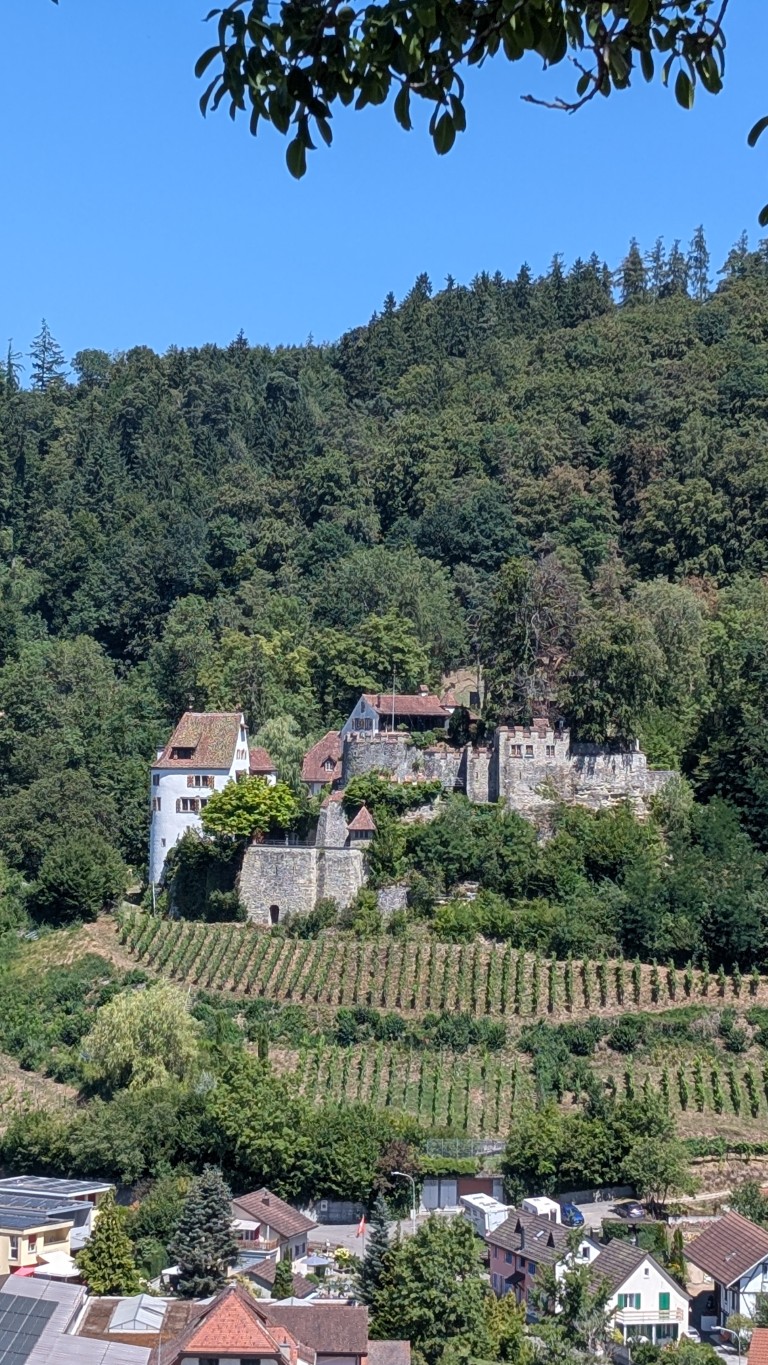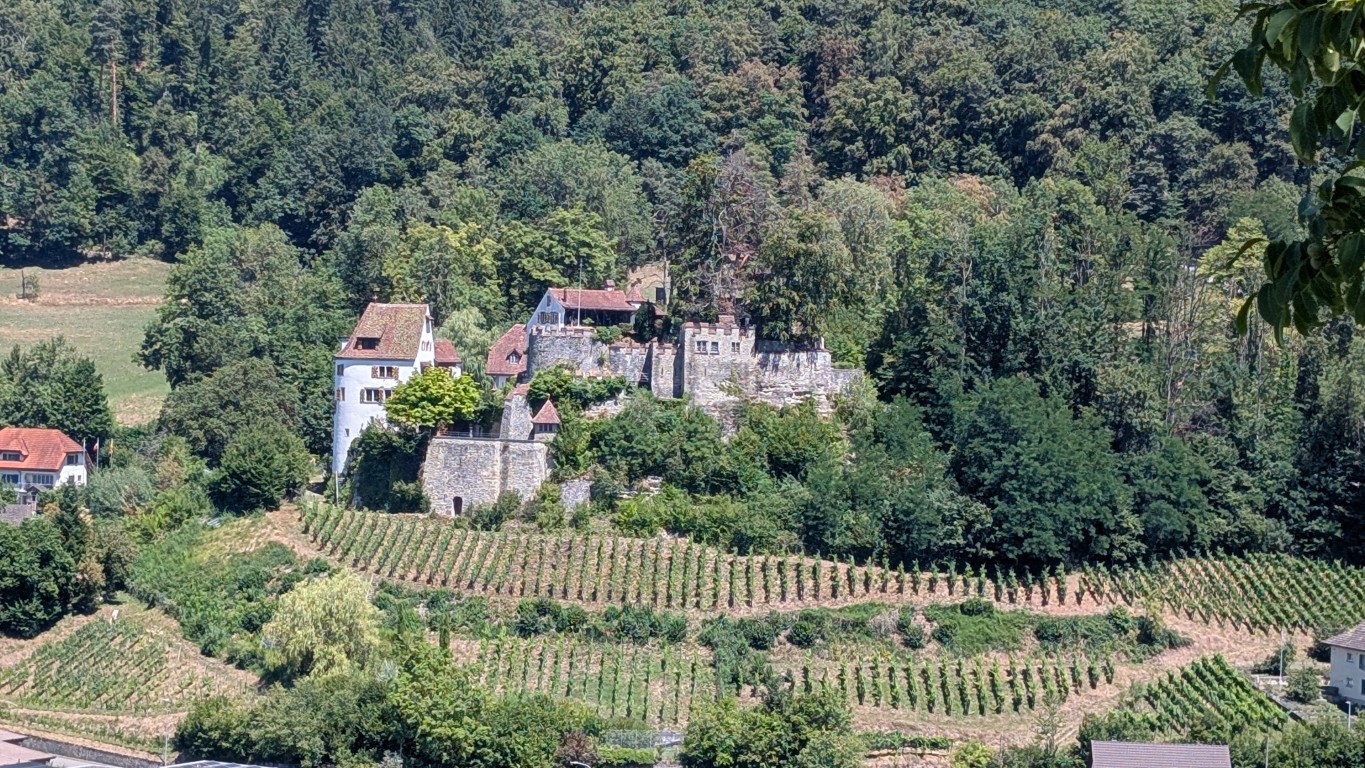
High above the village of Teufenthal in the canton of Aargau, Trostburg Castle rises on a rocky outcrop some 40 meters high. Nestled in a side valley of the Wyna River, it is one of Switzerland's lesser-known castles, yet it boasts a rich history spanning over 800 years. Besides its historical significance, mysterious legends surround the ancient castle, lending it a special allure that endures to this day.
The history of Trostburg
The origins of Trostburg Castle date back to the 12th century. It was first documented in 1241 as the seat of the Lords of Trostburg. This ministerial family initially served the Counts of Kyburg and switched to the Habsburgs in 1264.
Just a few decades after the construction of Trostburg Castle, a branch of the family built nearby Liebegg Castle, located only about half a kilometer away. After the Trostburg line died out, the castle passed into the possession of the Lords of Reinach in 1346. From there, they administered a small lordship with lower jurisdiction over what are now the municipalities of Teufenthal, Boniswil, Dürrenäsch, Hallwil, Leutwil, and Zetzwil.
However, with Bern's conquest of western Aargau in 1415, the decline of the Lords of Reinach's power began. In 1486, Hans von Hallwyl acquired Trostburg Castle. The Hallwyl family sold it to the city of Brugg in 1616, but Bern prevented the growth of the subject city's power, seized the sovereign rights, and sold the castle to private owners.
Around 1750, the medieval complex was expanded into a small residential castle. Trostburg Castle remains privately owned to this day and has changed hands several times over the centuries.
A castle somewhere between a ruin and a residential palace
Only fragments of the original hilltop castle remain today. The most impressive part is the ruin of the keep, whose walls still rise approximately seven meters into the sky. The interior of the tower is filled with rubble and separated from the rest of the complex by an artificial moat.
On the southwest side of the castle courtyard stands the so-called Hallwyl House. It was built in 1494 in the late Gothic style on the site of the former outer bailey. Since 2000, the building has undergone extensive restoration and today stands as an impressive example of late medieval architecture.
As Trostburg Castle is privately owned, it cannot be visited regularly. Nevertheless, it is a striking landmark visible from the surrounding hiking trails and is one of the most beautiful historical buildings in the Wynental valley.
The legend of the little mountain man of Trostburg
Besides its history, Trostburg Castle also lives on in the legends of the Wynental valley. One of the best-known tales tells of a mysterious encounter with a mountain spirit.
About forty years ago – so the story goes – several boys and girls aged ten to fourteen from the Kulmertal valley were playing below Trostburg Castle one summer evening. Near a small beehive, a little mountain spirit suddenly appeared. It cautiously looked left and right, as if to make sure no one was watching.
When the children discovered the small figure, they were seized with great fear. Terrified, they ran home and told their parents about the mysterious being. That same evening, adults searched the spot, and even the pastor climbed the castle hill early the next morning to try and find the little mountain man again. But the mysterious figure remained missing and was never seen again.
The legend reflects old folk beliefs that mountain gnomes were guardians of hidden treasures or mysterious inhabitants of remote places. Old castles, ruins, and wooded hills provided the ideal setting for such tales. Whether the mountain gnome actually appeared or whether children simply let their imaginations run wild remains an unsolved mystery to this day.
A hidden gem in the Wynental valley
Trostburg Castle may not be one of Switzerland's major tourist attractions, but its tranquil location and long history lend it a special charm. Nestled between medieval walls, the late Gothic Hallwyl House, and the mysterious legends of the Wynental valley, a fascinating picture emerges of a castle that intertwines past and legend.
Anyone hiking through the Wynental valley and glancing towards Trostburg Castle will discover not only a significant cultural monument of the Canton of Aargau, but also a place where history and folklore remain closely intertwined. Perhaps one might recall the shy little mountain spirit who is said to have once emerged from behind a beehive – and who has never been seen since.