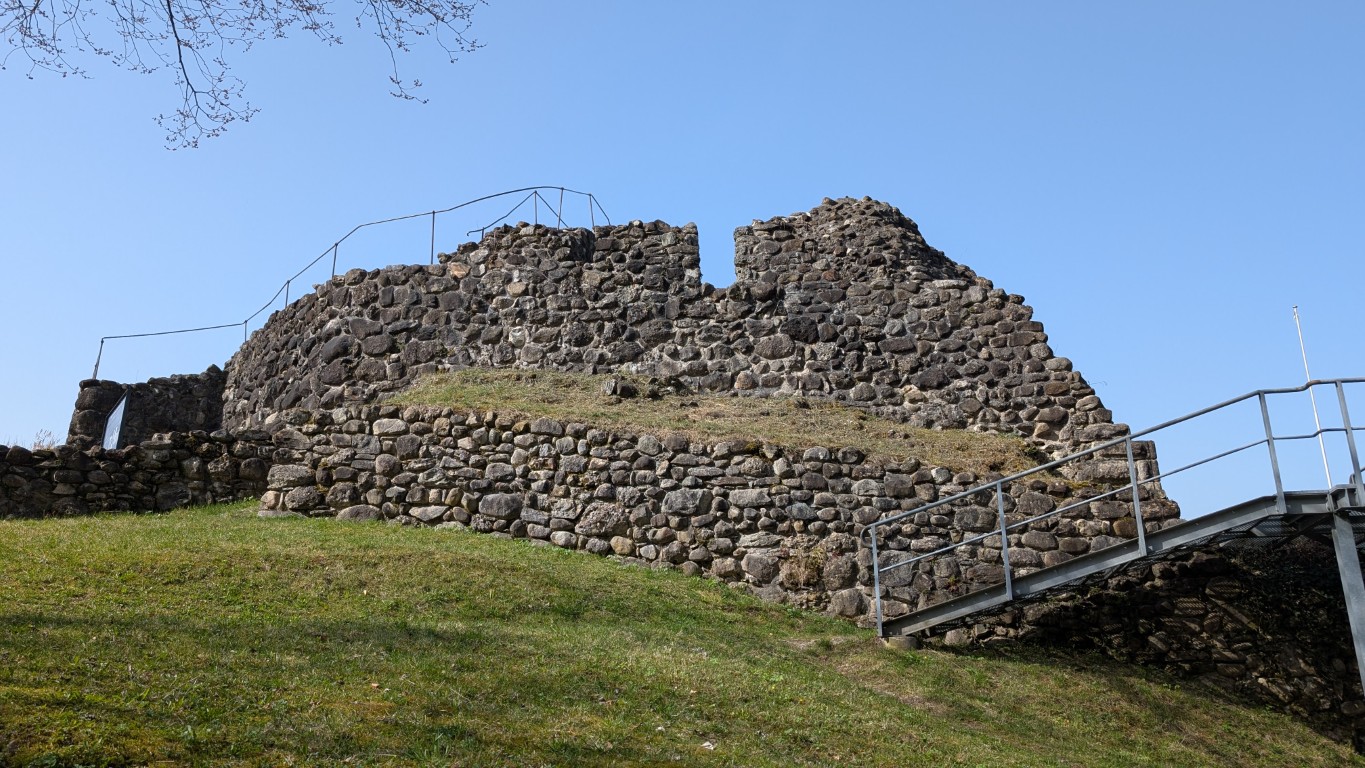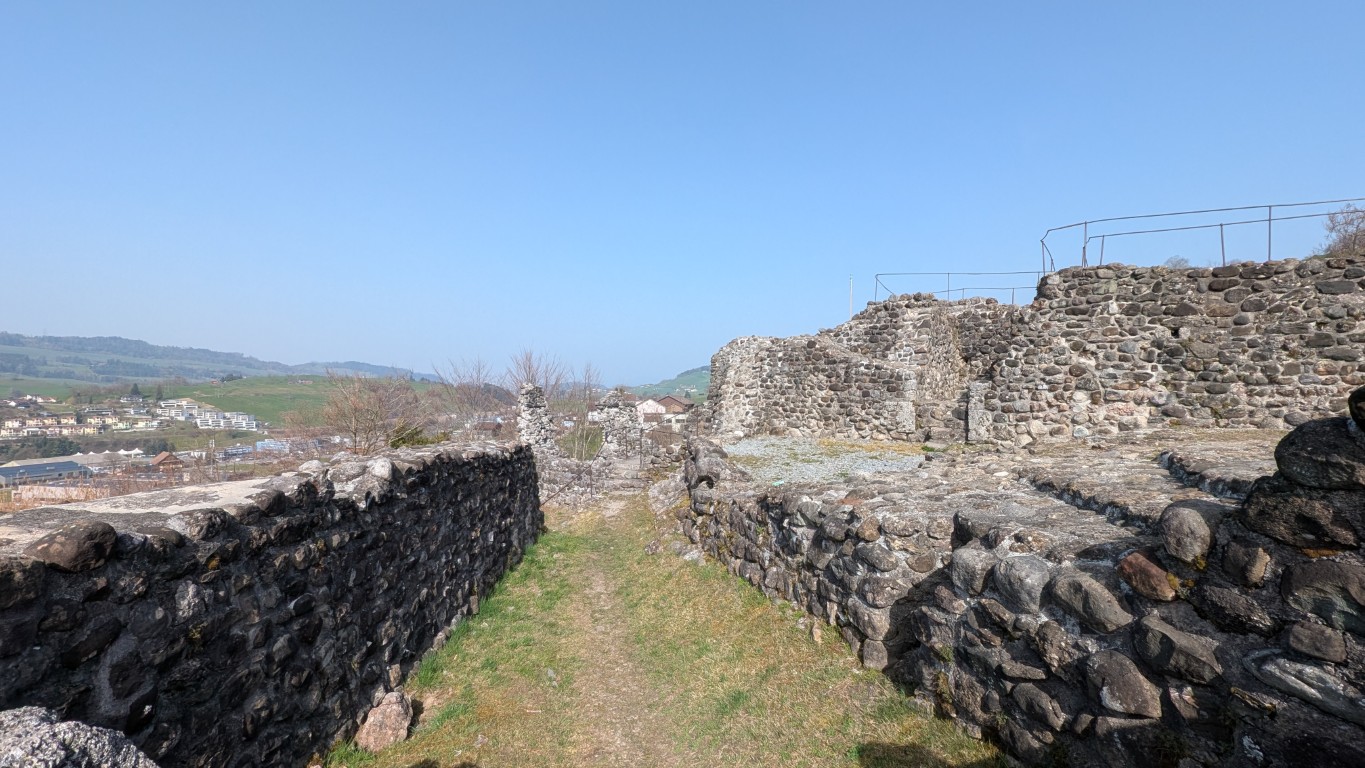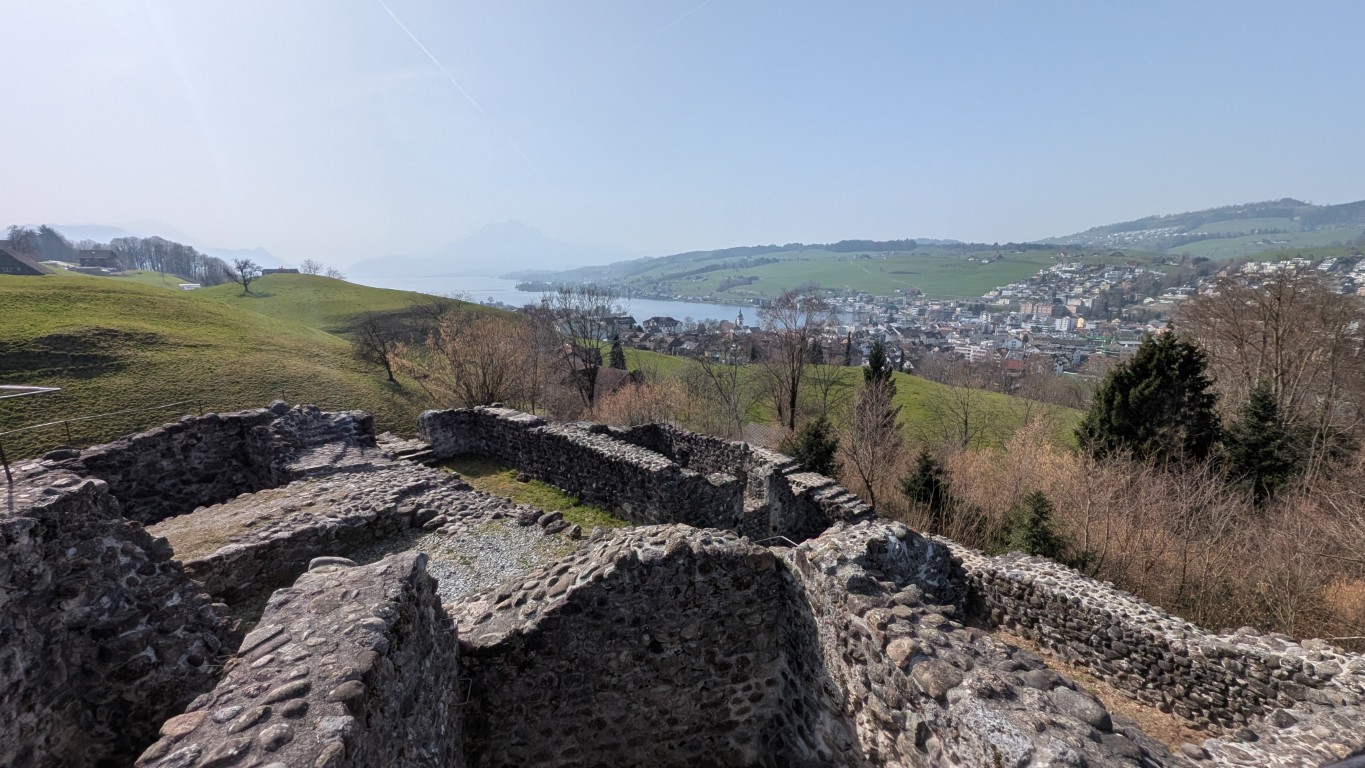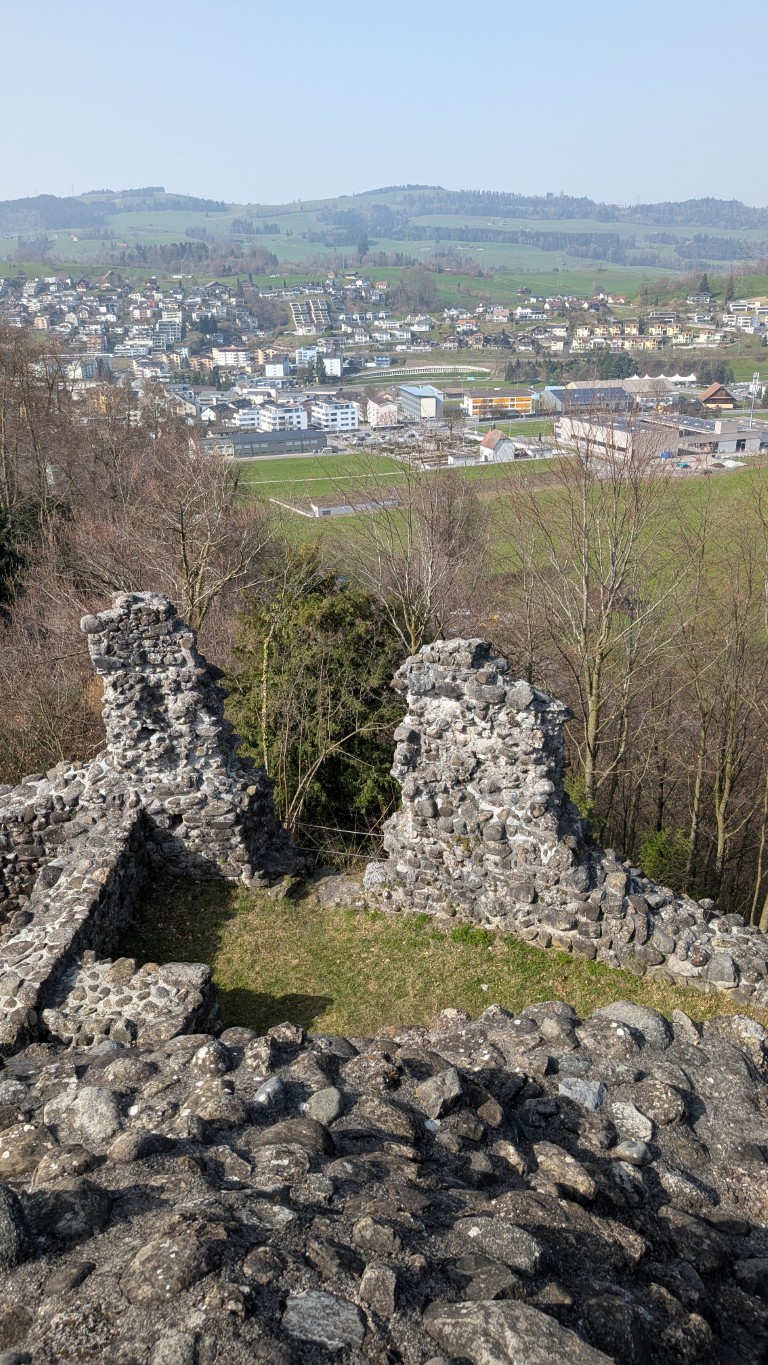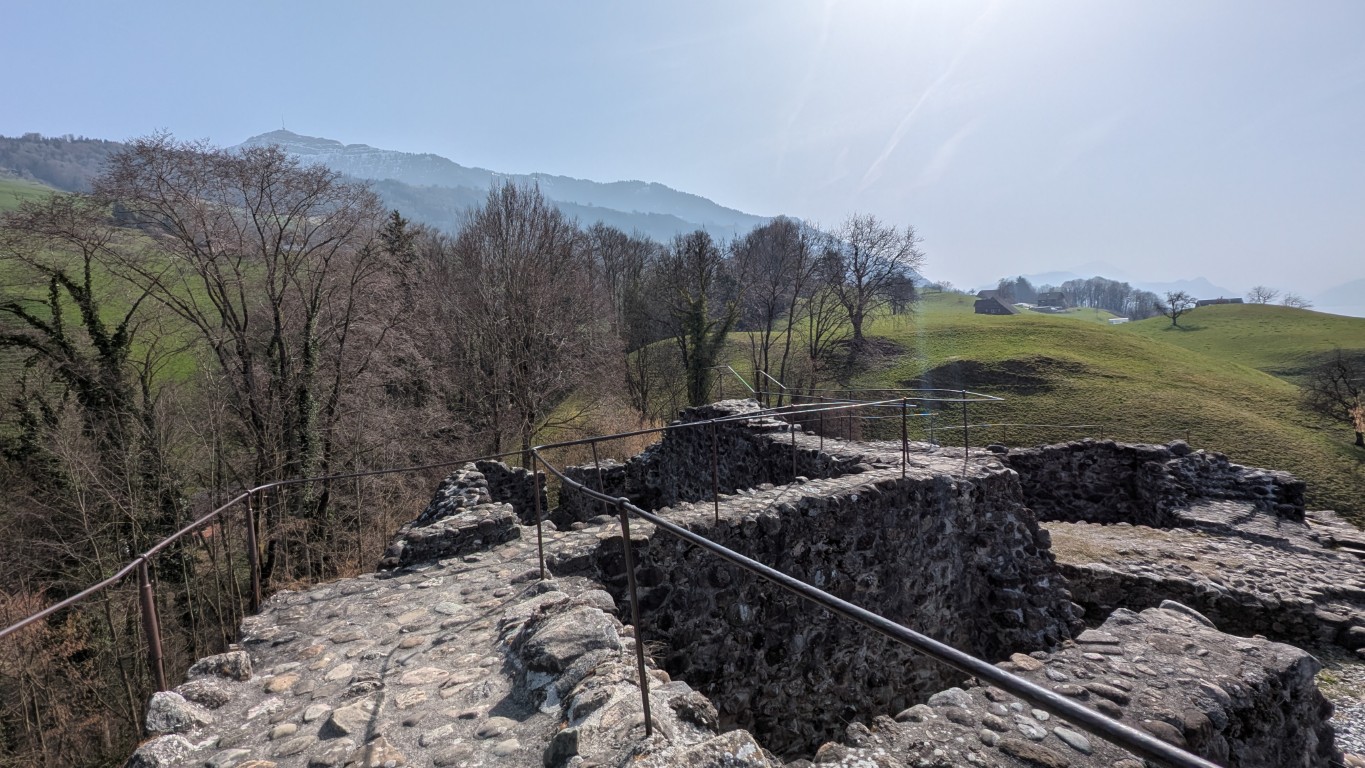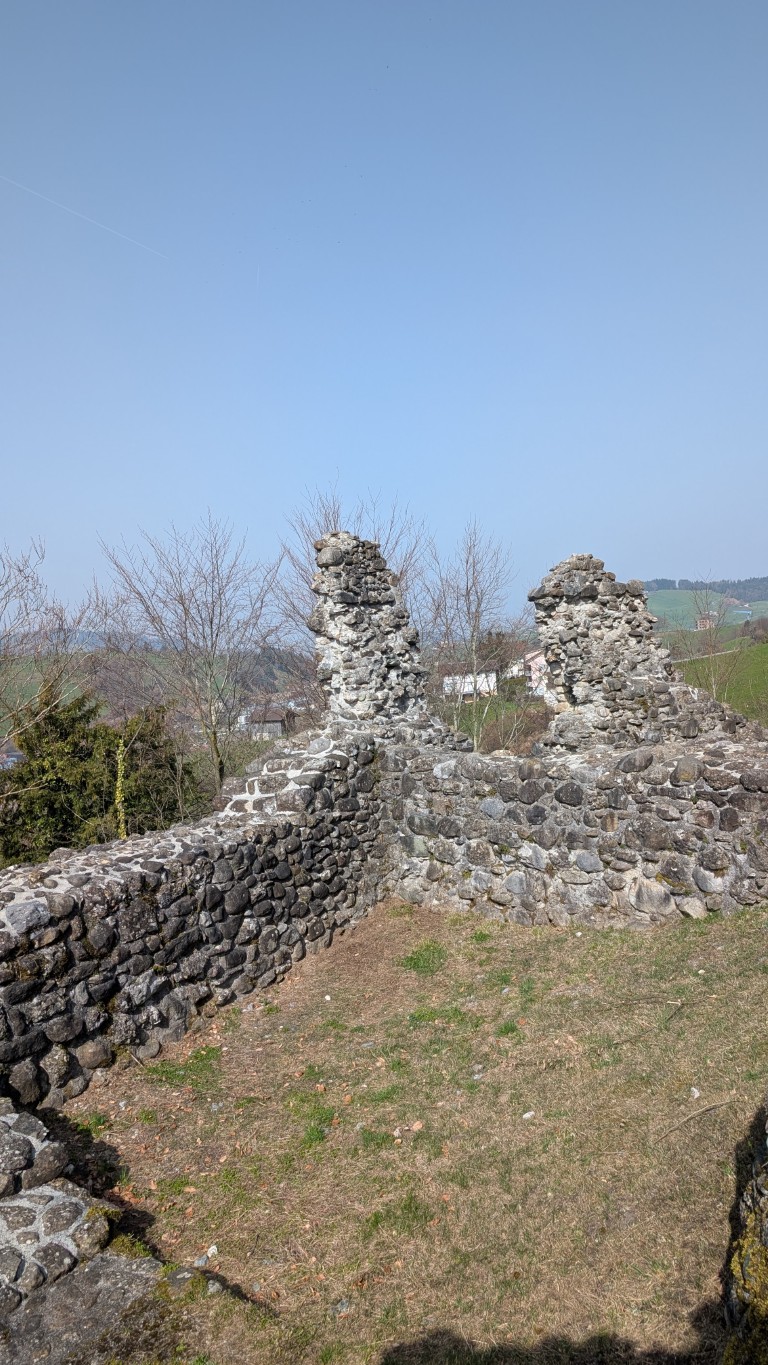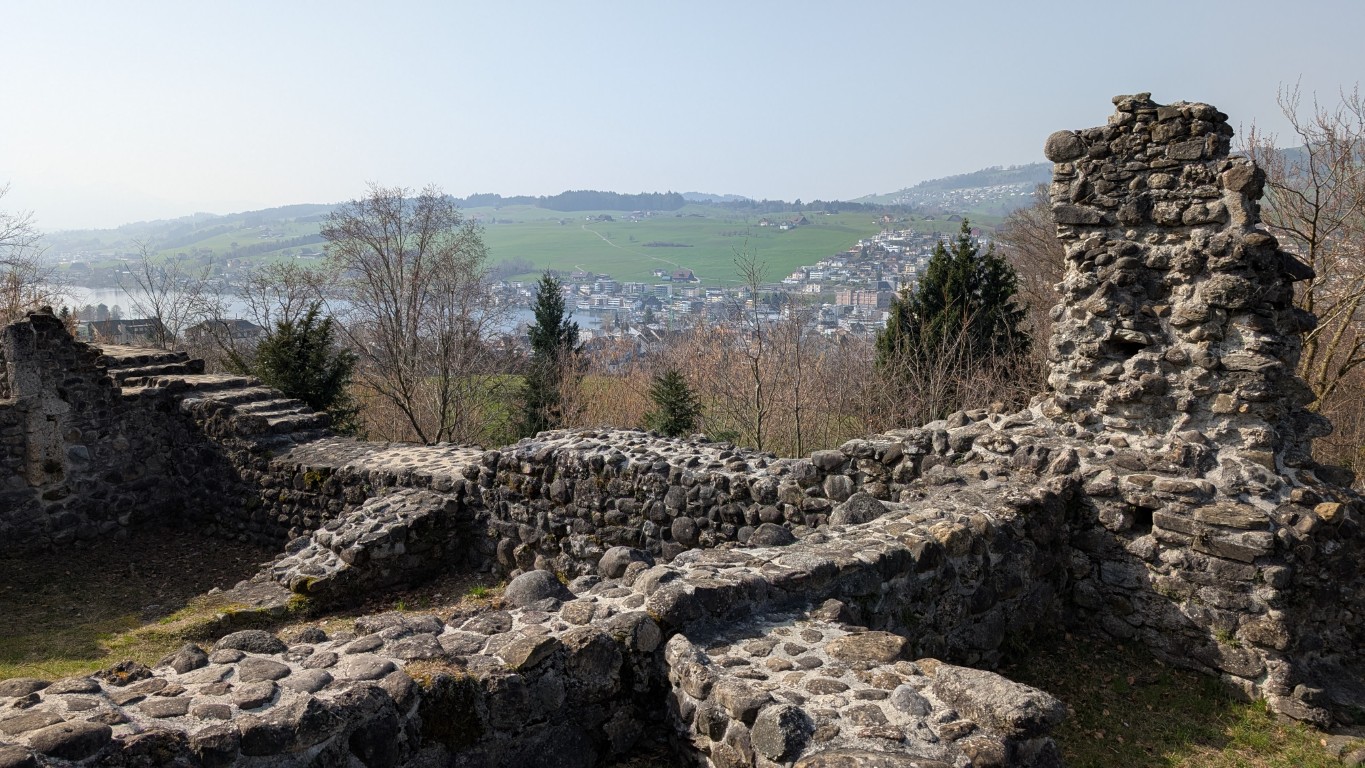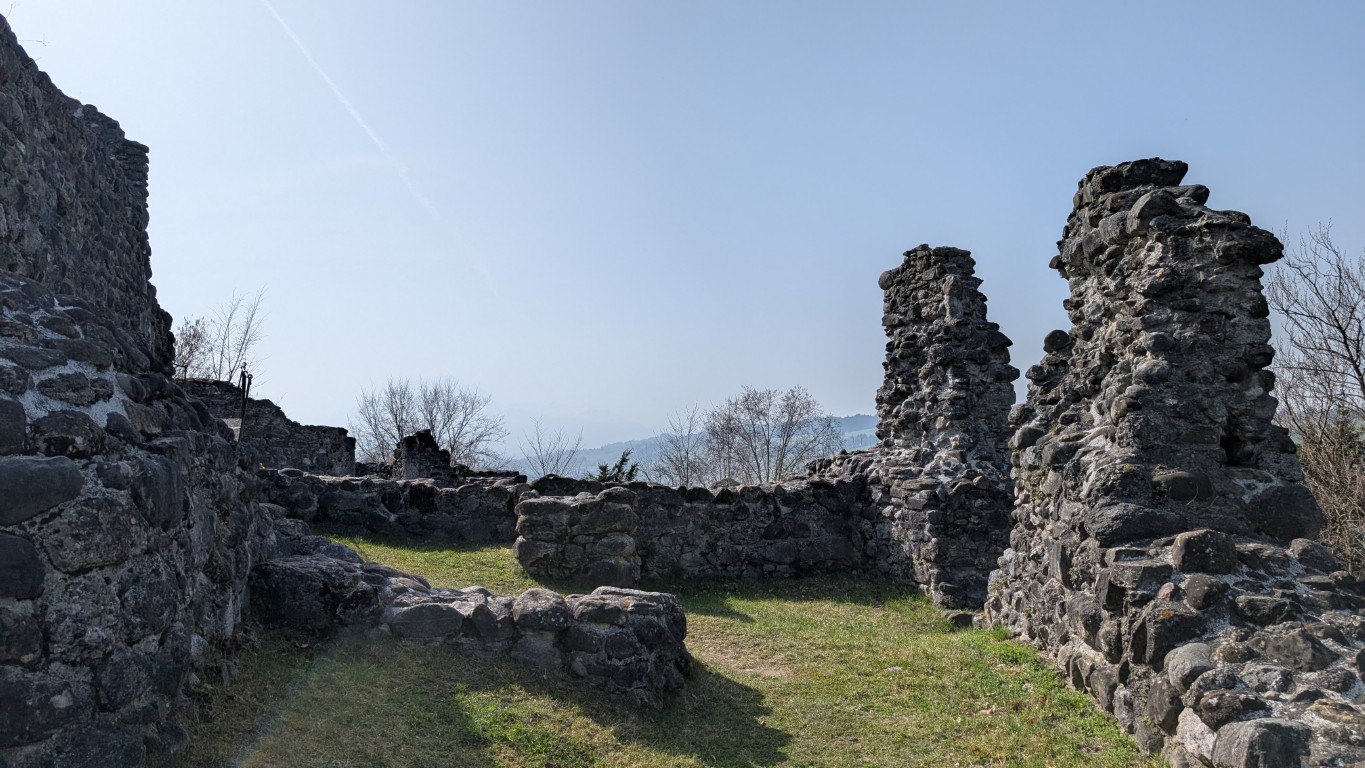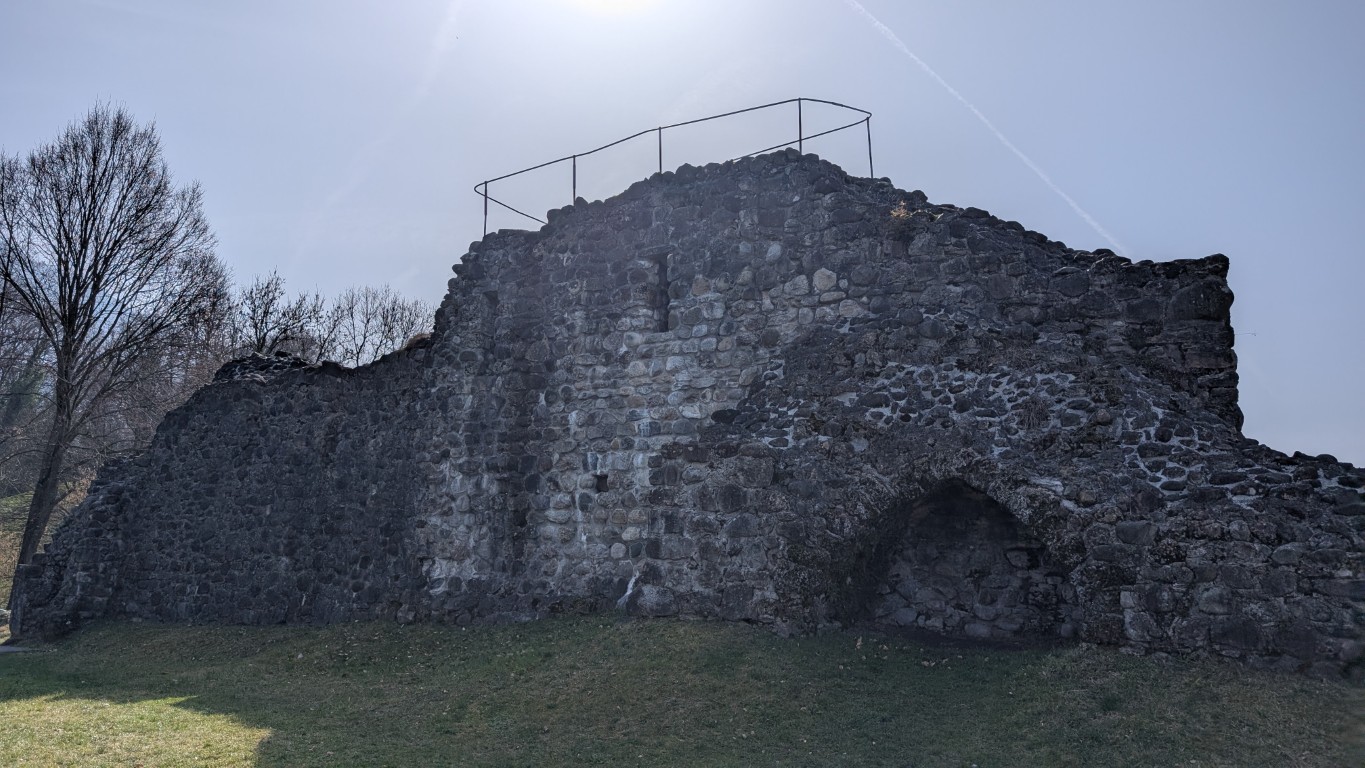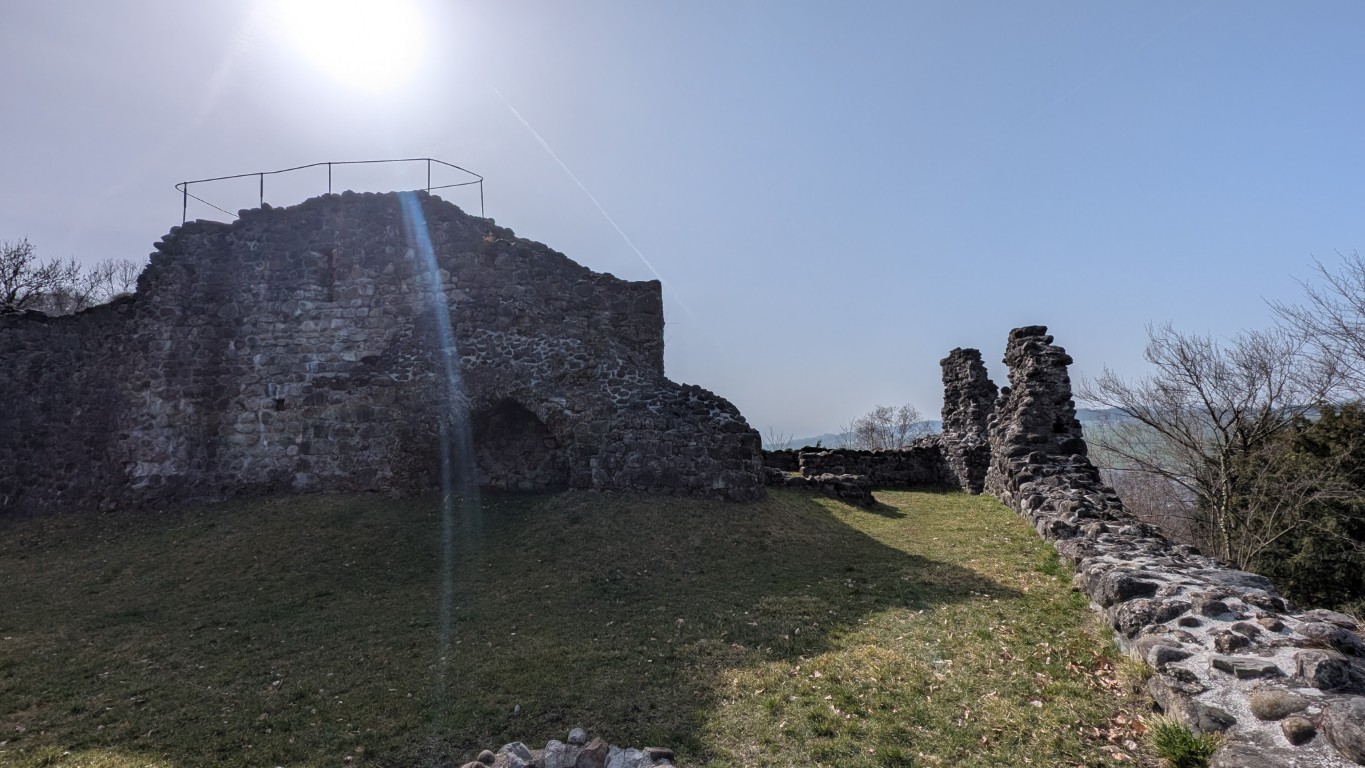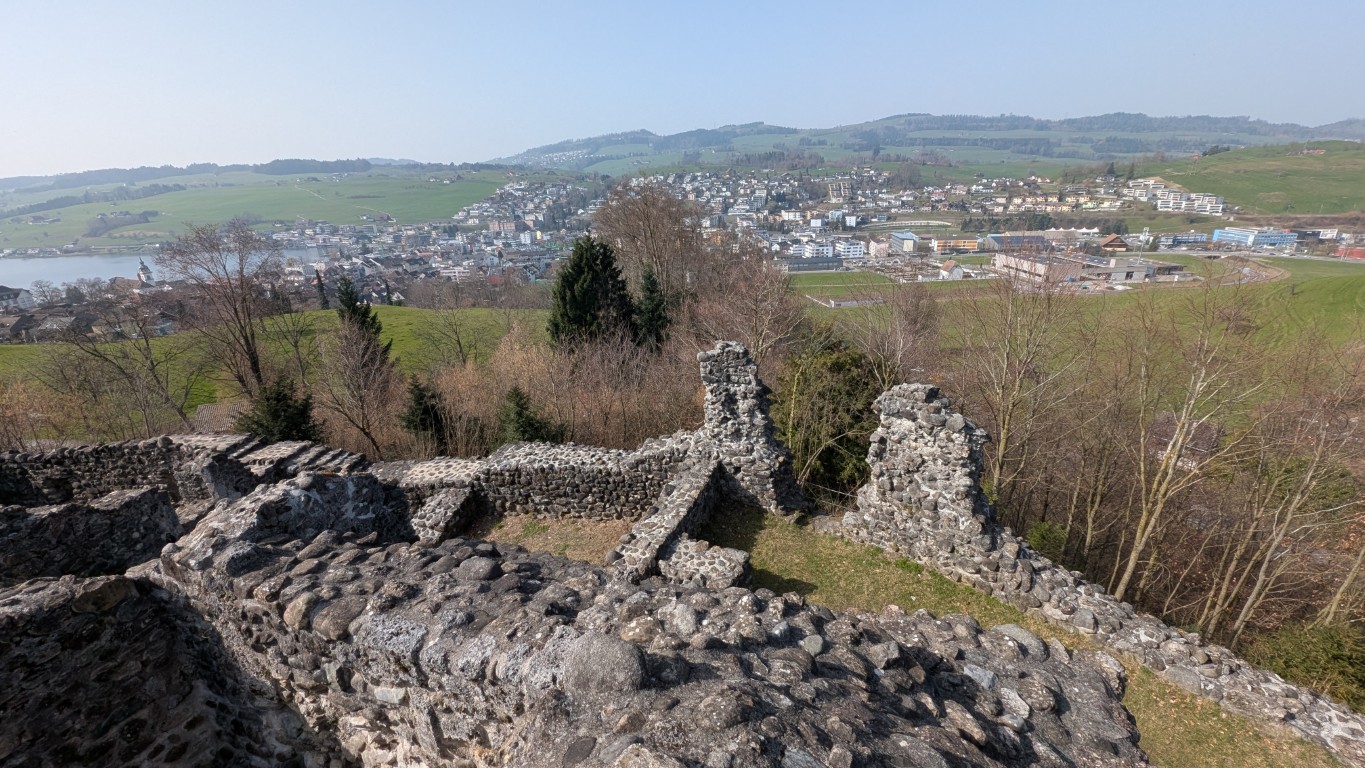
High above the village of Küssnacht, the ruins of Gesslerburg Castle rise on a small hilltop. Officially, it bears the name Küssnacht Castle , but it became famous primarily through the legend of William Tell . Together with the nearby Hohle Gasse (Hollow Way) , it is one of those places inextricably linked to the history of Swiss freedom. The chronicler Aegidius Tschudi wrote in the 16th century that the Habsburg governor Hermann Gessler resided here – the very tyrant who, according to legend, was shot by William Tell in the Hohle Gasse.
A castle above the village stream
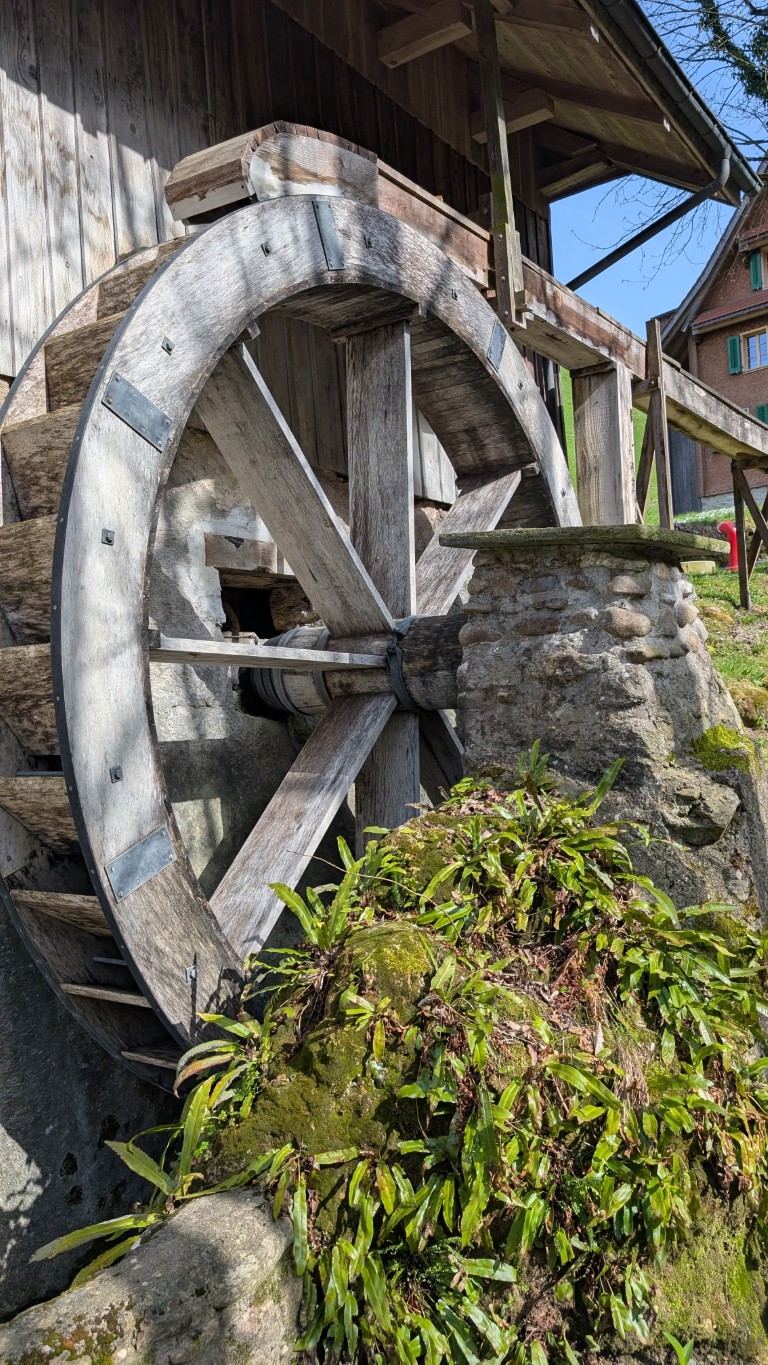
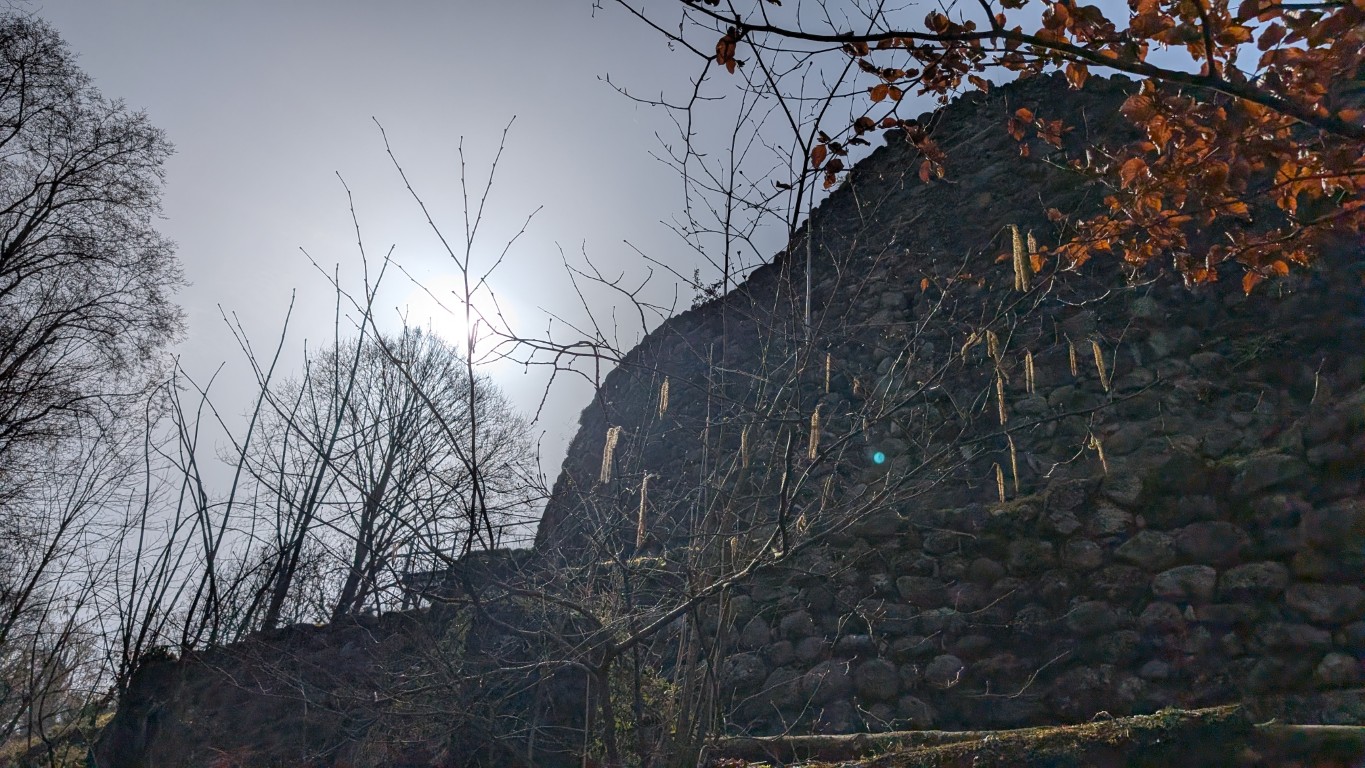
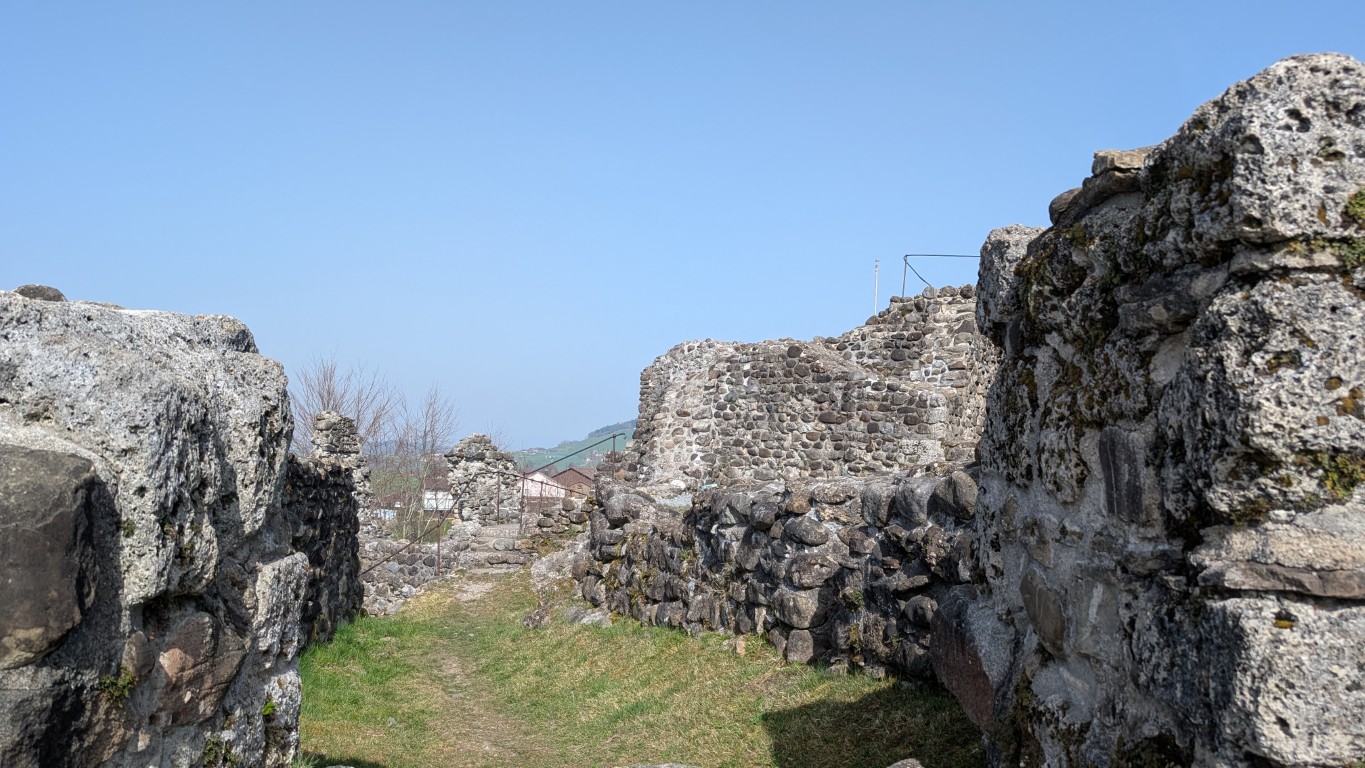
The ruins lie east of the village of Küssnacht, above the village stream that flows from the Seebodenalp down to Lake Lucerne . A short path leads up to the castle site from the so-called " bone mill ," a former factory building with a waterwheel on the stream. Today, only walls and foundation remnants protrude from the wooded hill – but the location clearly shows that the complex once controlled access to the village and the important trade route between Lucerne and Zurich.
Early History
Surprisingly little is known about the origins of the castle. Archaeological evidence suggests that a fortified structure already existed in the Early Middle Ages. A nobleman named Recho, who donated property in Küssnacht to the monastery in Hof, Lucerne , is recorded as having done so in the second half of the 9th century. This property likely included a castle.
The first reliable documentary mention dates from 1263 with the words "in castro nostro Chüssenach" . A few decades later, Küssnacht was acquired by the Habsburg King Rudolf I of Habsburg through purchase. The castle was subsequently administered by Habsburg bailiffs who called themselves "Edle von Küssnach".
Knights, taxes, and conflicts
In the early 14th century, Knight Eppo II served as bailiff. He demanded taxes, levies, and forced labor from the population, which led to tensions. In 1302, a dispute even erupted in which the bailiff is said to have nearly lost his life. The lords of the castle also profited from tolls on the trade route between Lucerne and Zurich.
Archaeological finds show that the inhabitants were wealthy and participated in knightly life. Tournament equipment and other objects suggest that they belonged to the regional nobility. However, with the death of Knight Hartmann von Küssnacht around 1352, the male line of the family became extinct.
Destruction and Change
The castle was probably partially destroyed in the 14th century. Traces of fire suggest that it may have been damaged during a feud between Zurich, the Swiss Confederation, and Austria. The structure was subsequently rebuilt in a modified form.
In the 15th century, it served as the residence of the von Silenen family. After the death of Kaspar von Silenen in 1517, the castle passed to the canton of Schwyz. Without continuous use, it slowly began to decay – a process that lasted for several centuries.
From decay to national memorial site
In 1908, the Swiss Confederation purchased the ruins at the initiative of Federal Councillor Josef Zemp . The site was to be preserved and maintained as a national monument. Under the direction of historian Robert Durrer, the castle was archaeologically excavated until 1916.
Numerous artifacts were unearthed during the excavations. Of particular importance is a great helm from the second quarter of the 14th century, which is now kept in the Swiss National Museum . Further preservation work on the ruins was carried out in the 21st century, most recently between 2018 and 2019.
Castle of history – and legend
Whether the legendary bailiff Gessler actually resided here cannot be historically proven. Nevertheless, the name Gesslerburg has become deeply ingrained in the collective memory – not least through Friedrich Schiller 's drama Wilhelm Tell , which briefly mentions the place.
Thus, the unassuming castle ruins today stand less for its actual history than for one of Switzerland's most famous legends: the resistance against tyranny and the myth of William Tell.