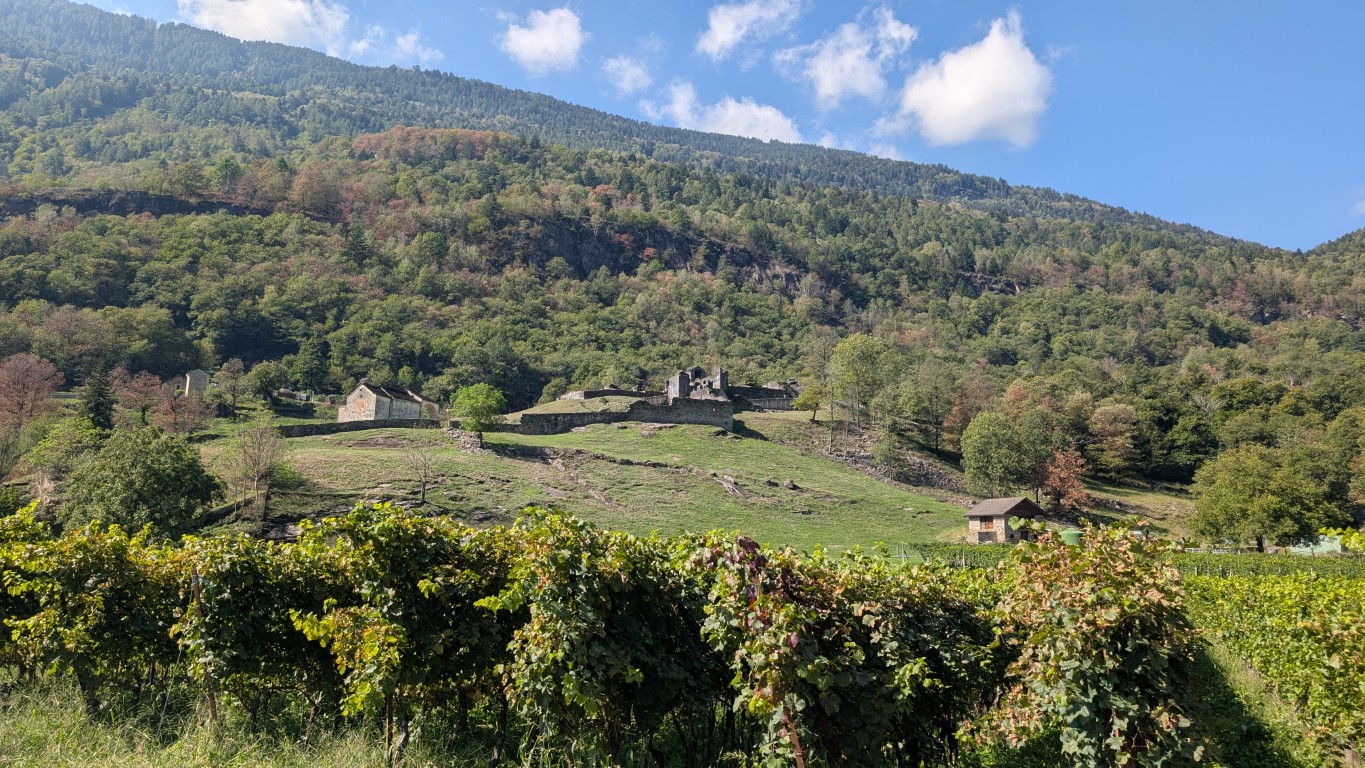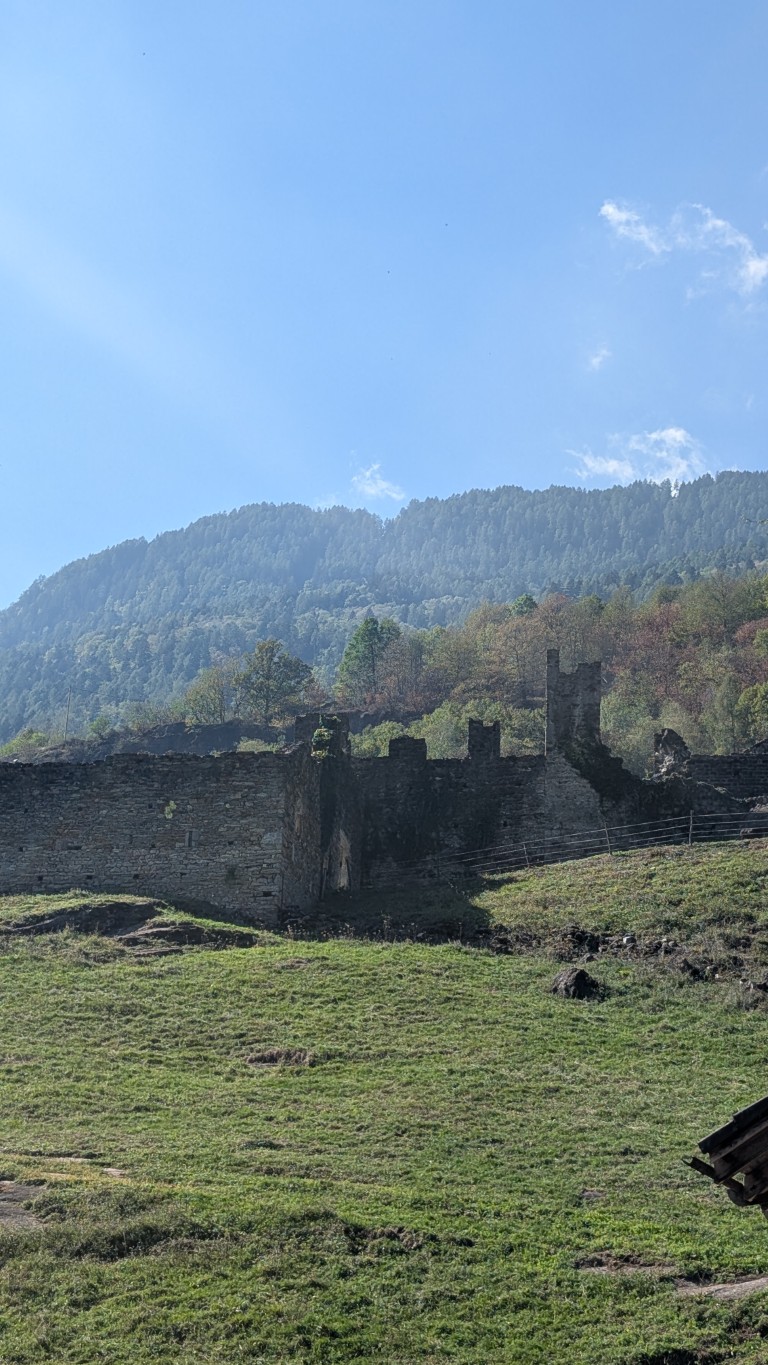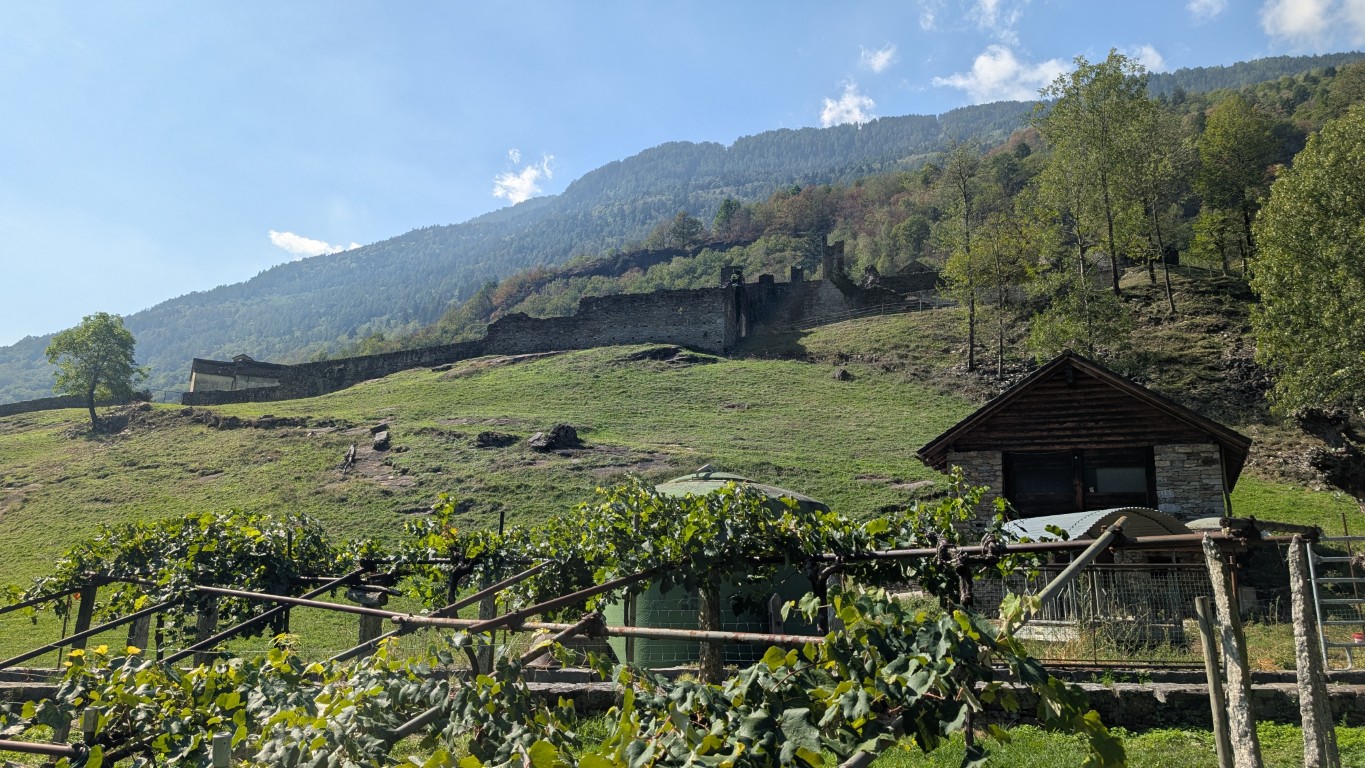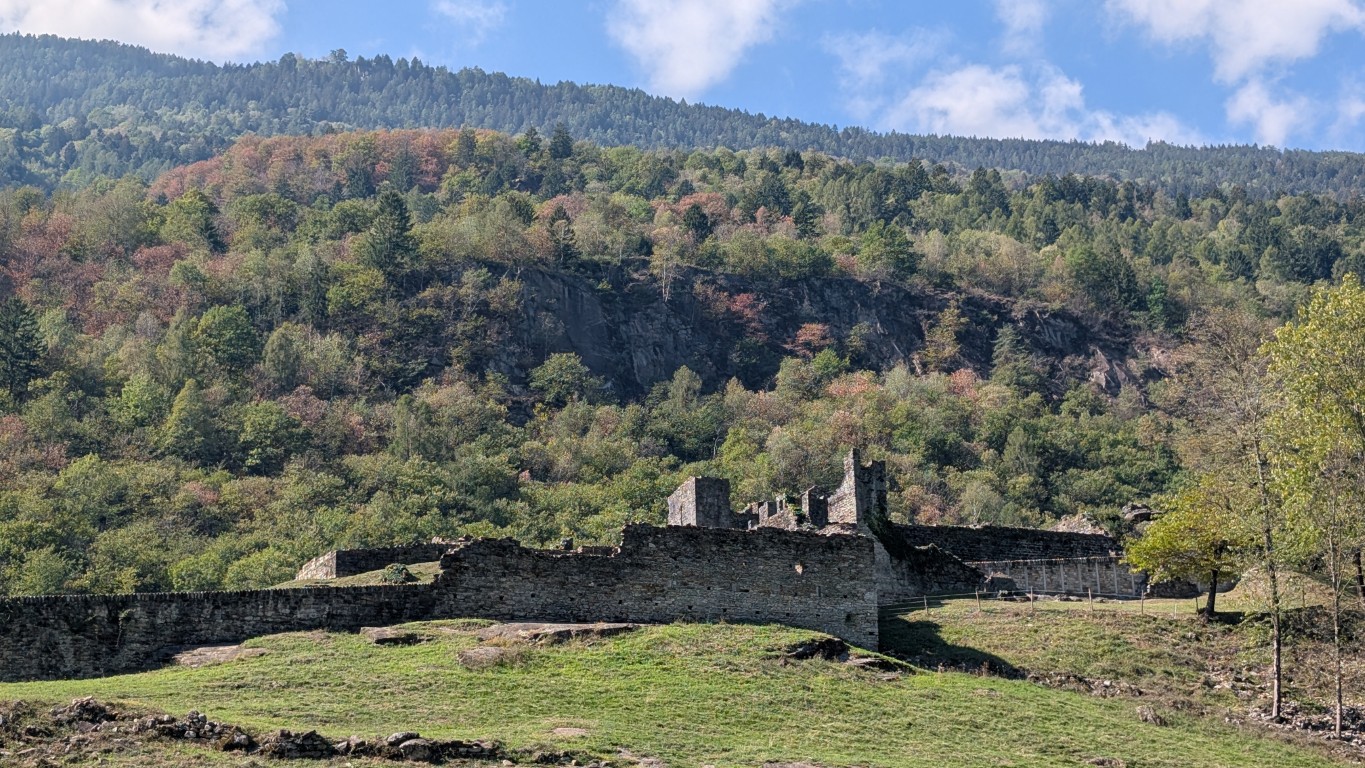
High above the Blenio Valley, north of the small village of Semione, mighty walls rise from the greenery. Little remains of the once imposing Serravalle Castle – and yet, among the ruins, one can still sense the importance this castle once held.
Situated on a broad rocky ridge, Serravalle controlled access to the Blenio Valley and an important route over the Lukmanier Pass. The castle was therefore one of the most important medieval fortresses in the Sopraceneri region.
A castle with a long history
The history of the site stretches far back. Archaeological investigations have dated the first fortified settlement to around the year 900. This early castle was probably destroyed around 1180. A new structure was built on the rocky ridge only about 40 to 50 years later.
In the 12th century, Serravalle became embroiled in the power struggle between the emperor and the Lombard cities. Frederick I Barbarossa played a key role in this conflict. The emperor is said to have stayed at Serravalle for several days in 1176 before the Battle of Legnano, awaiting reinforcements. After his defeat by the Lombard League, the castle was destroyed.
Around 1220/30, the castle complex whose foundations are still visible today was finally built. The Orelli family, later the Counts of Oleggio, and finally the Visconti, were among the ruling families associated with Serravalle. The castle became the political center of the Blenio Valley.
Through the ruins of the castle
Anyone walking through the site today can still appreciate the dimensions of the medieval fortress. The castle consisted of a main castle and an outer bailey. Inside were living quarters and reception rooms, a large courtyard, kitchens with ovens, and a mighty keep.
The remaining foundations are particularly impressive. The keep once had walls more than two meters thick. Remnants of a large colonnade have also survived, giving a glimpse of how grand the complex must once have been.
Archaeological excavations have unearthed numerous artifacts – including Venetian glass, majolica, coins, jewelry, and remnants of wall paintings. These tell the story of a wealthy society strongly influenced by northern Italy. At the same time, arrows, crossbow bolts, and heavy projectiles were discovered: Serravalle was not only a manor house but also a fortified stronghold.
Santa Maria del Castello
The castle grounds also include the small church of Santa Maria del Castello . It is located on the edge of the former outer bailey and is partially integrated into the fortification wall.
A castle chapel is documented as early as the 14th century. However, its current appearance dates primarily from the 16th and 18th centuries. Inside, among other things, are frescoes from 1587. On the exterior facade, a depiction of Justitia serves as a reminder that the area in front of the castle once also served as an execution site.
The uprising of 1402
The most dramatic chapter in the castle's history took place in 1402.
After the Visconti sold their rights in the Blenio Valley to the Pepoli family from Bologna, tensions between the new rulers and the local population intensified. Following the death of Duke Gian Galeazzo Visconti, an uprising finally broke out.
The people from the valley stormed Serravalle Castle. The fortress was systematically destroyed, and its lord, Taddeo Pepoli, was killed. Serravalle was never rebuilt. The massive, fallen blocks of stone that still lie among the ruins today serve as a reminder of this violent destruction.
A legend about the downfall of the castle
Legendary tales surrounding these events have survived to this day. The uprising of 1402 and the death of Taddeo Pepolis are historically documented. However, popular tradition has transformed it into a dramatic story about the liberation of the valley from a hated ruler.
The story goes that the inhabitants of the Blenio Valley could no longer tolerate the rule of the foreign Pepoli family. When the opportunity arose, the entire valley rose up against the castle. The walls, which for centuries had symbolized the power of the lords of the castle, were torn down – stone by stone.
Particularly striking is the idea that, after its destruction, people deliberately ensured that Serravalle could never again become a stronghold of power. The castle was not simply to be conquered, but erased from the landscape.
Whether every detail of this tradition is historically accurate can no longer be determined. However, the events of 1402 themselves are well documented. To this day, the story of the castle's fall is told as a symbol of the population's resistance against the medieval feudal lords.
A quiet place with a great history
Today, Serravalle is a fascinating place for anyone interested in castles, history, and unique landscapes. Where knights, nobles, and soldiers once lived, grasses and shrubs now grow between the ancient walls.
The castle offers a beautiful view over the Blenio Valley. At the same time, it is precisely the combination of nature and ruins that gives the place its special charm.
Here you stand on stones that were already in place when Barbarossa crossed the Alps. You can trace the foundations of the castle that was the political center of the valley in the 13th and 14th centuries – and finally touch the walls that collapsed in 1402 during the uprising of the valley's inhabitants.
Serravalle Castle is therefore much more than a castle ruin. It is a piece of medieval Ticino – and a place where history still seems surprisingly alive among the ancient stones.