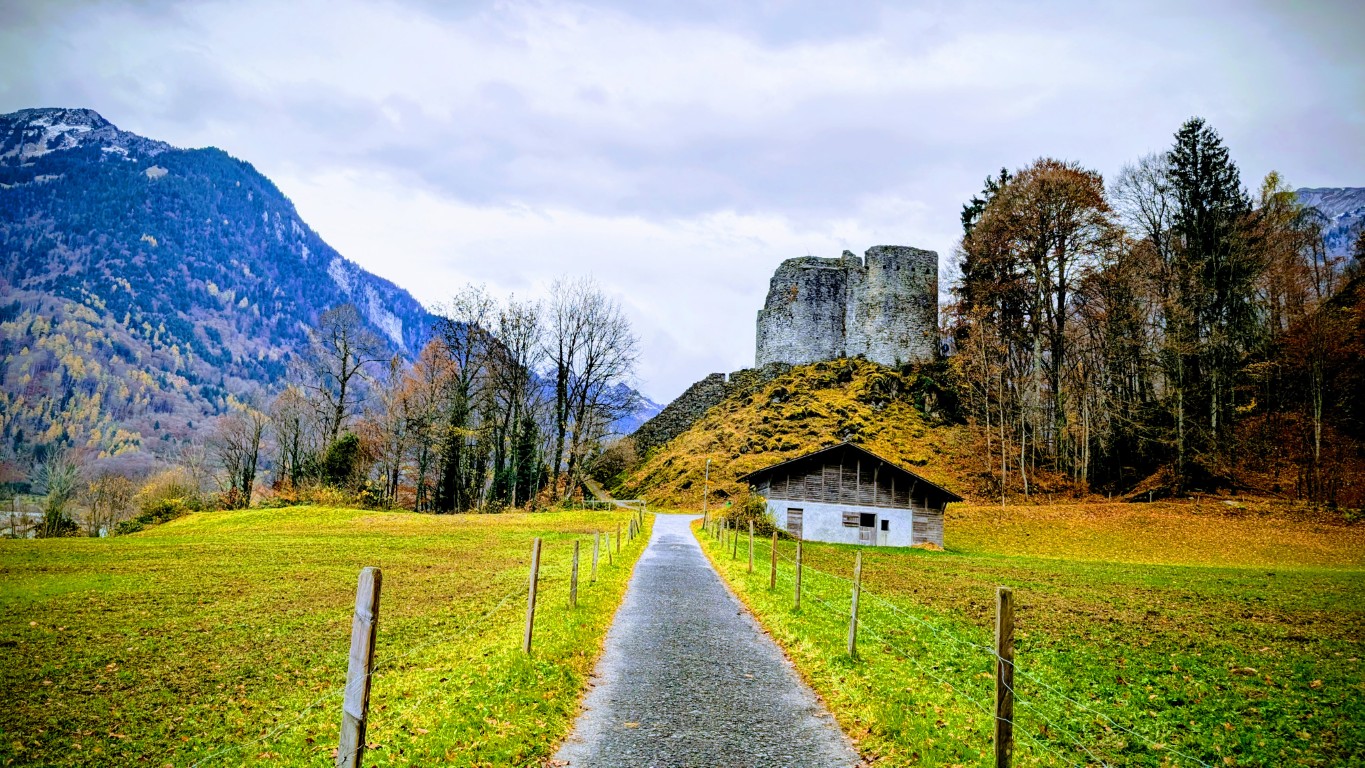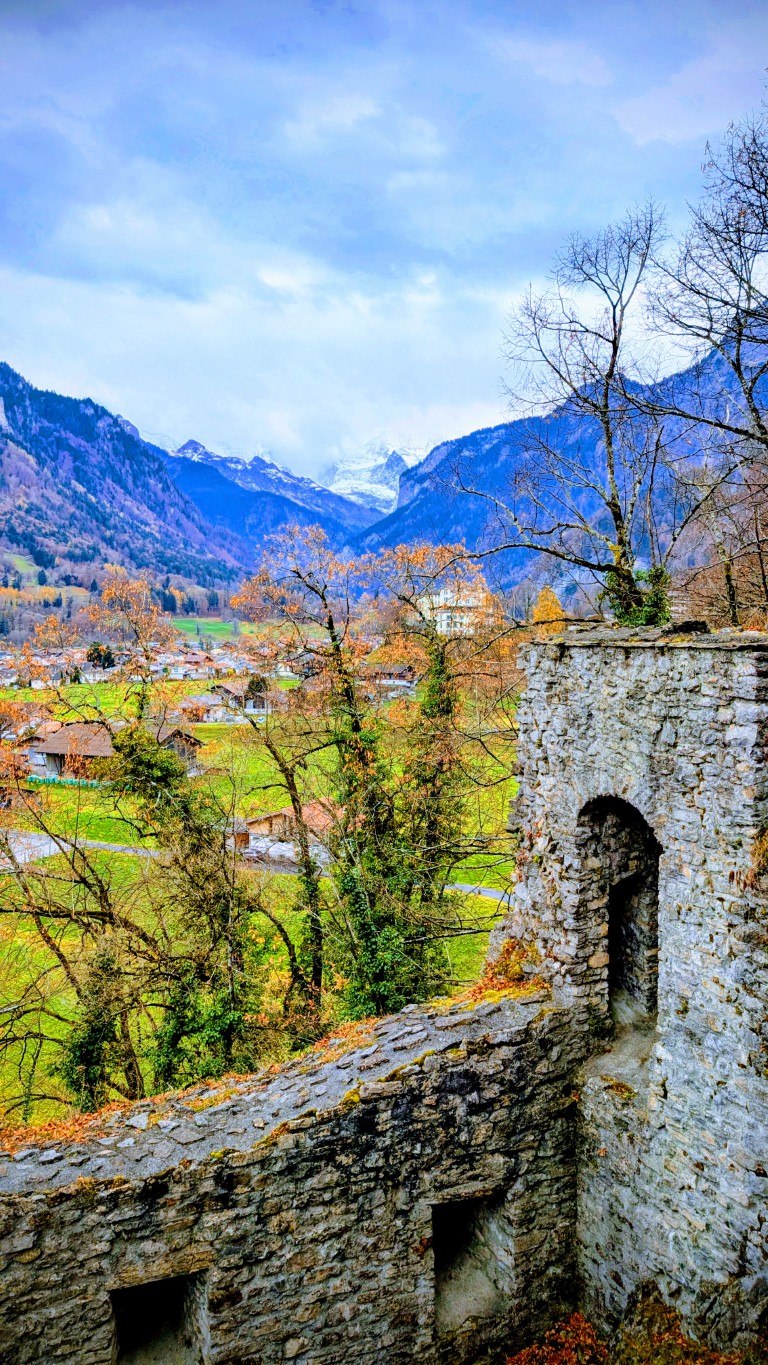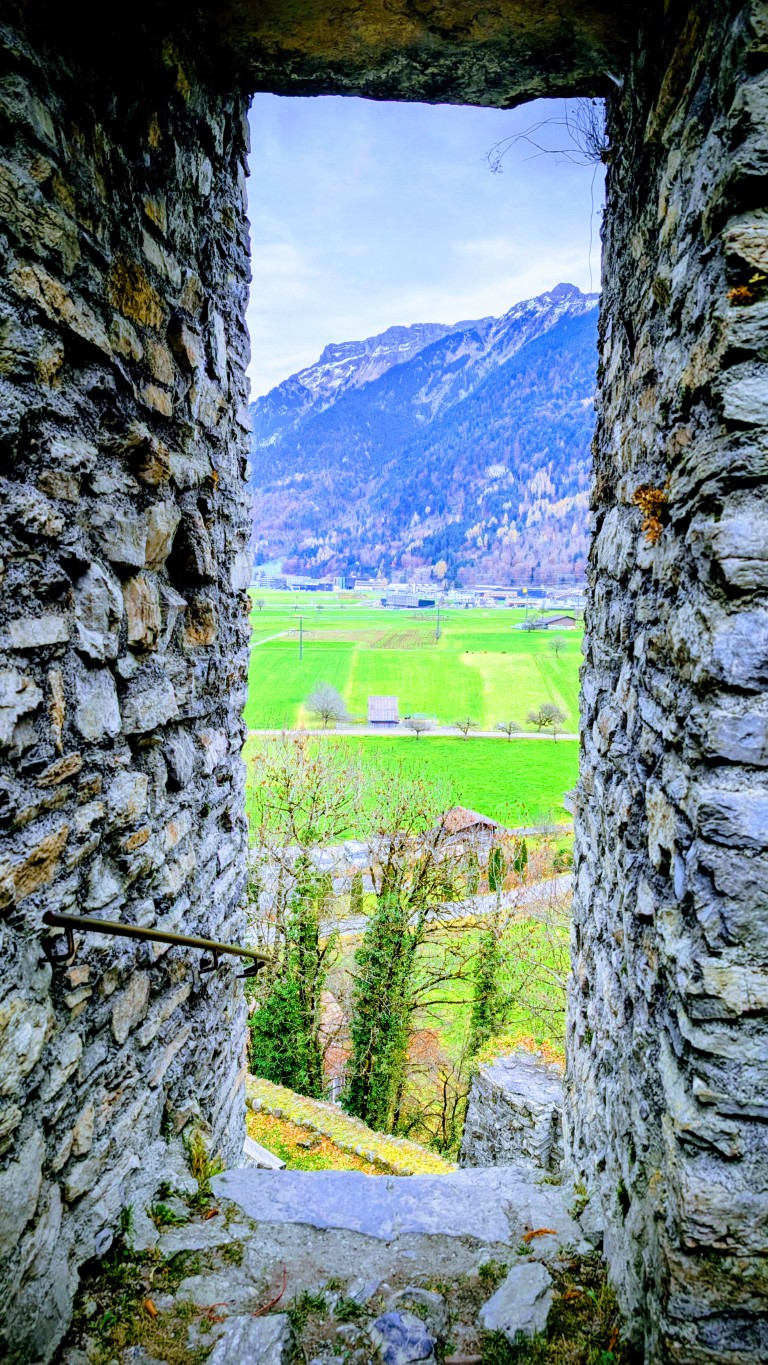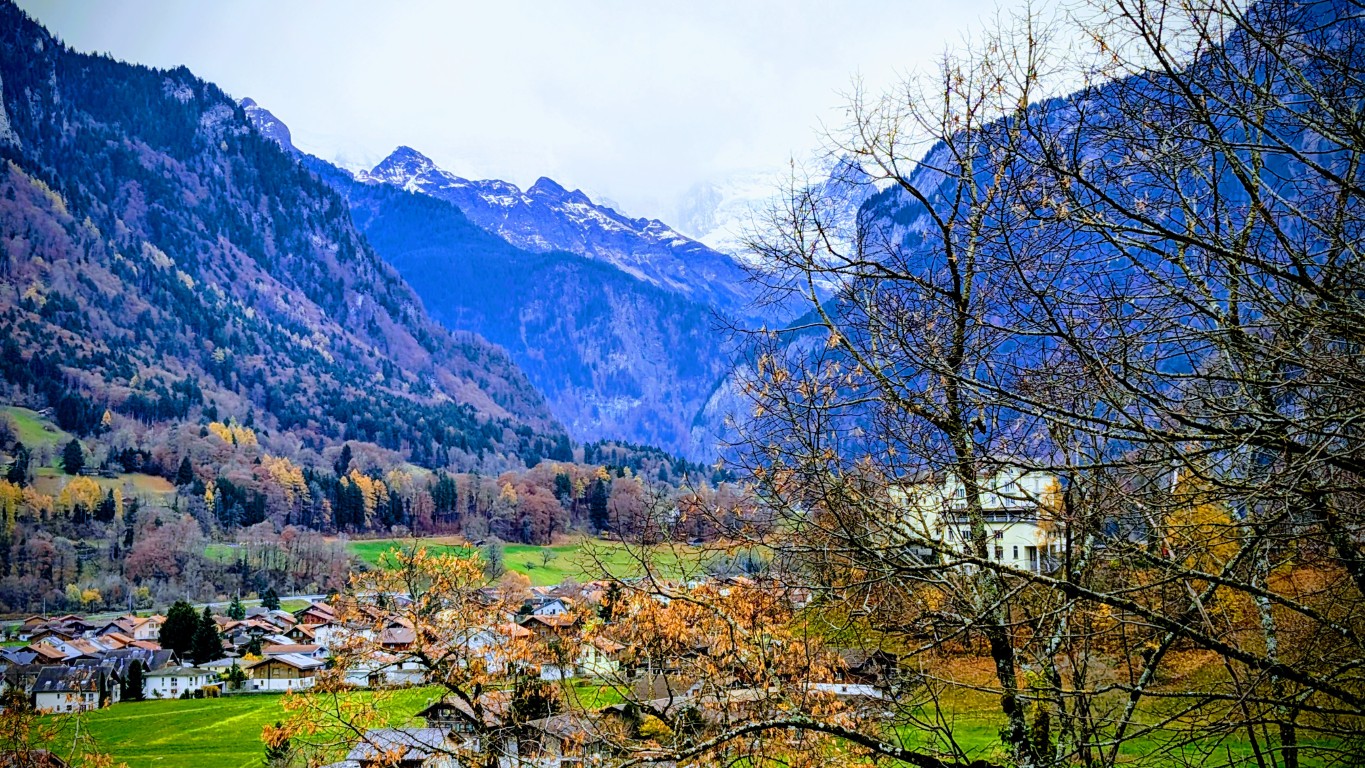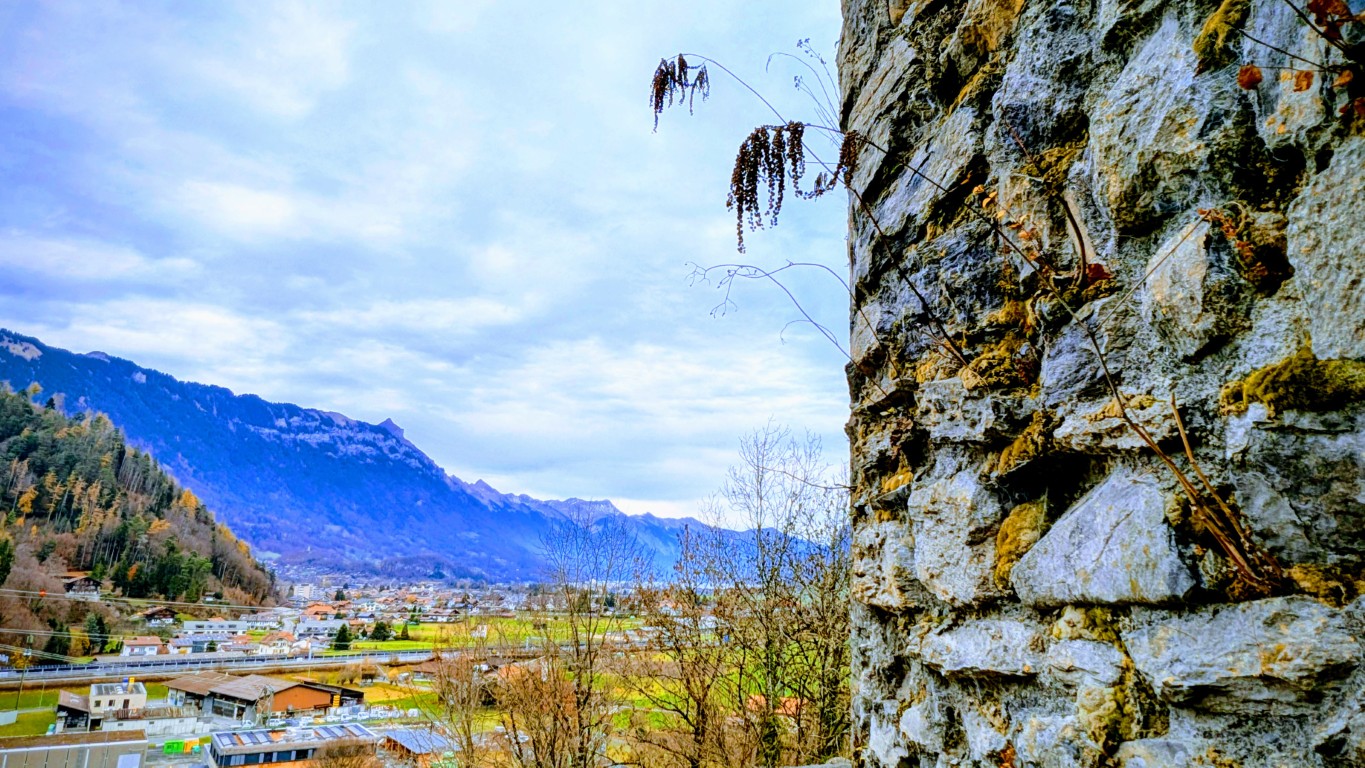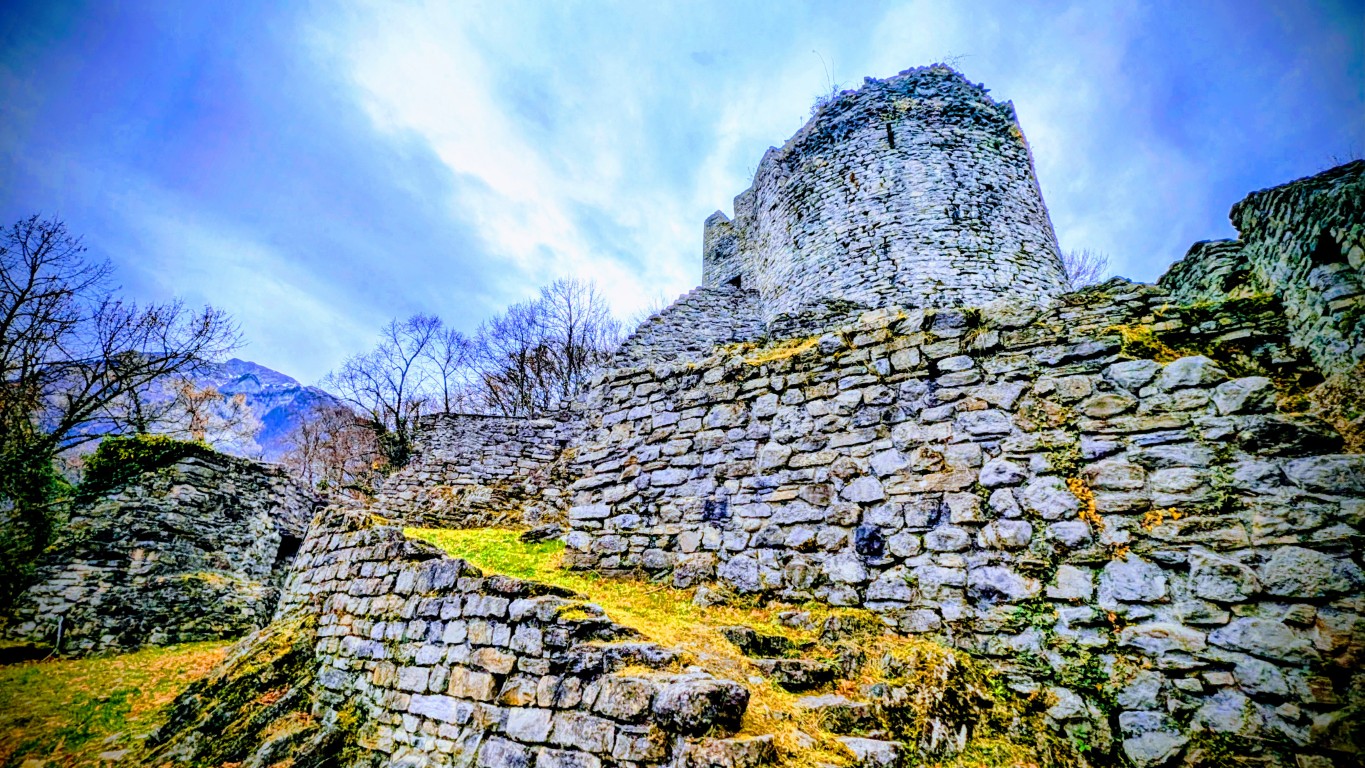
Between Lake Thun and Lake Brienz, on the edge of the Bödeli near Wilderswil, lies a place where Swiss history is condensed in several ways: the Unspunnen Castle ruins. It is not only a silent witness to medieval power struggles, but also the setting for one of the most symbolic festivals of the young Swiss Confederation – the Unspunnen Festival of 1805, which, at the end of the Helvetic Republic, was intended to invoke the unity of town and country.
A castle from the early days of the Bernese Oberland
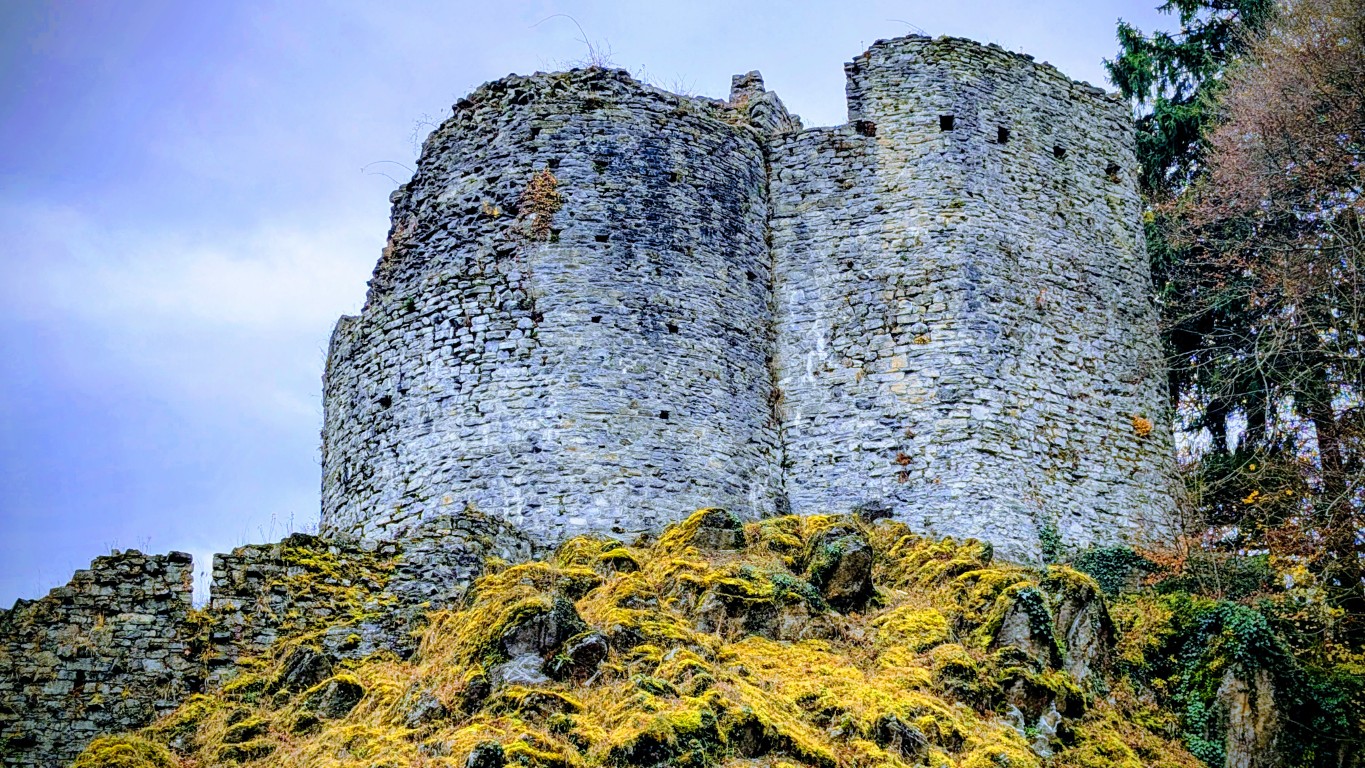
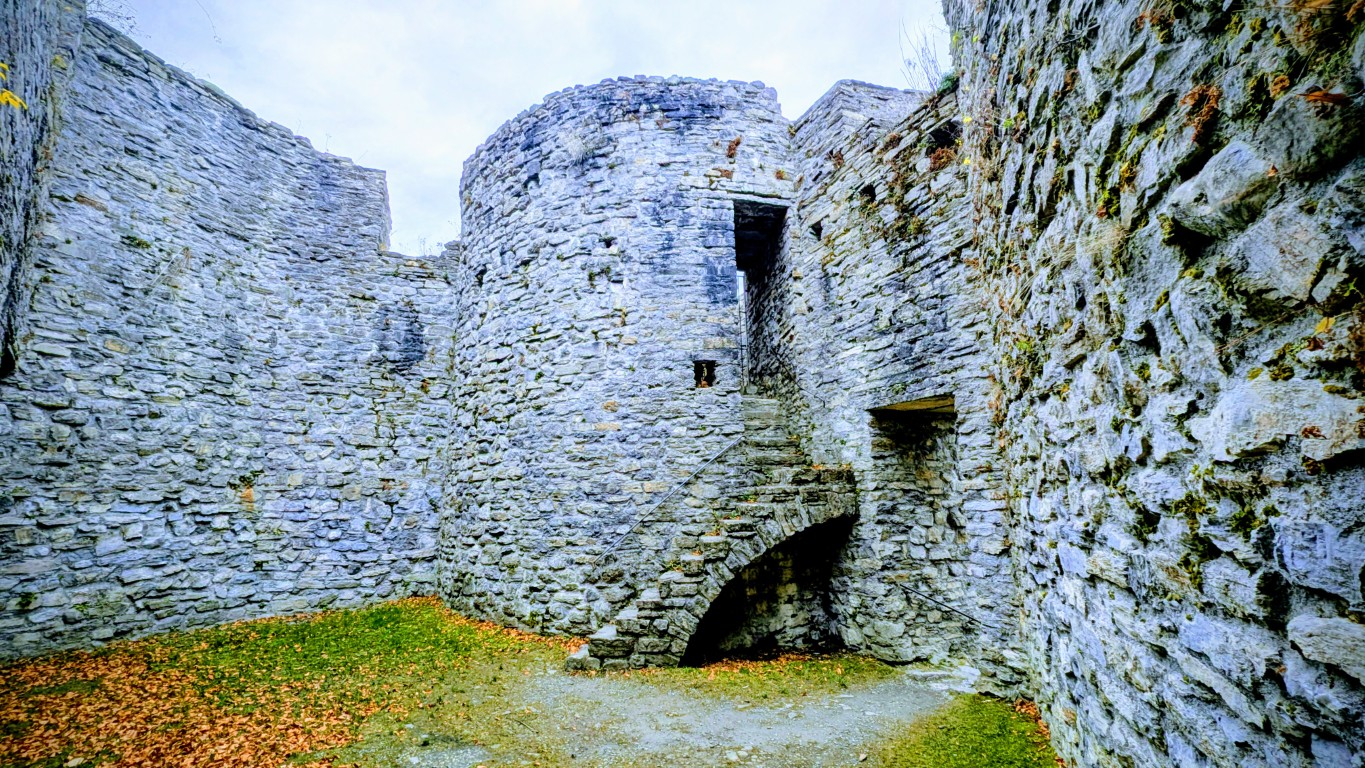
The origins of Unspunnen date back to the early 12th century. The oldest structure was probably a round tower, likely built by the Lords of Rothenfluh, who previously owned a castle on Balmburg Castle to the south. The name Unspunnen probably derives from the Celtic field name ussubonno – an indication of how far back into prehistoric times the history of this place extends.
In the late 12th century, Baron Burkhard von Unspunnen decisively shaped the complex: he had the upper palace built and transformed the castle into a prestigious seat of power. Burkhard is a fascinating figure – he is said to have participated in a failed uprising against the Zähringer dynasty around 1191. With the marriage of his daughter Ita, the castle then passed to Rudolf II of Wädenswil.
In the 13th century, the Barons of Eschenbach took over the estate and expanded it several times before Walter IV of Eschenbach-Schnabelburg sold the lordship to the sons of Albrecht of Habsburg in 1306.
Between uprisings, pledges and decay
Unspunnen was not only a seat of power in the Middle Ages, but also repeatedly the scene of political tensions.
-
In 1316, the property was pledged to the Lords of Weissenburg.
-
In 1322, inhabitants of the Hasli Valley rose up against increased taxes and marched on the castle. The revolt failed; 50 men were imprisoned at Unspunnen and only freed two years later by Bern.
In 1397, the castle came into the possession of the city of Bern, which sold it just a year later to the von Scharnachthal family for 5000 guilders. The family commissioned major renovations in 1425.
From 1515, Bern once again took possession of the castle – but this time only to abandon it soon afterward. The governor was withdrawn, and Unspunnen quickly fell into disrepair. Stones and building materials were removed, and walls collapsed. The castle finally became a ruin in 1533.
It was only in the 19th century that things changed: in 1805 a folk festival was intended to bring new life to the ruins.
The Unspunnen Festival – How a ruin became a symbol
The Unspunnen Festival of 1805 is inextricably linked to the castle. In a politically tense time – the Helvetic Republic had just failed – this festival was intended to invoke the reconciliation of town and country, of patricians and peasants.
The meadow below the ruins was transformed into a stage for flag throwers, alpine herdsmen, traditional costumes, dances – and for the symbol of Swiss strength par excellence: the Unspunnen Stone.
The Unspunnen Stone – Power, Tradition and Political Statement
The 83.5-kilogram stone was first used for stone throwing in 1805. Since then, it has developed a life of its own:
-
It is a symbol of Alpine culture and traditional power games.
-
It has been stolen several times – most recently in 2005 by activists who wanted to make a political statement.
-
A duplicate was reused at the festival, but the original remains a myth in itself.
Unspunnen thus became a symbol of the Alpine myth – an idealized notion of tradition, connection to nature and community that still resonates in the collective consciousness today.
Restorations between modernity and the past
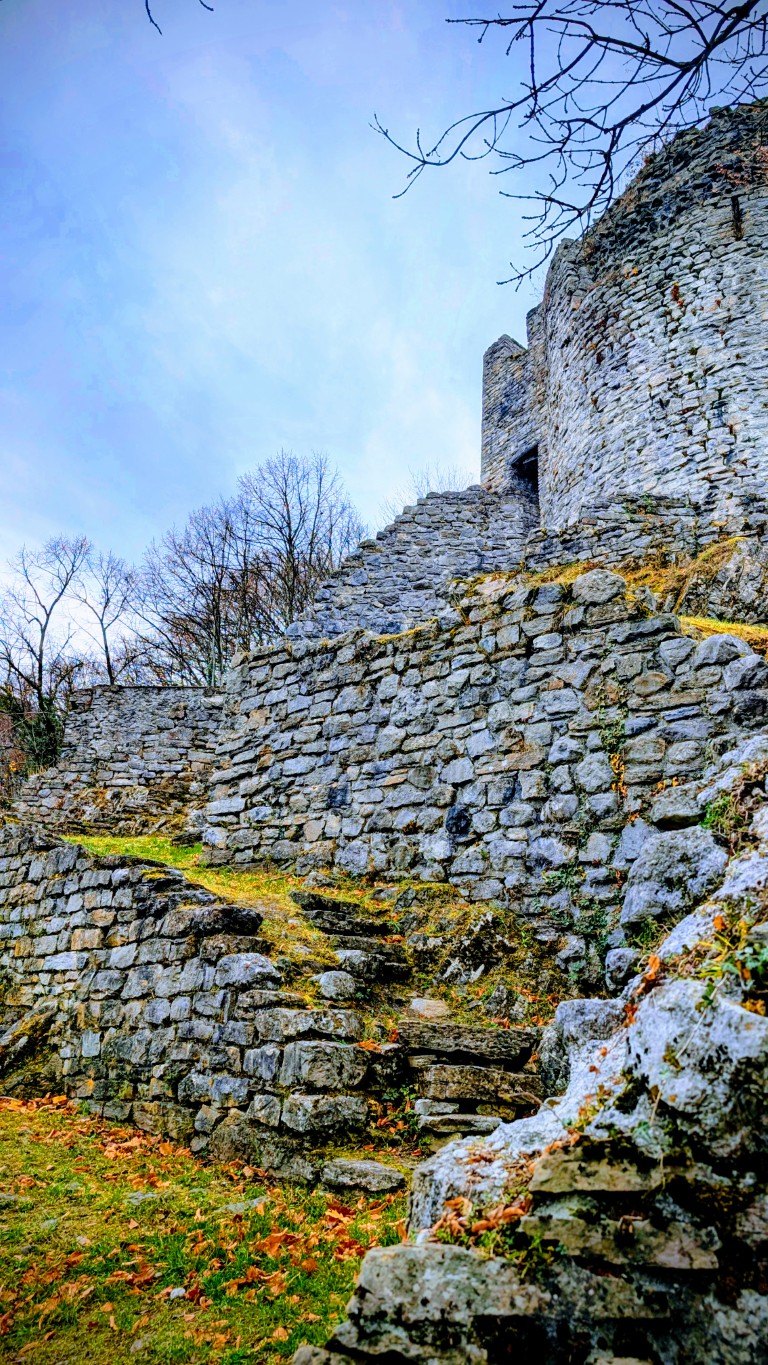
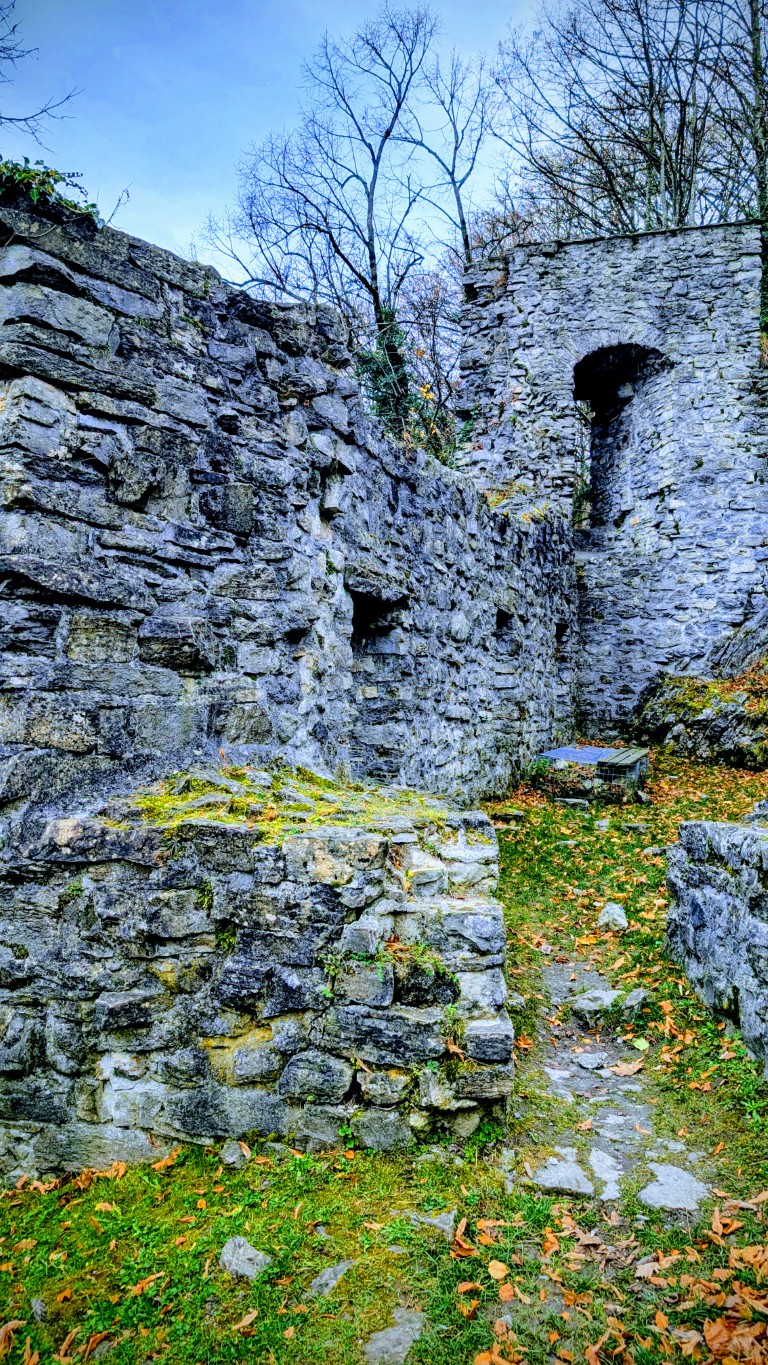
In the 1880s, initial restoration and reconstruction attempts were made, but these were not very historically sensitive. During the restoration work of 1968/69, these alterations were largely reversed. Today, the ruin once again presents itself with the clarity that reveals its medieval character: round tower, remnants of the curtain wall, traces of the former residential buildings – enough to bring history to life with every step.
Legends and ghosts – the echo of the highlands
No specific legends are associated with the Unspunnen castle ruins themselves. However, the Upper Inn Valley is home to numerous tales of ghosts, nocturnal signs, and magical phenomena. These stories revolve less around the castle itself and more around the wild landscape of lakes, gorges, and mountain slopes. In this context, Unspunnen acts as a silent center – a place whose history alone provides ample material for myths.
Those who visit the ruins stand at one of the most important cultural and historical sites in the Bernese Oberland. A place where the past does not fade, but continues to have an effect.