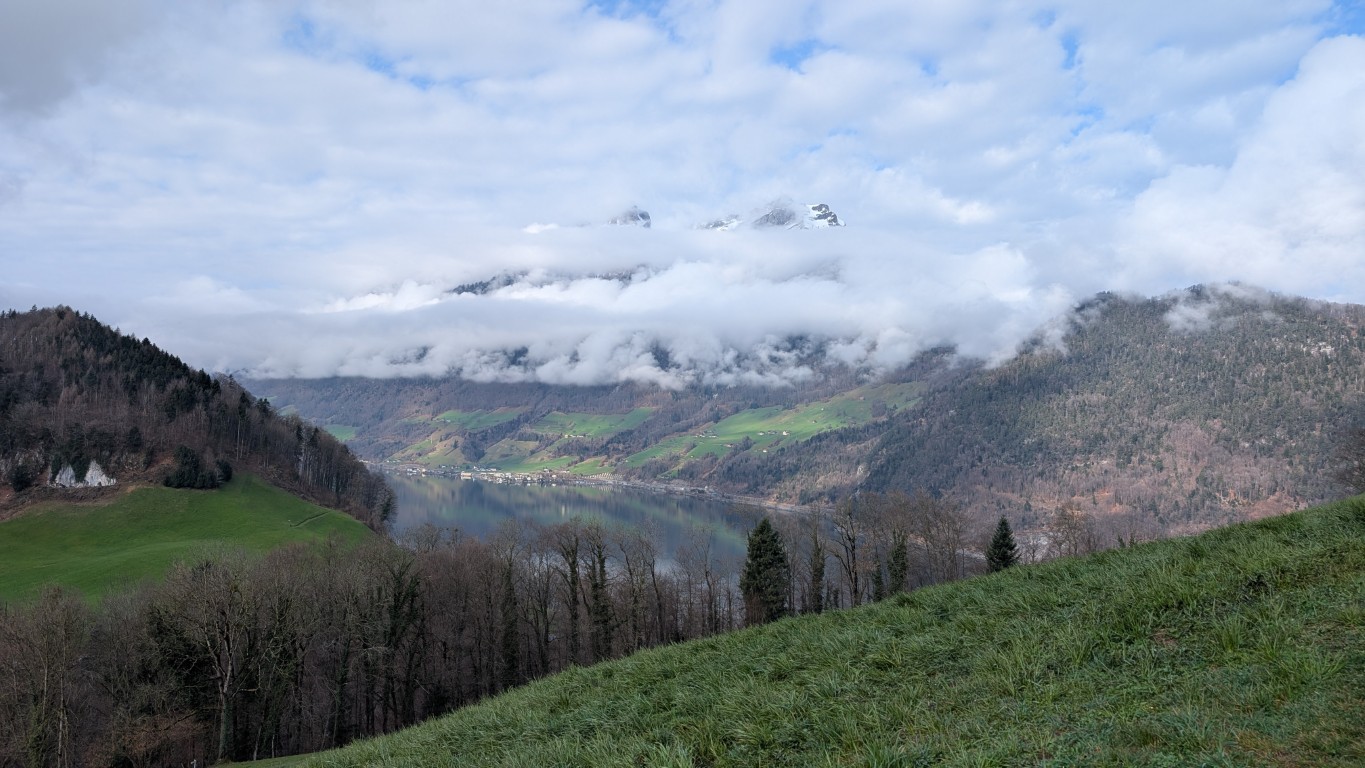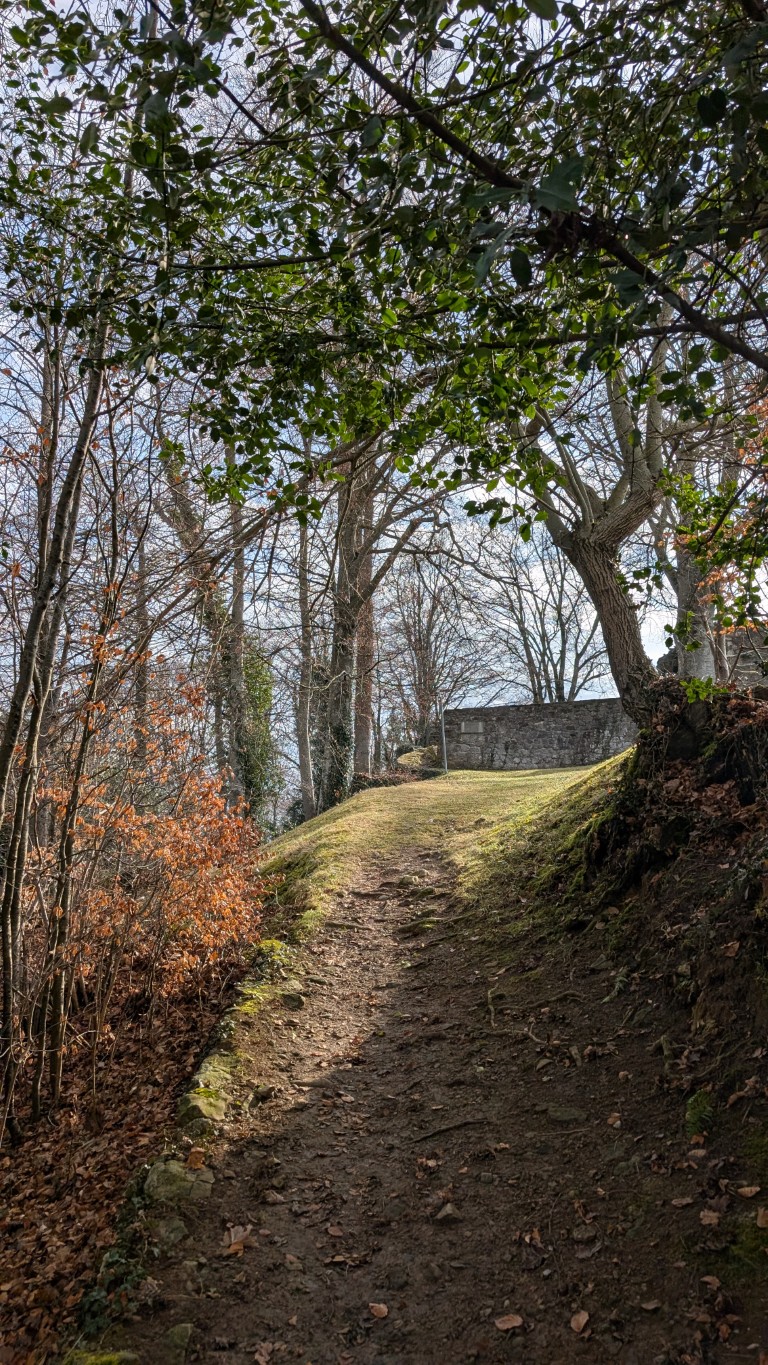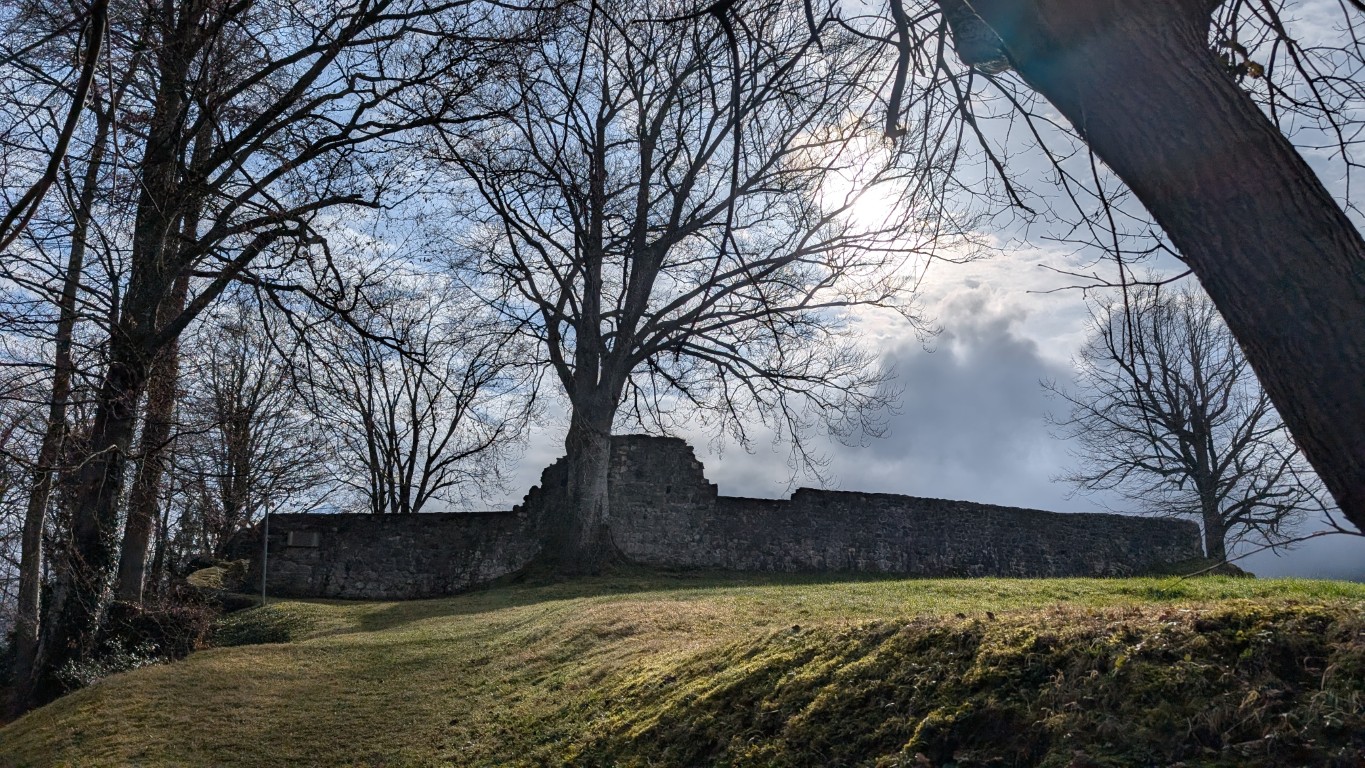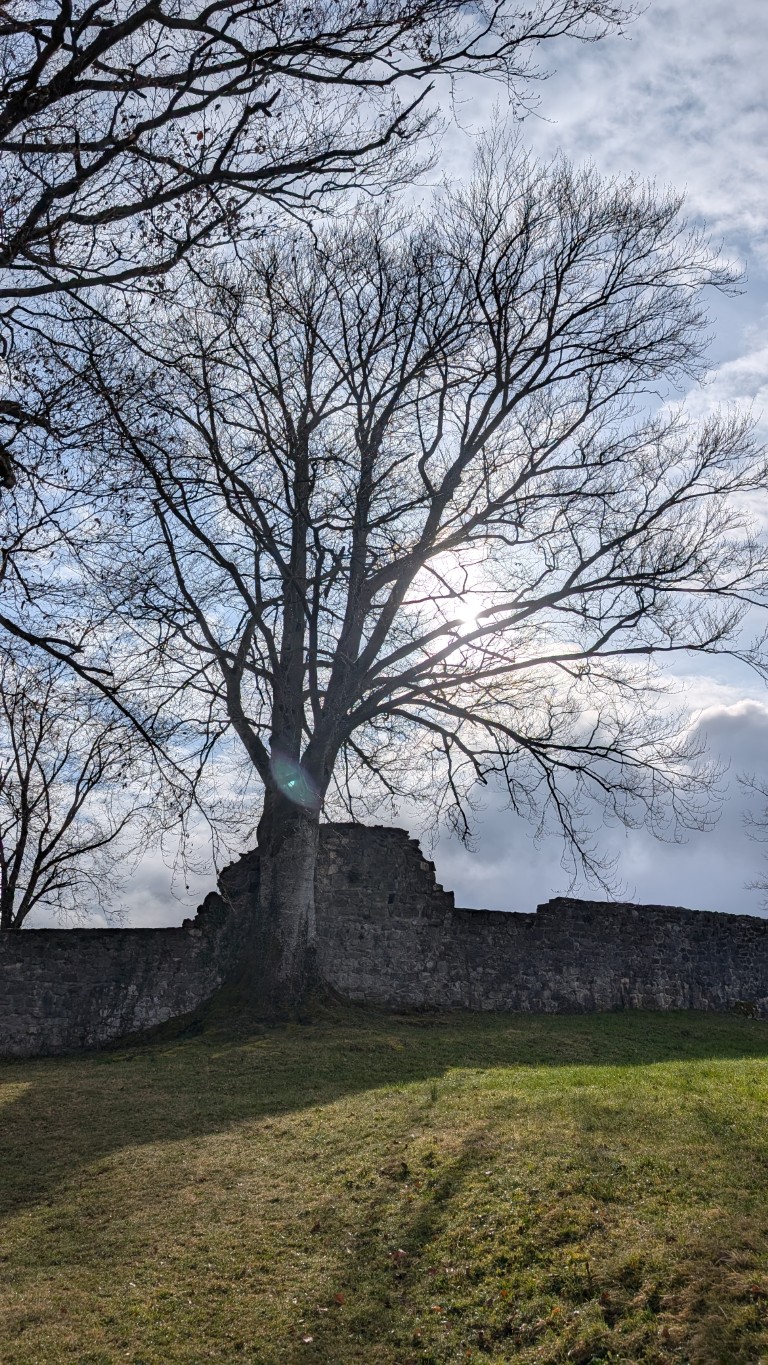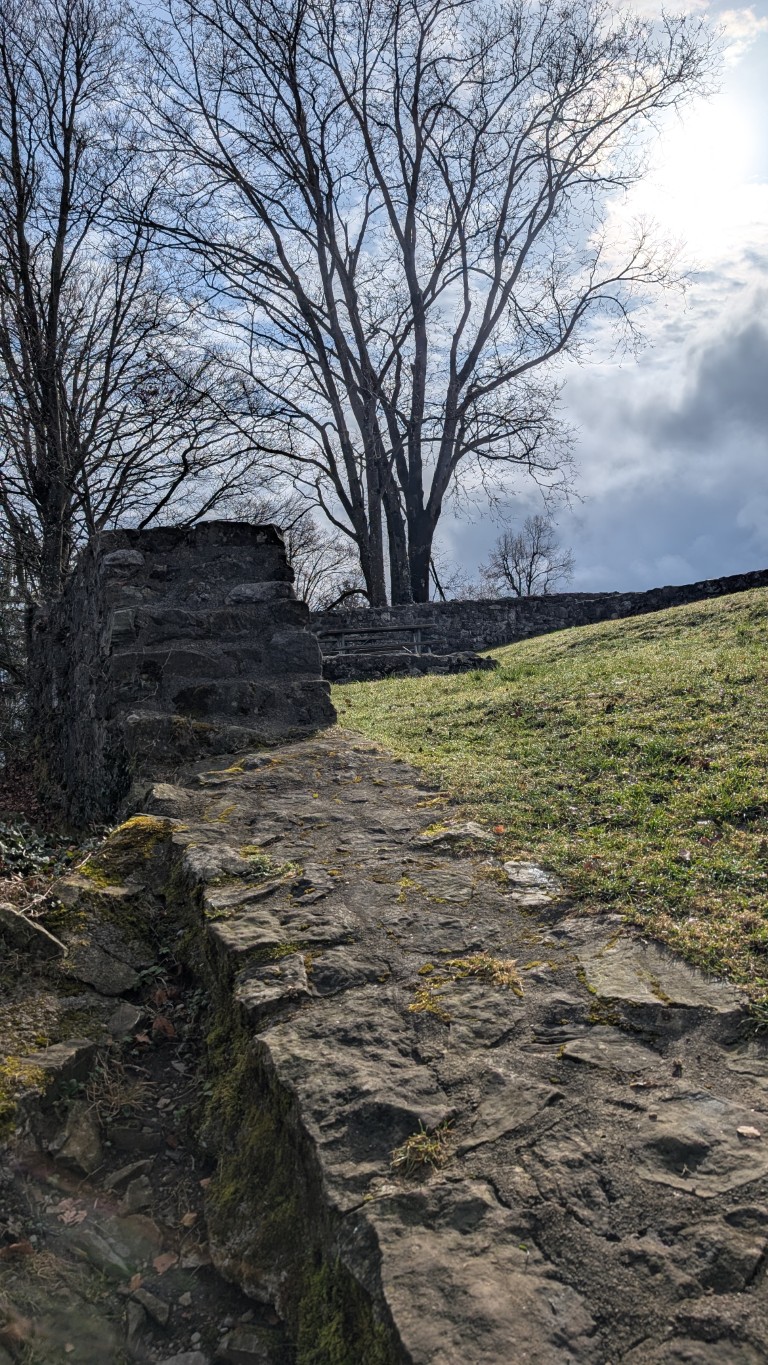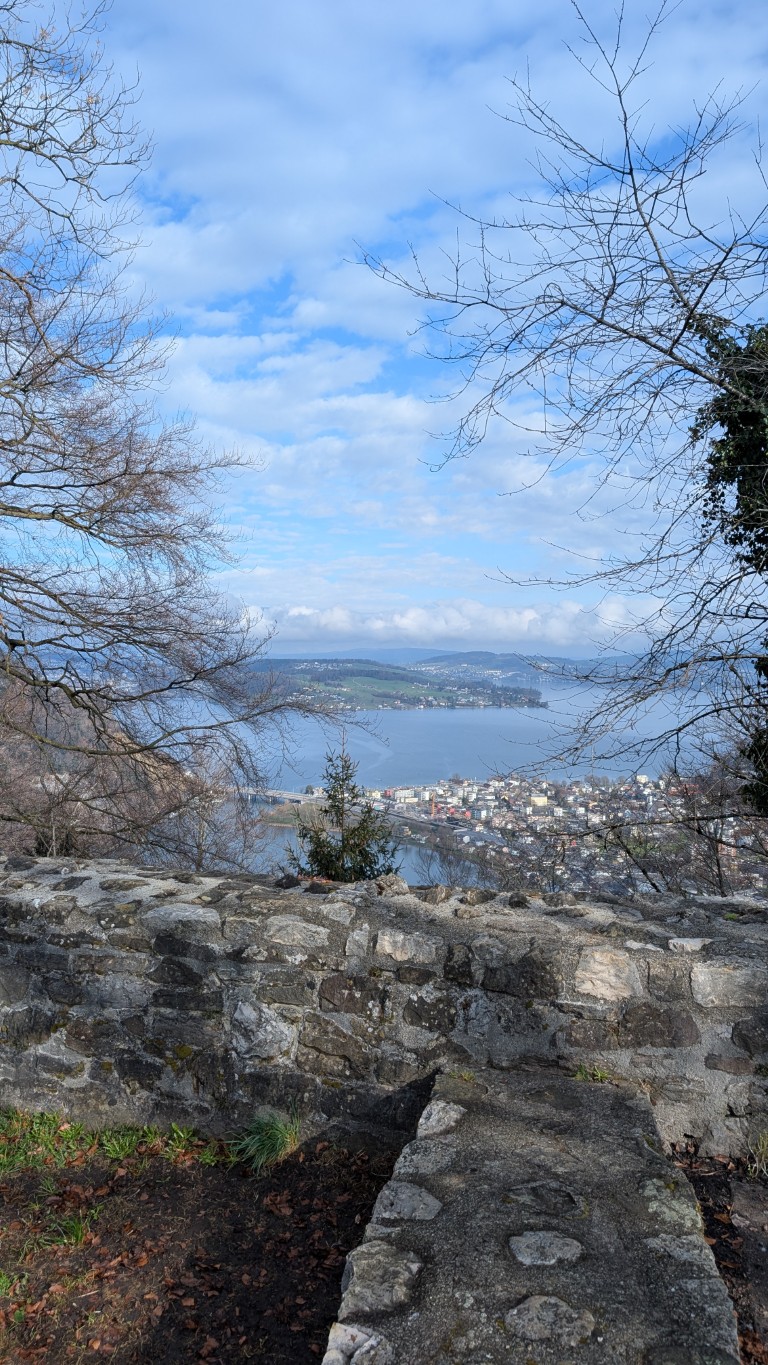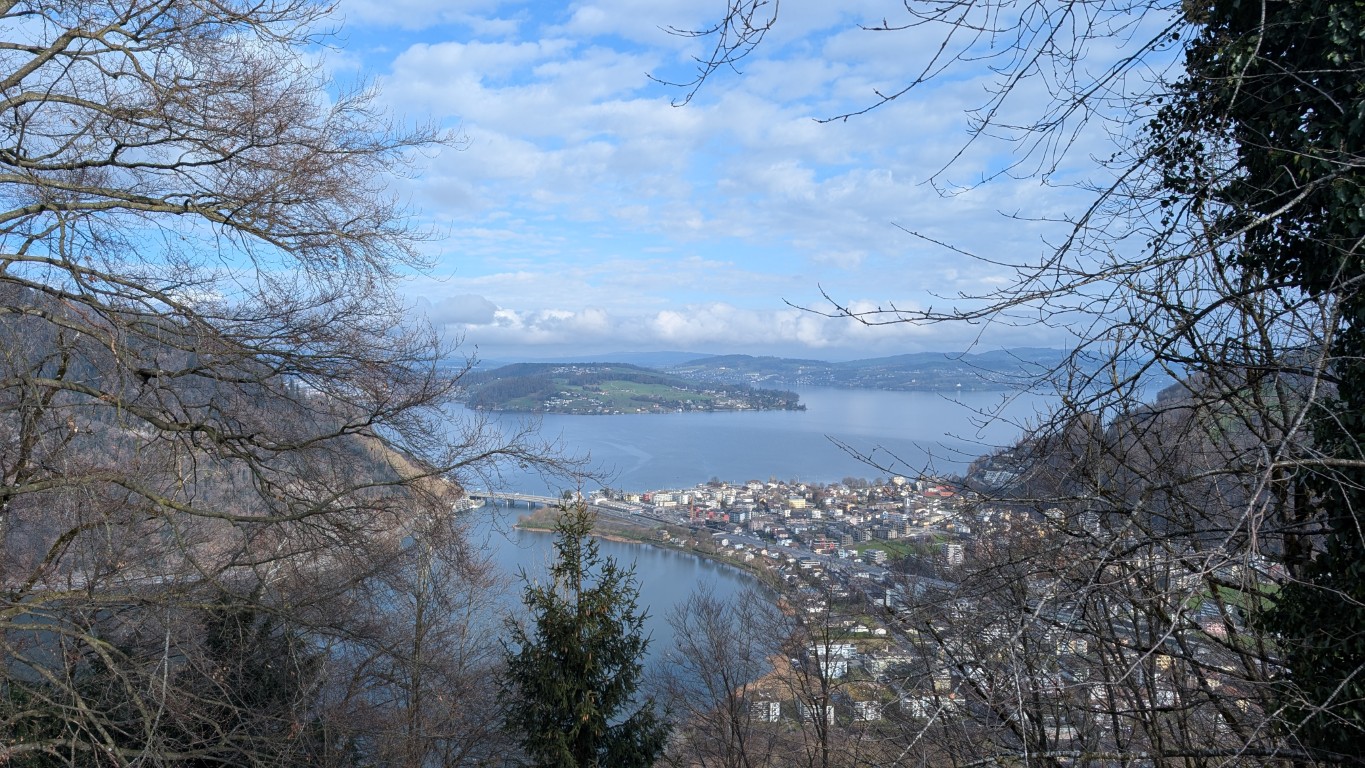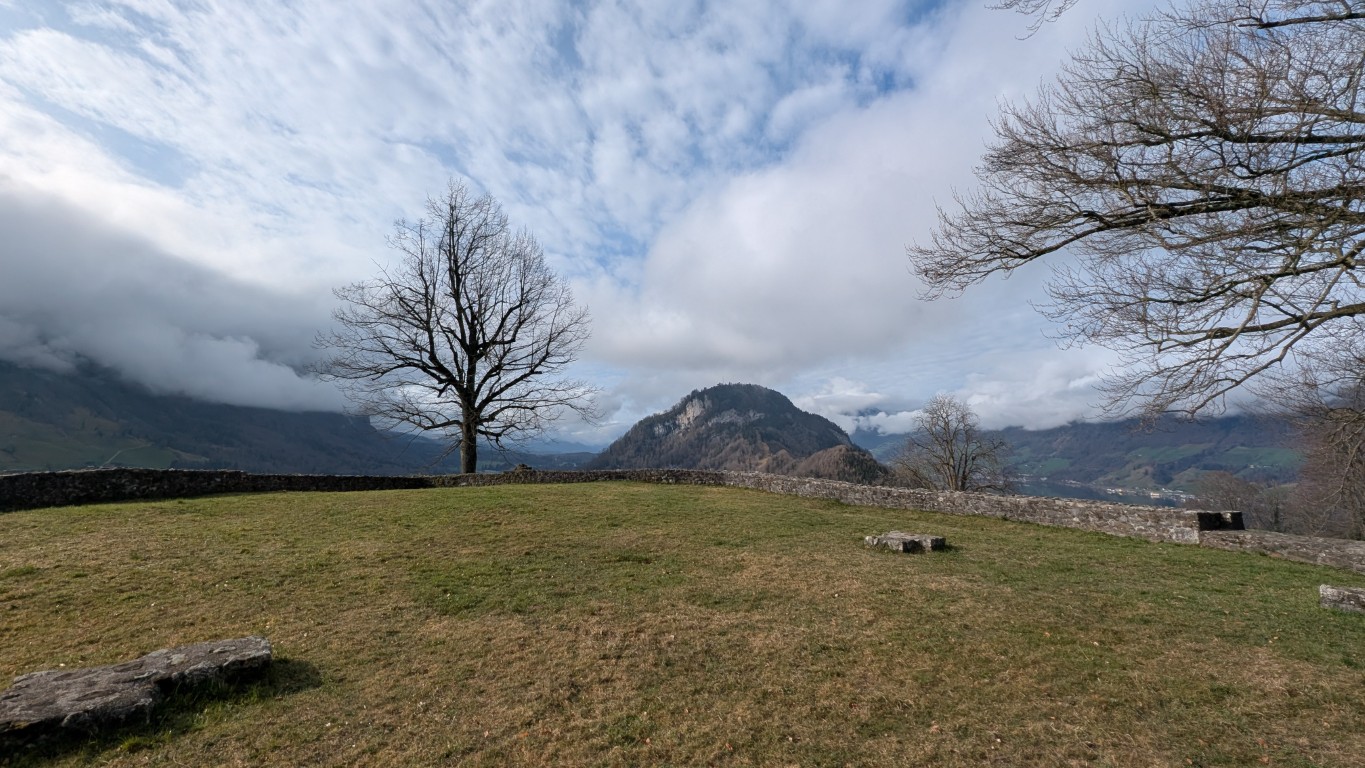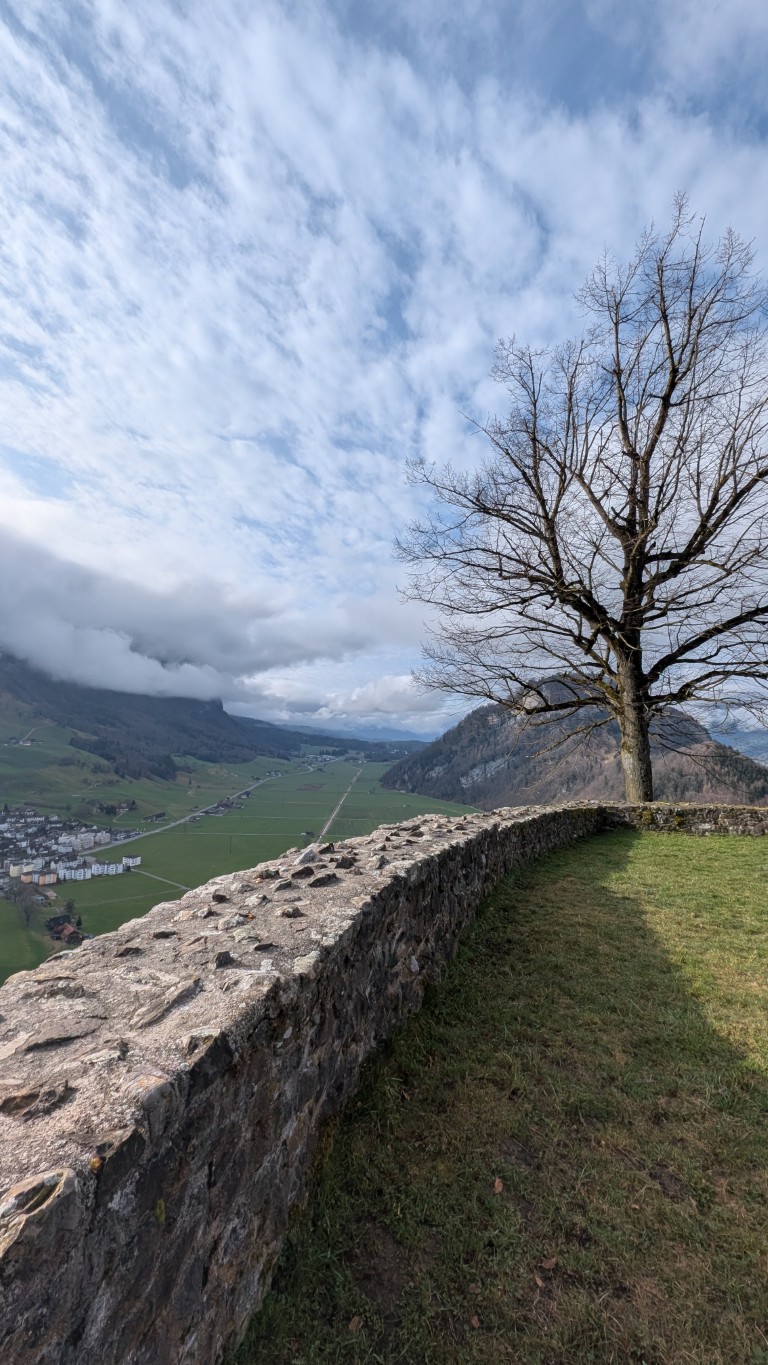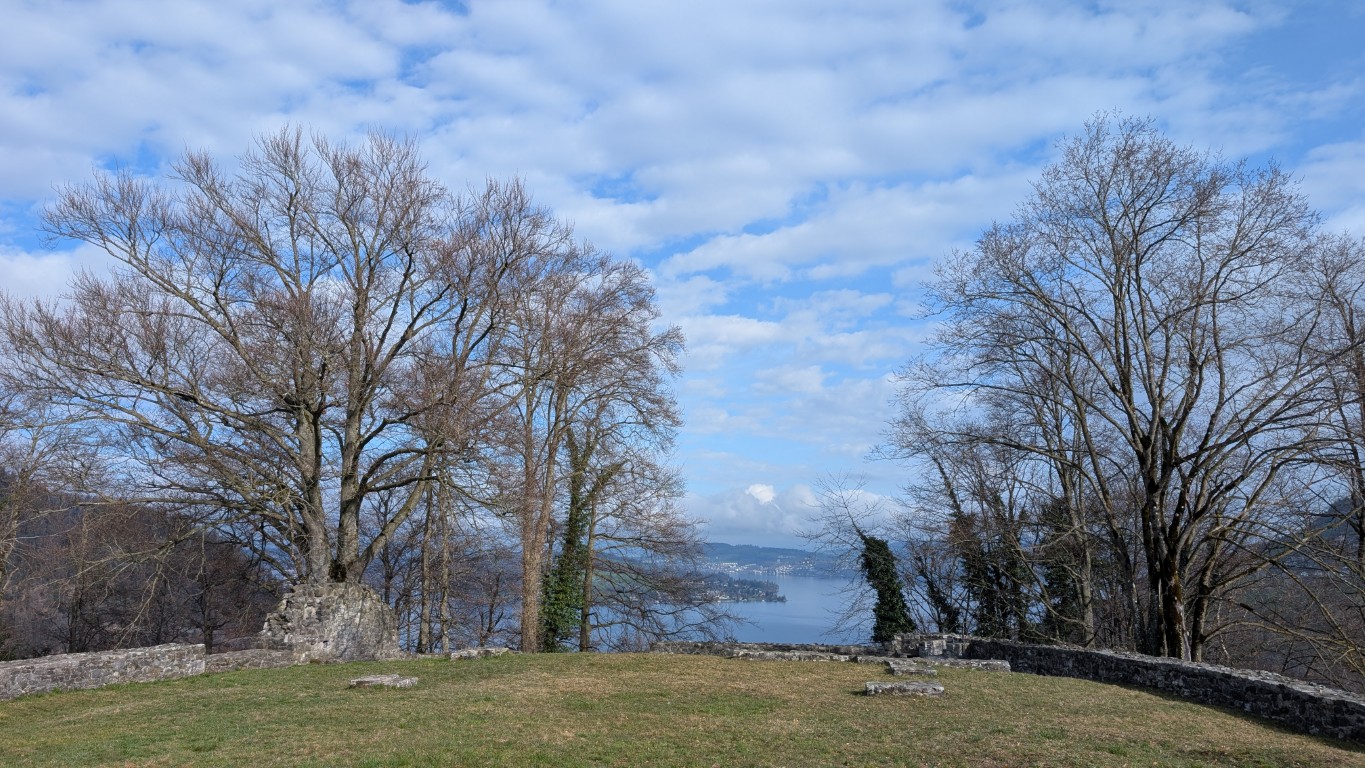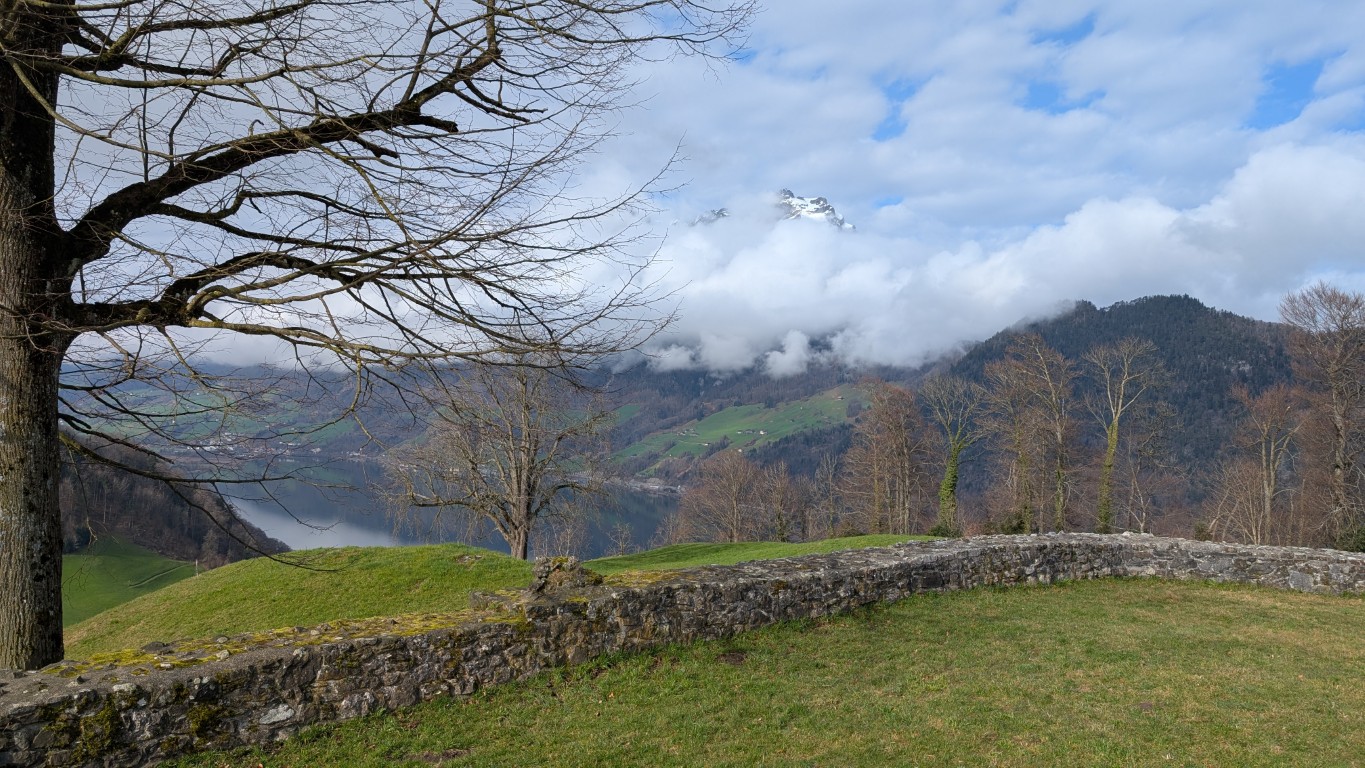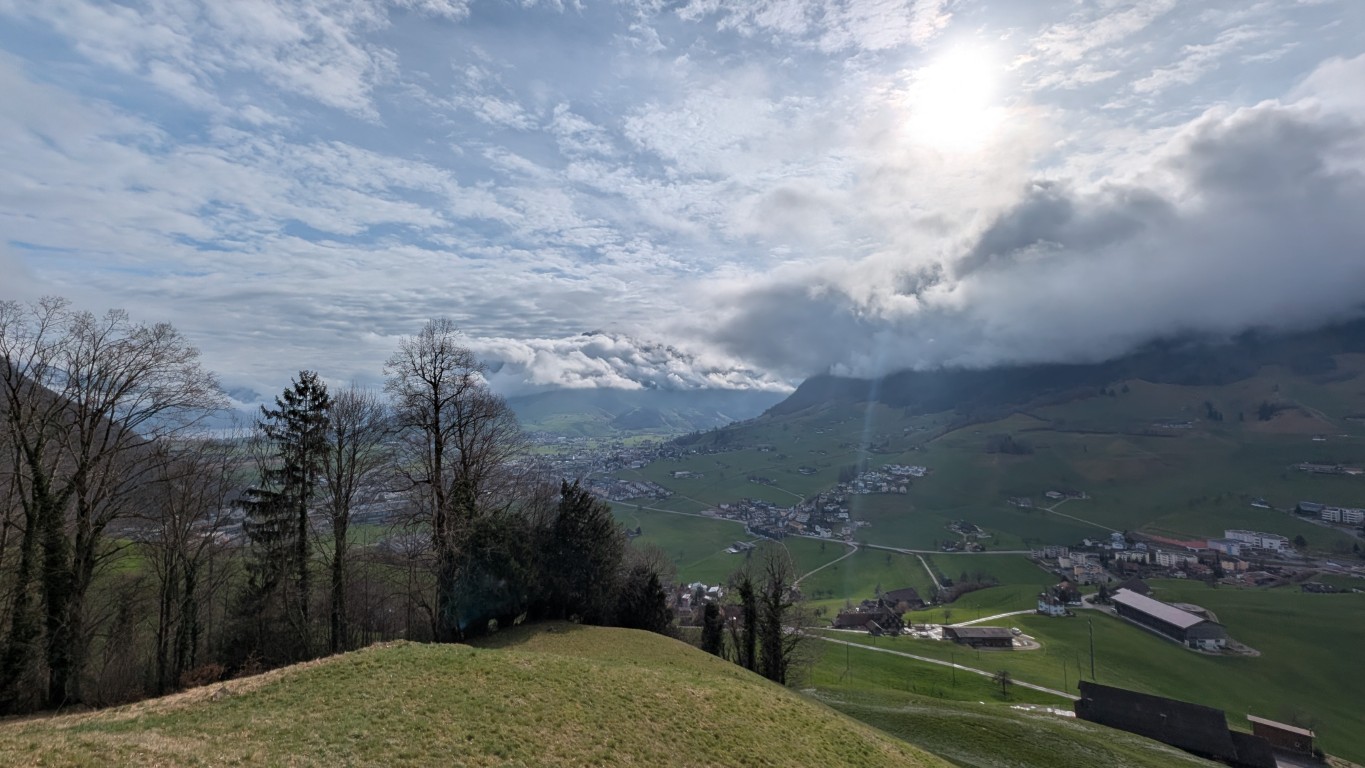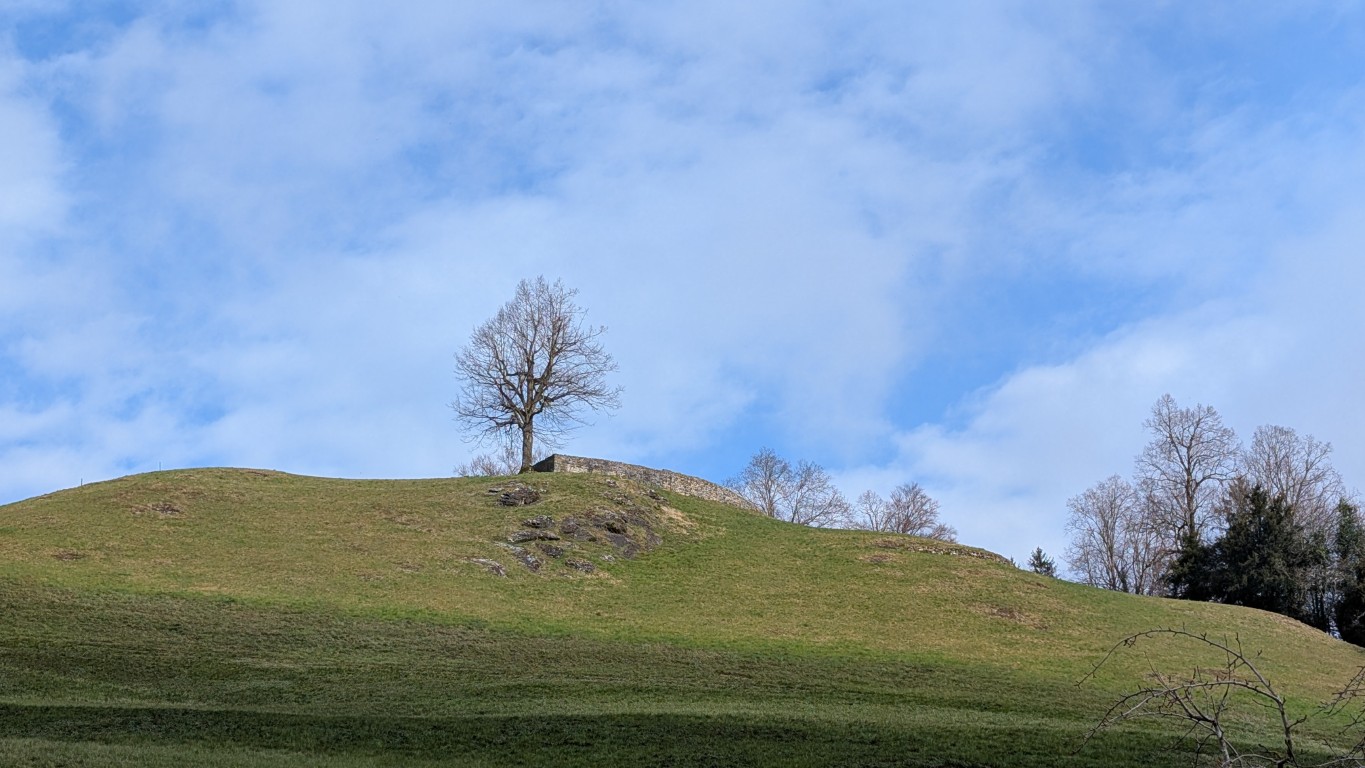
High above the Stans valley, at 672 meters above sea level, the Rotzberg ruins cling to the ridge between the village and the tranquil arm of Lake Alpnach like a stony memory. West-East 668340, South-North 201860 – coordinates that seem austere, yet lead to a place where the wind carries stories.
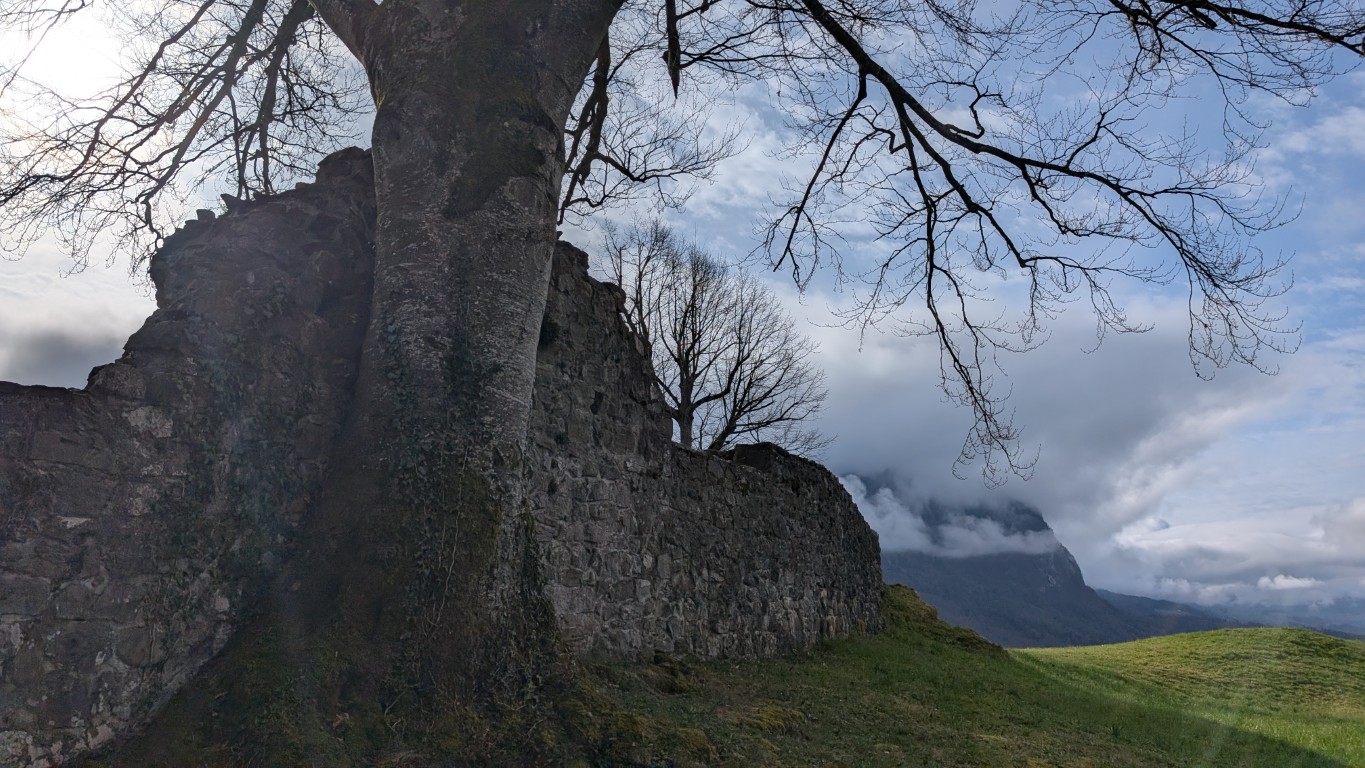
The polygonal ring wall, dating from the 12th century, still stands, defiant and weathered by the elements. Likely erected by the Barons of Rotenburg, and later used as a fortress by the Habsburgs, the Rotzberg was more than just stone. It was a symbol of power, of ambition, of observation and control. During times of war, the people of Nidwalden kept watch here, peering into the surrounding countryside, searching for smoke signals, and listening for the rumble of distant unrest.
And yet, there is something else about the place – something that is not found in chronicles.
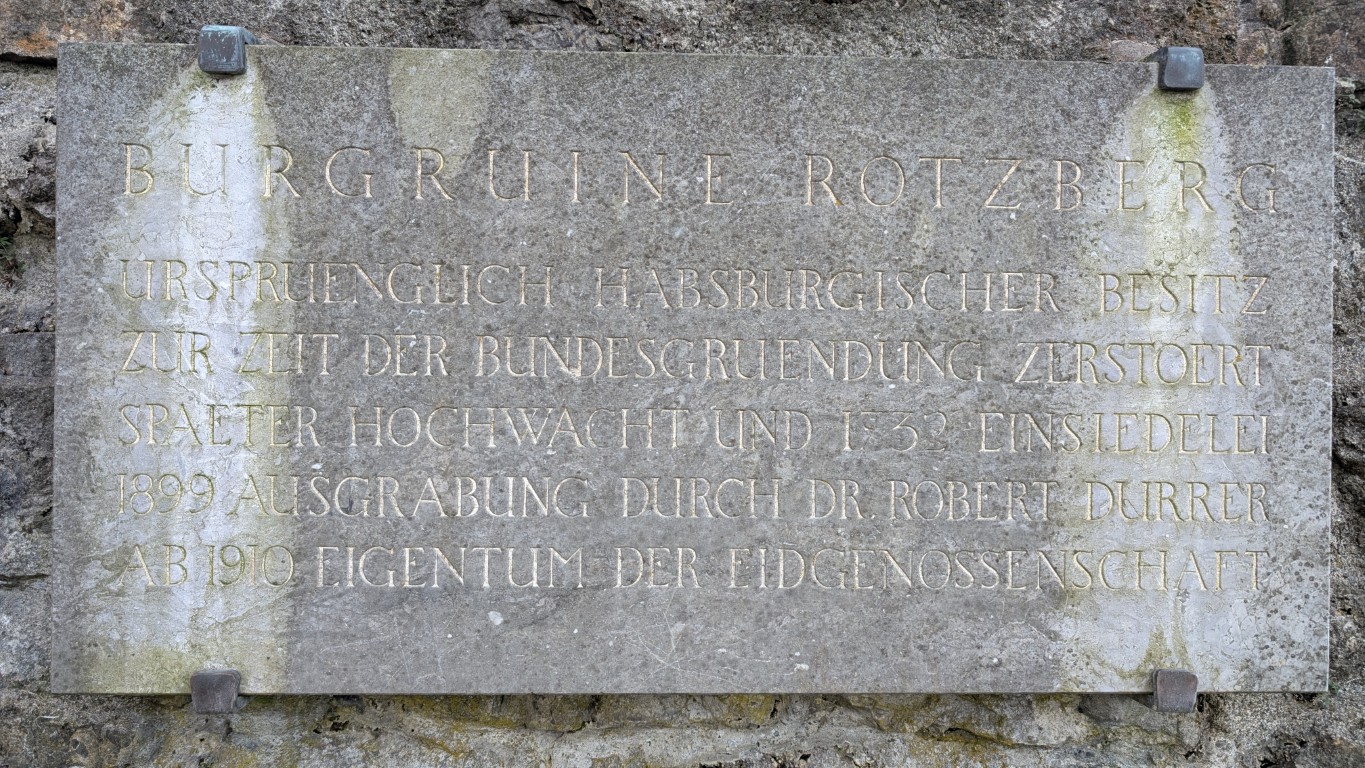
It is said that the castle was destroyed by rebellious Swiss Confederates in 1308. Whether the fire burned brighter than the setting sun over the lake, no one knows anymore. Only one thing is certain: the walls survived. Later, hermits lived in simple wooden huts among the stones, as if they had understood that this place demanded less defense than contemplation – a contemplation of thoughts, of prayers, of shade.
A guesthouse was built in 1864. Plans for a hotel with a funicular railway followed in 1909 – the mountain was to be tamed, developed, and marketed. But things turned out differently. In 1910, the Swiss Confederation bought the land for 18,000 francs and placed it under protection. Excavations in 1988 and renovations in the 2010s – the castle remained what it had always been: an open wound of stone and time.
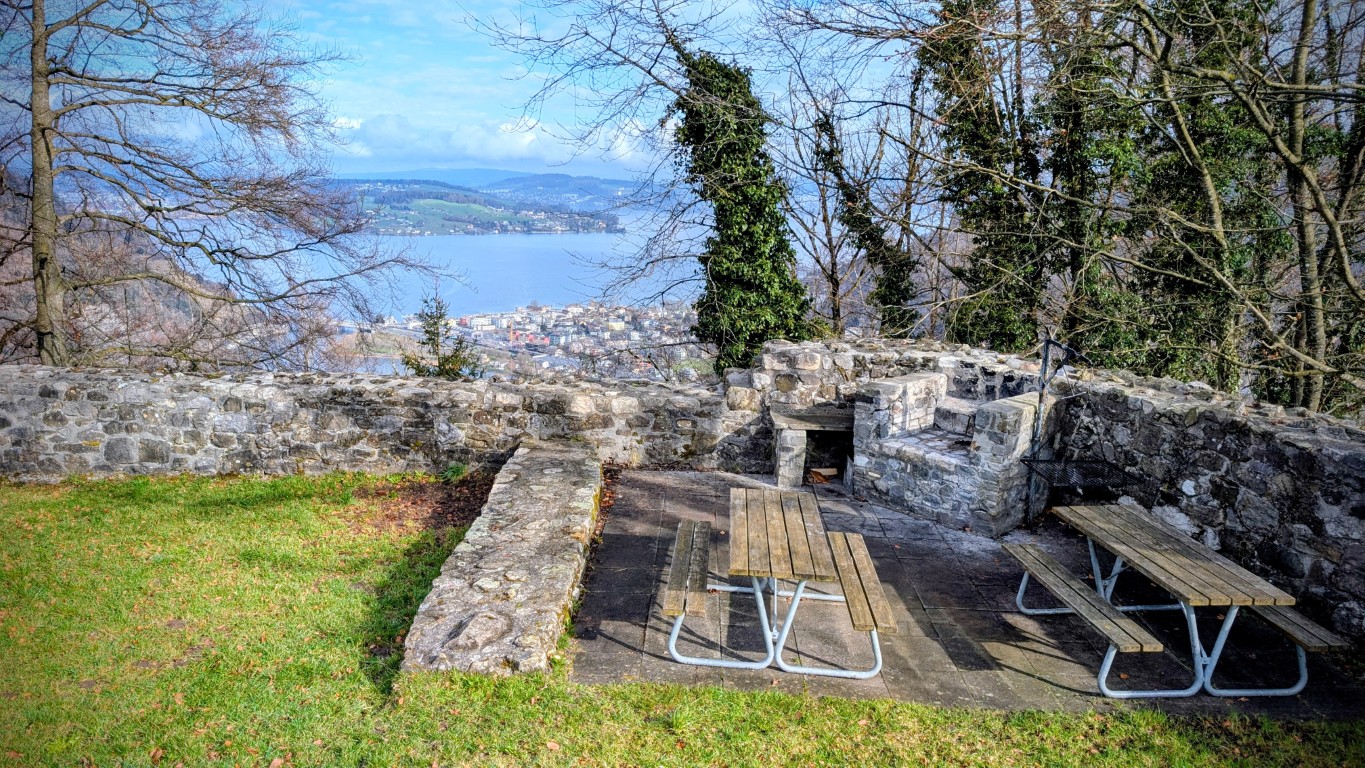
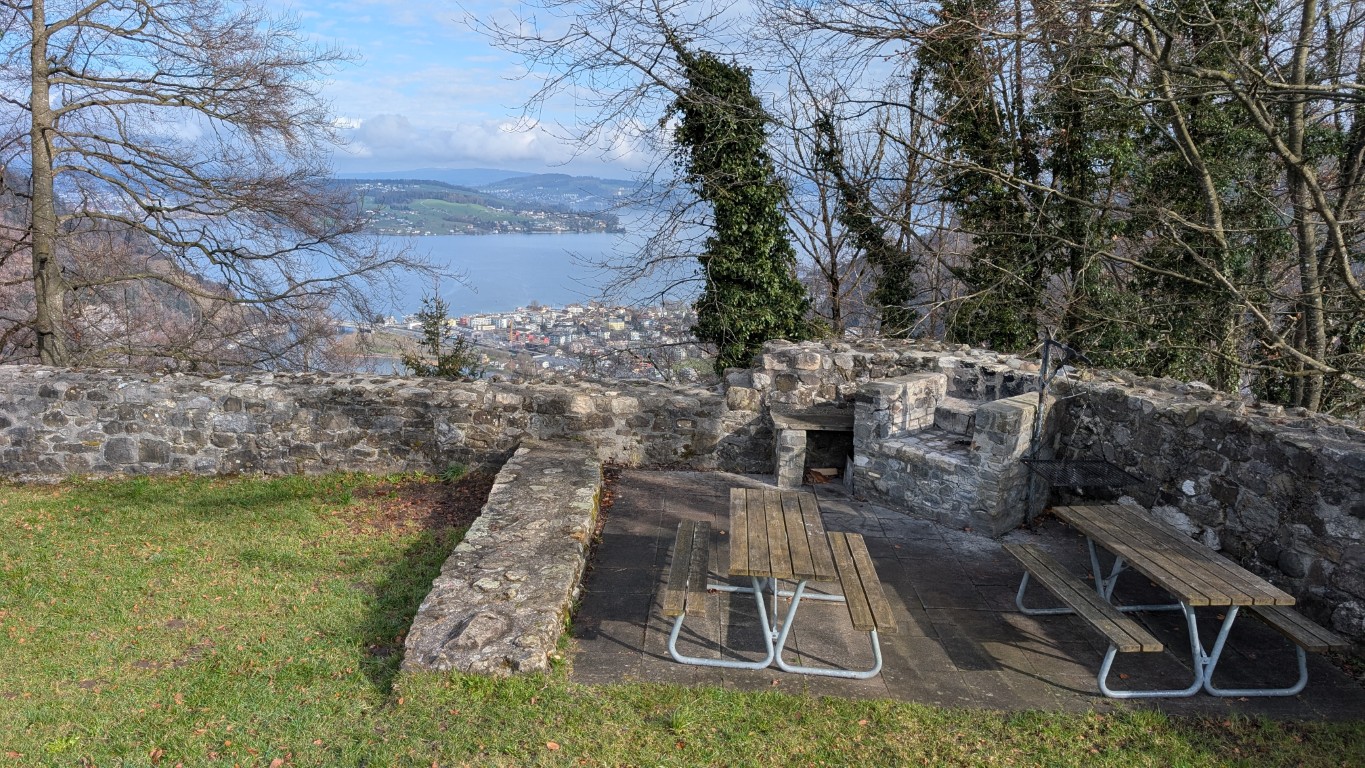
Today it's accessible at any time. No restaurant, no overnight accommodation, no wheelchair access. Just a fire pit, wind, and a view. The climb takes about 30 minutes, is of medium difficulty – but the journey isn't just measured in meters.
The legend of the Riedross in Ennetmoos
When night falls over Ennetmoos and the reeds begin to breathe, the old folks tell each other stories about the Riedross.
It was often seen at night, snorting and galloping – summer and winter. A dark horse, faster than the wind, heavier than fear. Those who avoided it were unharmed. It raced past, hooves like thunder on invisible ground.
But this time it didn't just stop passing by.
A person—their name long since forgotten—heard the clatter of horses' hooves behind them. First distant, then near, then everywhere. They didn't dare turn around. And suddenly they felt something at their armpits, placed over their shoulders. A weight. A burden. Formless, breathless—and yet present.
So she had to carry it. Step by step, up the slope to Ennerberg in Buochs . Only there, at the top, did the invisible burden lift. Not a sound, not a farewell. Only silence.
Some say the Riedross is the restless soul of a fallen soldier. Others believe it is the embodiment of old guilt, clinging to those who linger too long in darkness. Still others think it belongs to the Rotzberg like fog belongs to the wall – a guardian between the world and the in-between.
Those who climb to the ruins today might only hear the crunch of gravel under their shoes. But when the wind blows up from the lake and sweeps across the ring wall, it sometimes sounds like distant footsteps.
And then you know: Some castles are not abandoned.