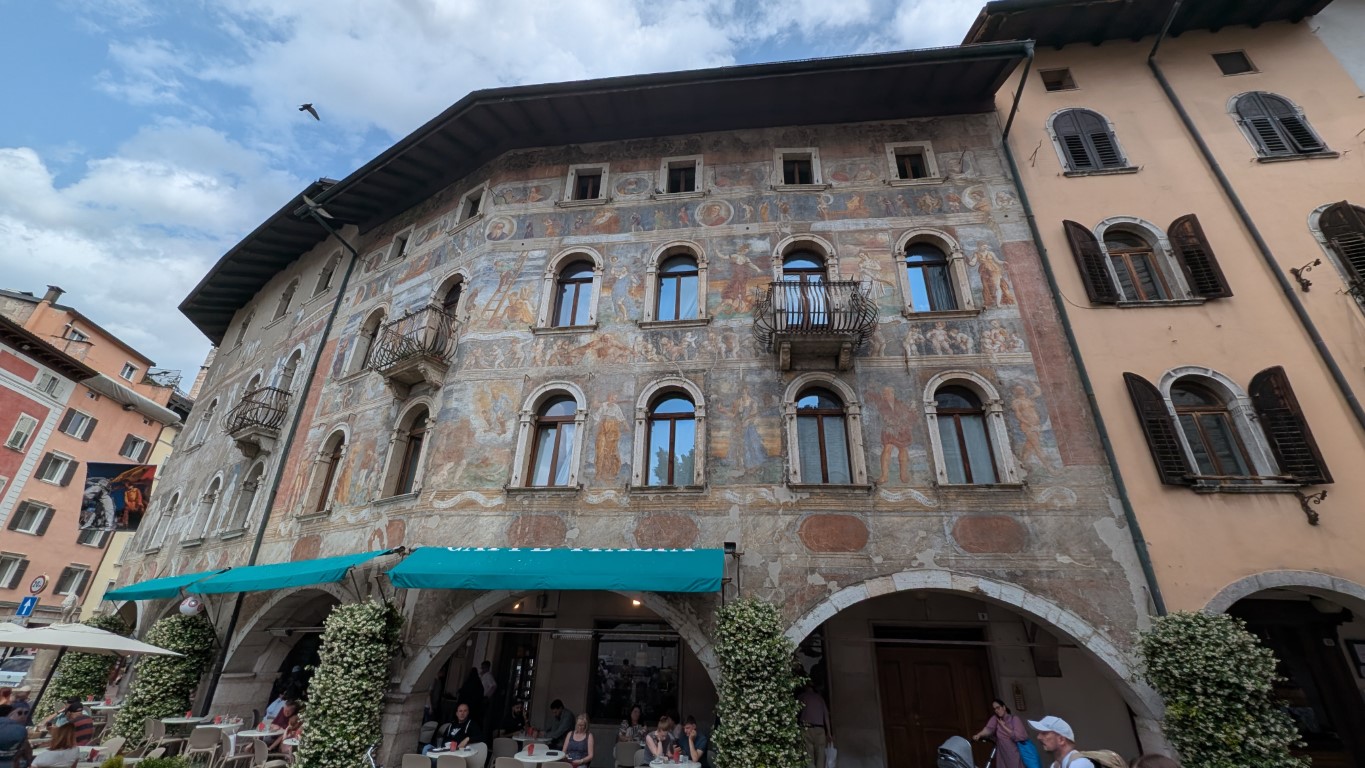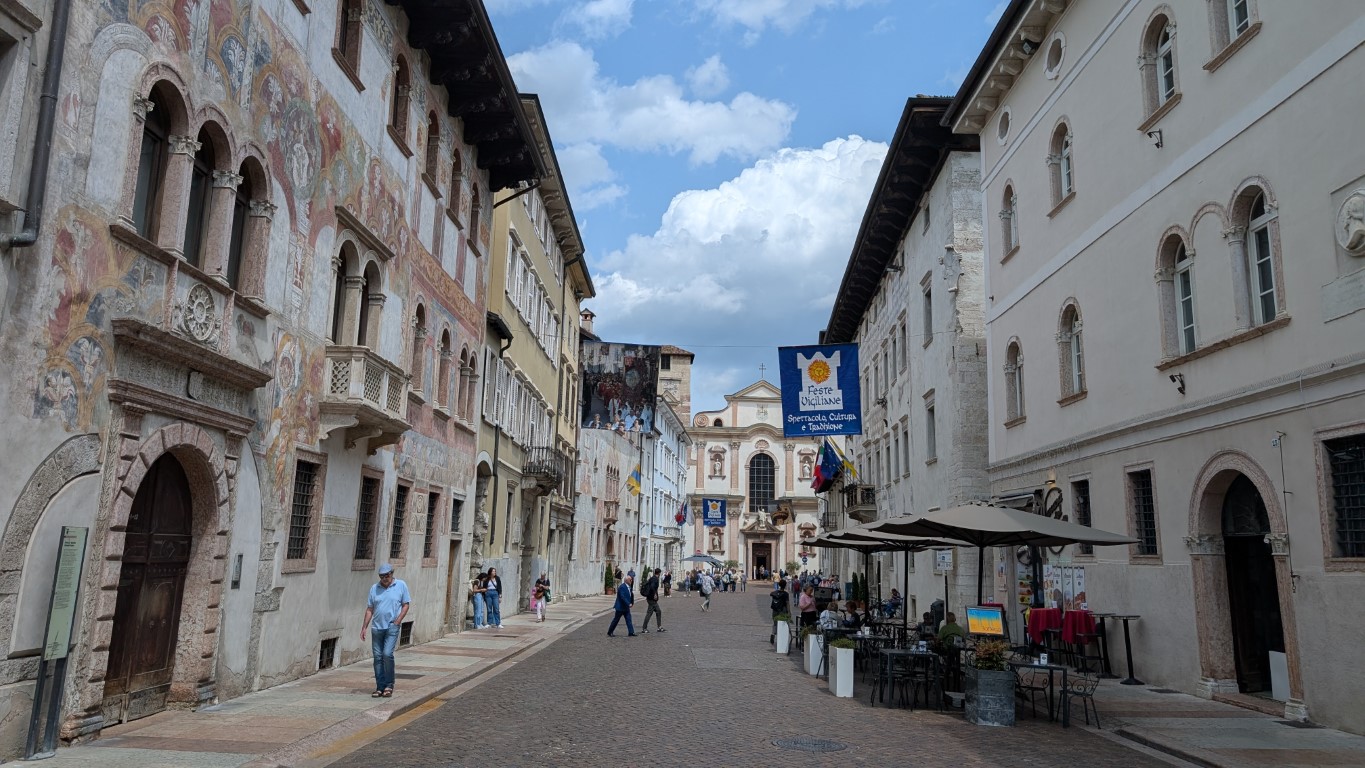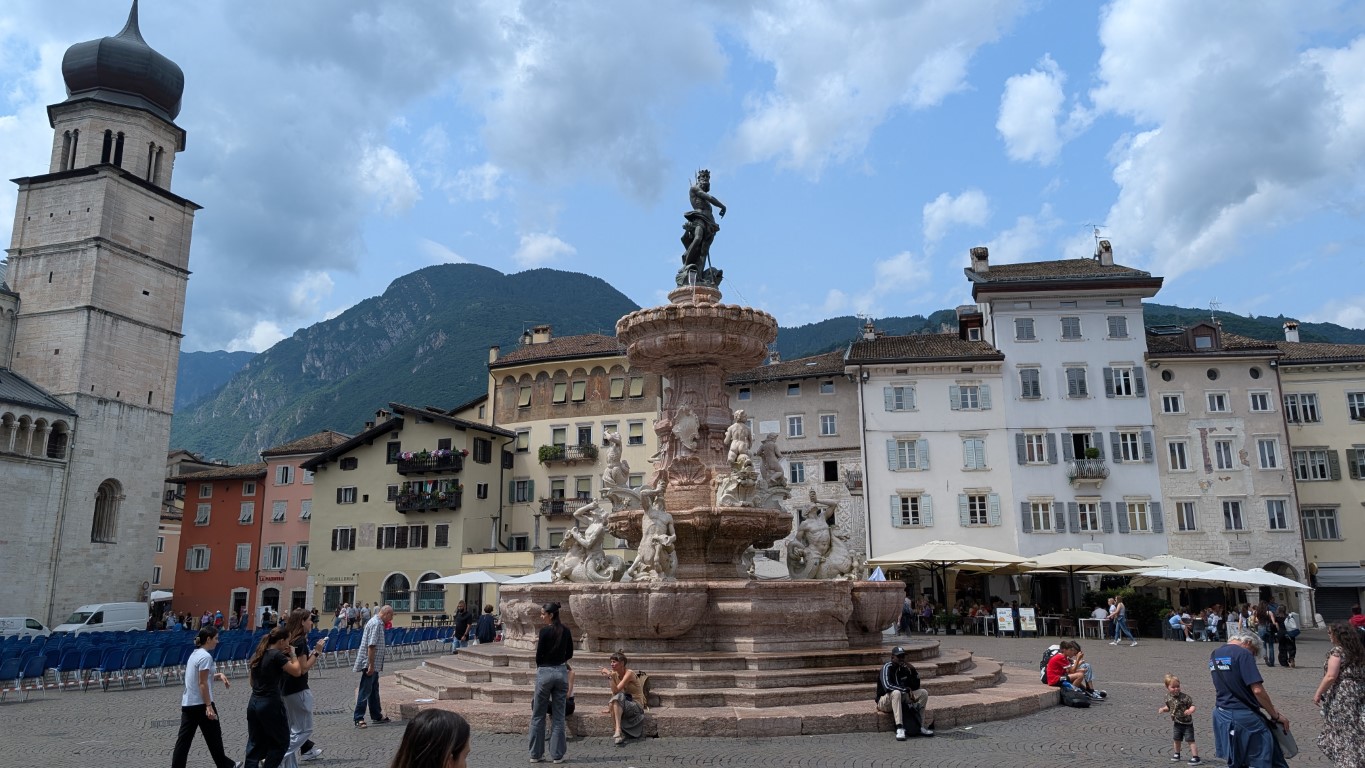
Anyone entering the Piazza del Duomo in Trento isn't just standing on cobblestones—they're stepping onto a stage of history where centuries have played out. The square is the stone heart of the city, a vast, breathing rectangle where Romanesque, Baroque, early Christianity, and the daily life of the people of Trento meet in a silent dance.
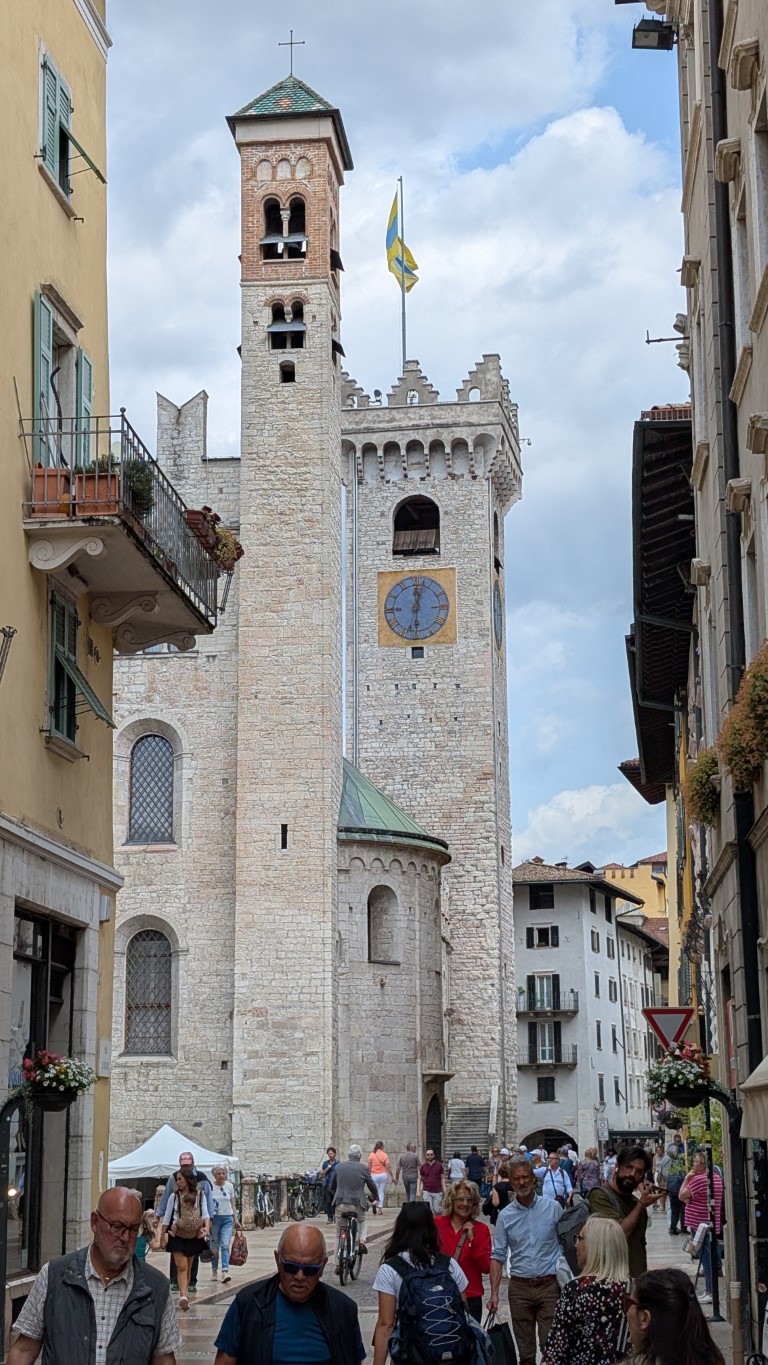
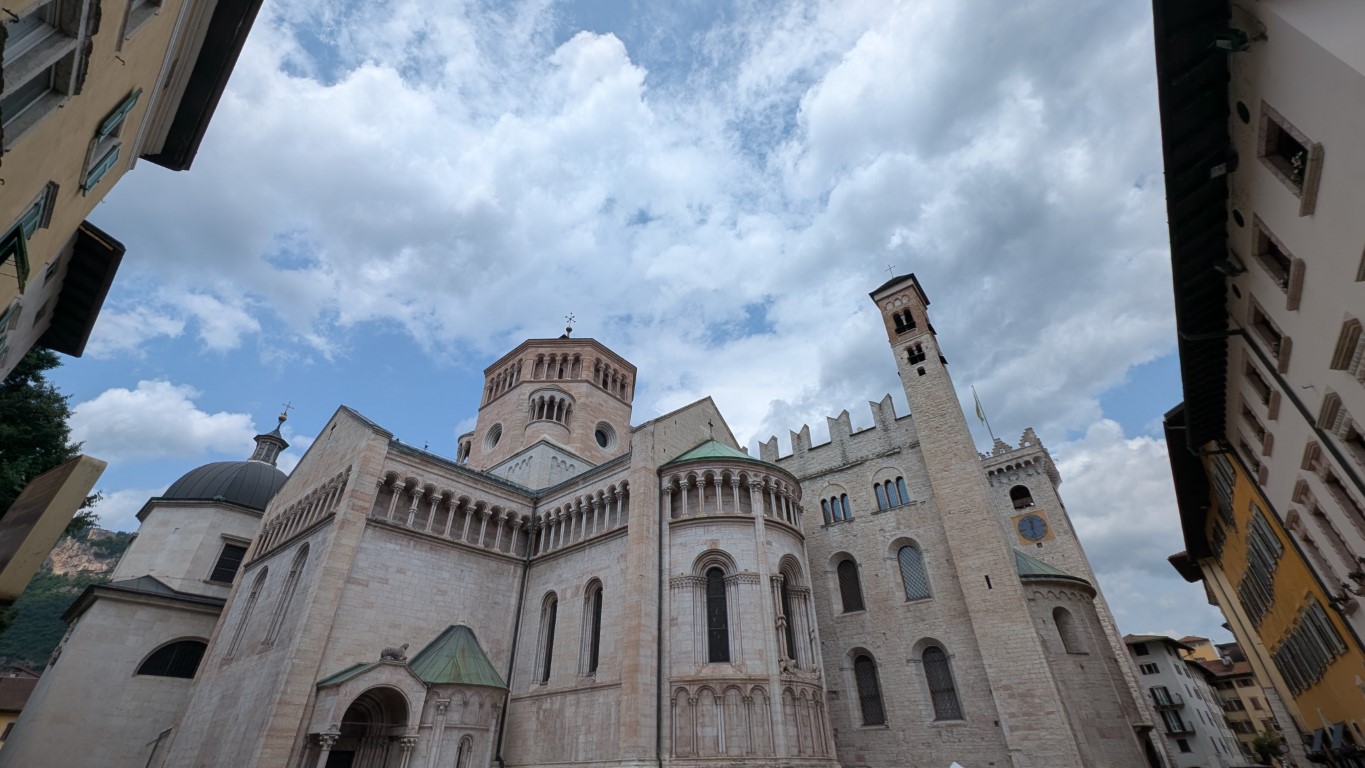
To the south rises the venerable Cathedral of San Vigilio, a masterpiece of Romanesque-Lombard architecture. Its façade speaks of the transition to Gothic architecture, with its sparse walls and soaring forms, and its rose windows like the "Wheel of Fortune," evoking the capricious cycle of fate. Deep beneath its floor lies the early Christian basilica, burial place of the city's patron saint, Vigilius, and the Cappadocian martyrs Sisinnius, Martyrius, and Alexander – a tranquil place where the light of history still shimmers today, as if through ancient glass.
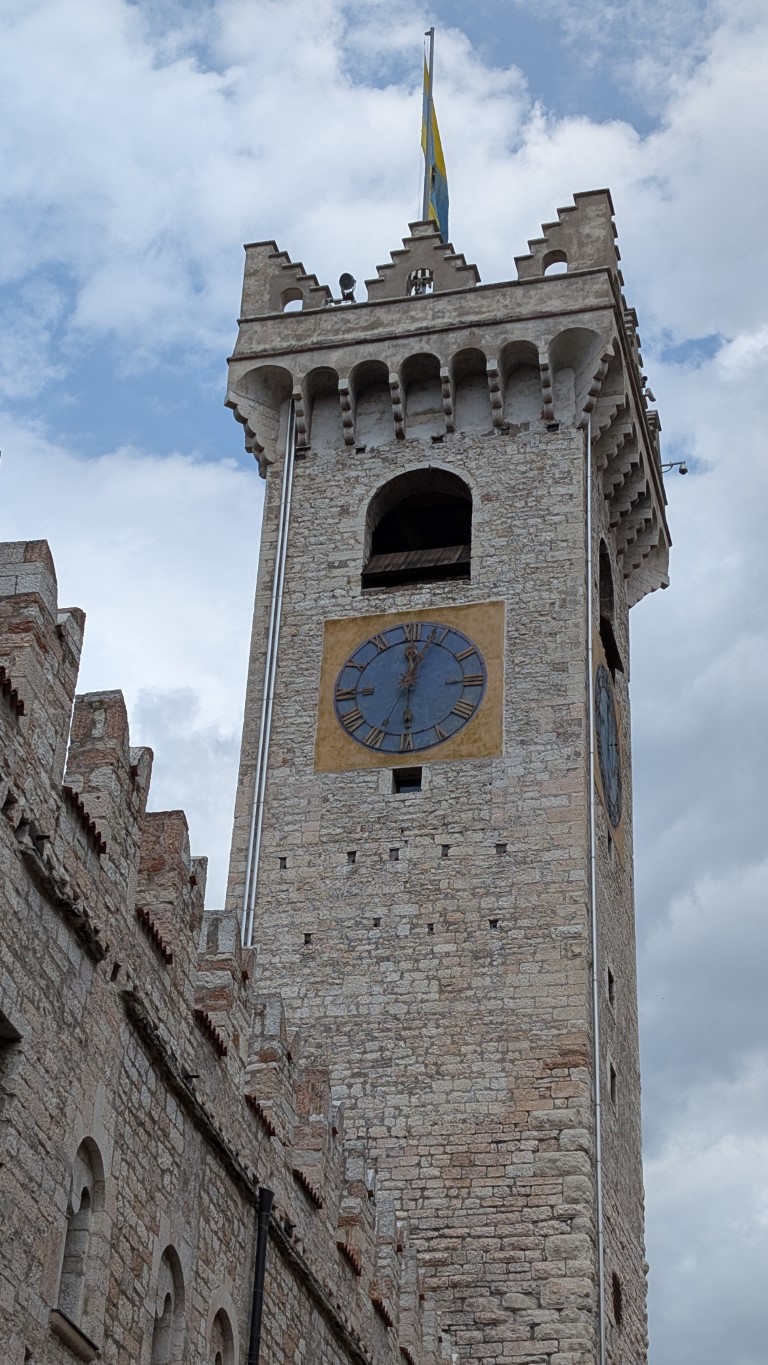
Next to the cathedral, the Palazzo Pretorio nestles against the cathedral, once a bishop's seat and now the treasury of the Diocesan Museum. The small Castelletto, a fine little palace with a slender bell tower, testifies to the secular power of the prince-bishops. From here, a private stone staircase once led directly into the cathedral – the bishop as ruler of the spirit and the city.
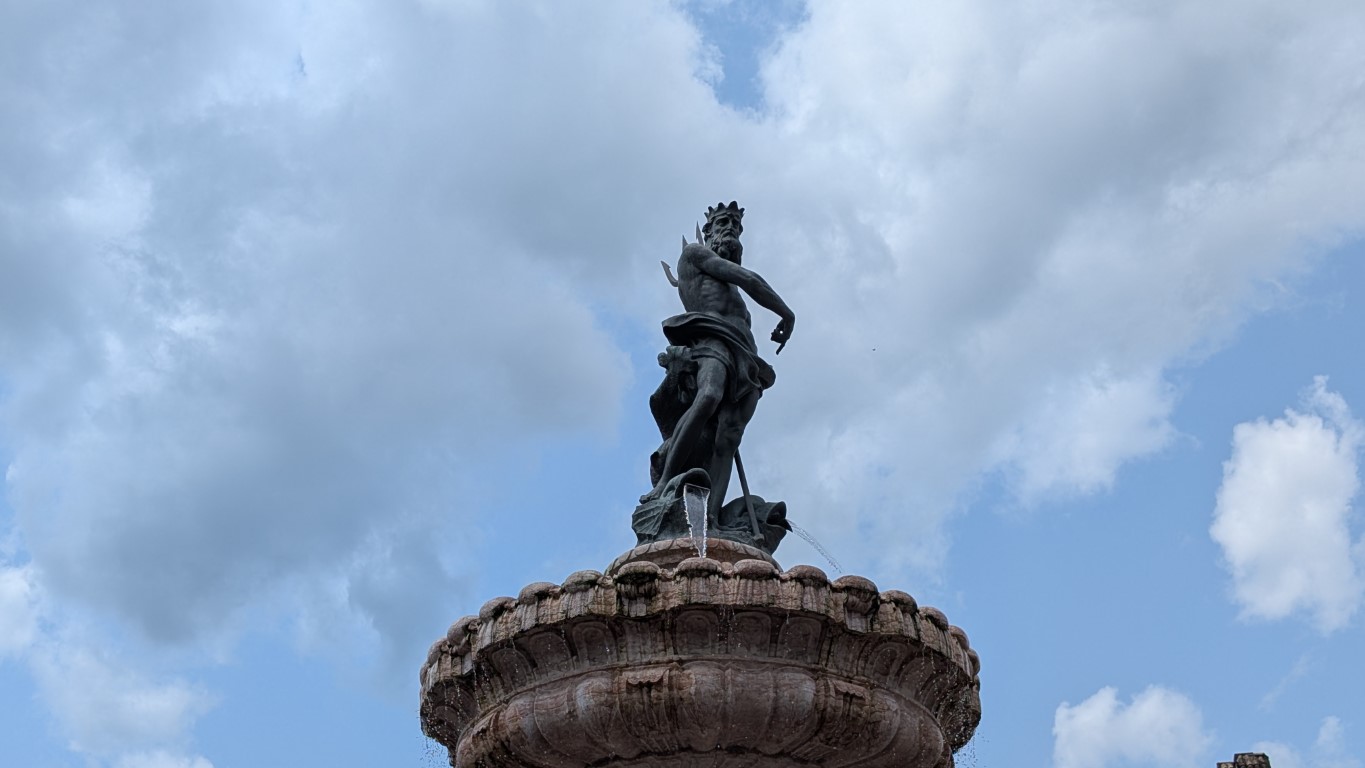
But the square's walls aren't the only thing that make it tick. At its center, on a pedestal of water and stone, stands the Fountain of Neptune, setting the pace like a Baroque conductor. Created in 1767 by Francesco Antonio Giongo, this fountain captures the imagination with its powerful composition: the sea god, armed with a majestic trident, sits enthroned above a dance of tritons, dolphins, and gargoyles, hurling water into the air in an eternal dance.
The fountain is more than ornamental—it is a symbol. It commemorates the city's connection to water, its role as a bridge of trade and faith between the Alps and the Adriatic, between the empire and the papacy. It reflects not only the sky and the cathedral, but also the spirit of a city that has always balanced between the elements: between stony austerity and fluid lightness, between liturgical silence and baroque splendor.
A poetic afterword
In the evening, when the light of the setting sun hits the golden stone of the facades, when the cathedral bells ring across the square, and the water of the Neptune Fountain dances in liquid silver, past and present merge into a moment of pure beauty. The Piazza del Duomo is then no longer just a place—it becomes a place of remembrance, a place to pause, a breath of history.
Anyone standing here hears the whispering of the Council Fathers, the ringing of Maximilian's coronation bells, the sound of the water - and perhaps, for a fleeting moment, the smile of Neptune himself.