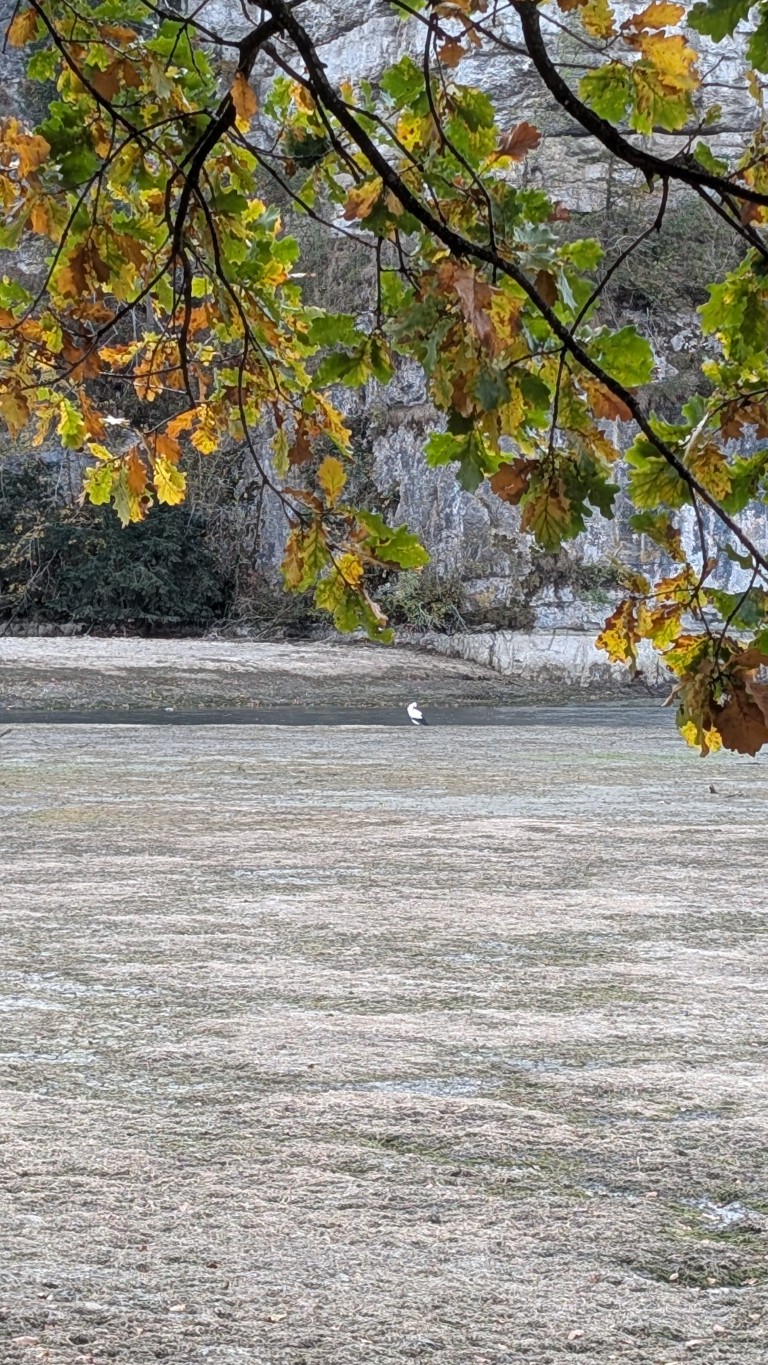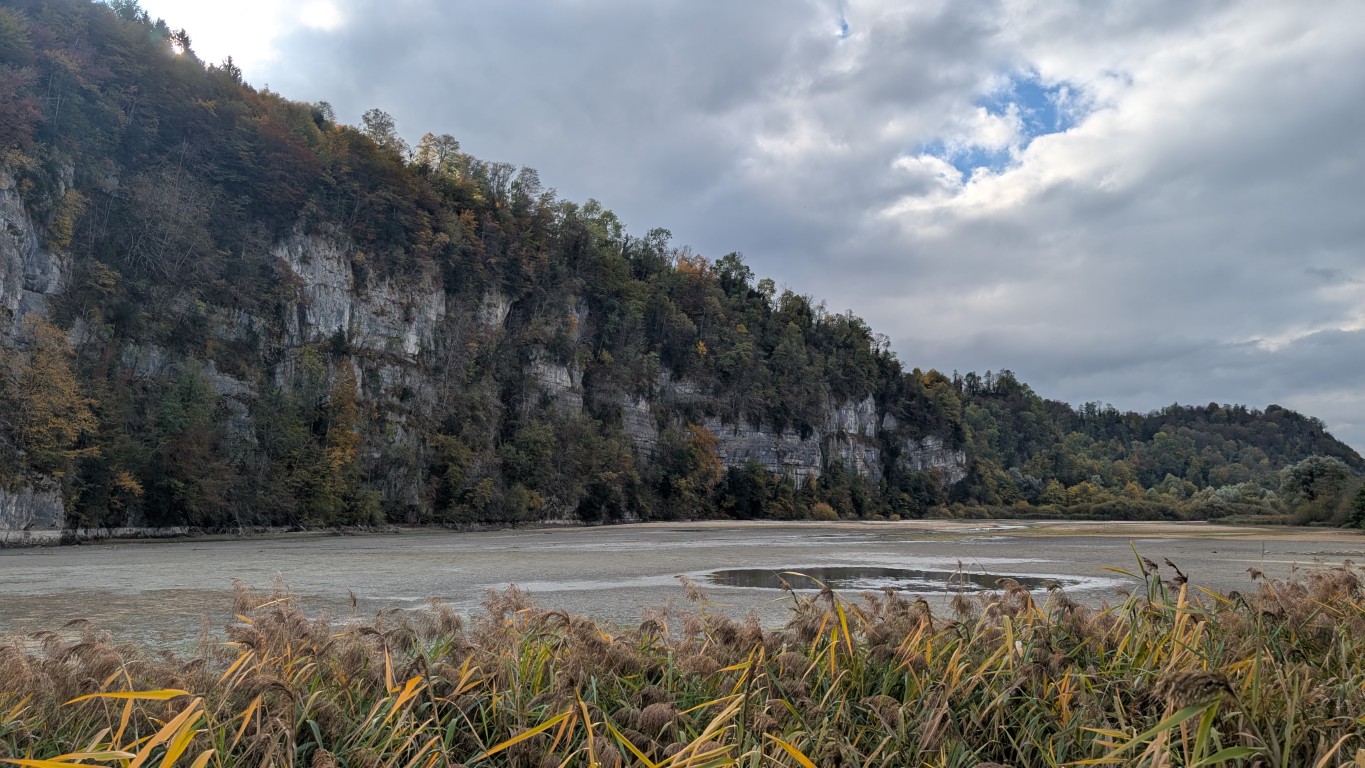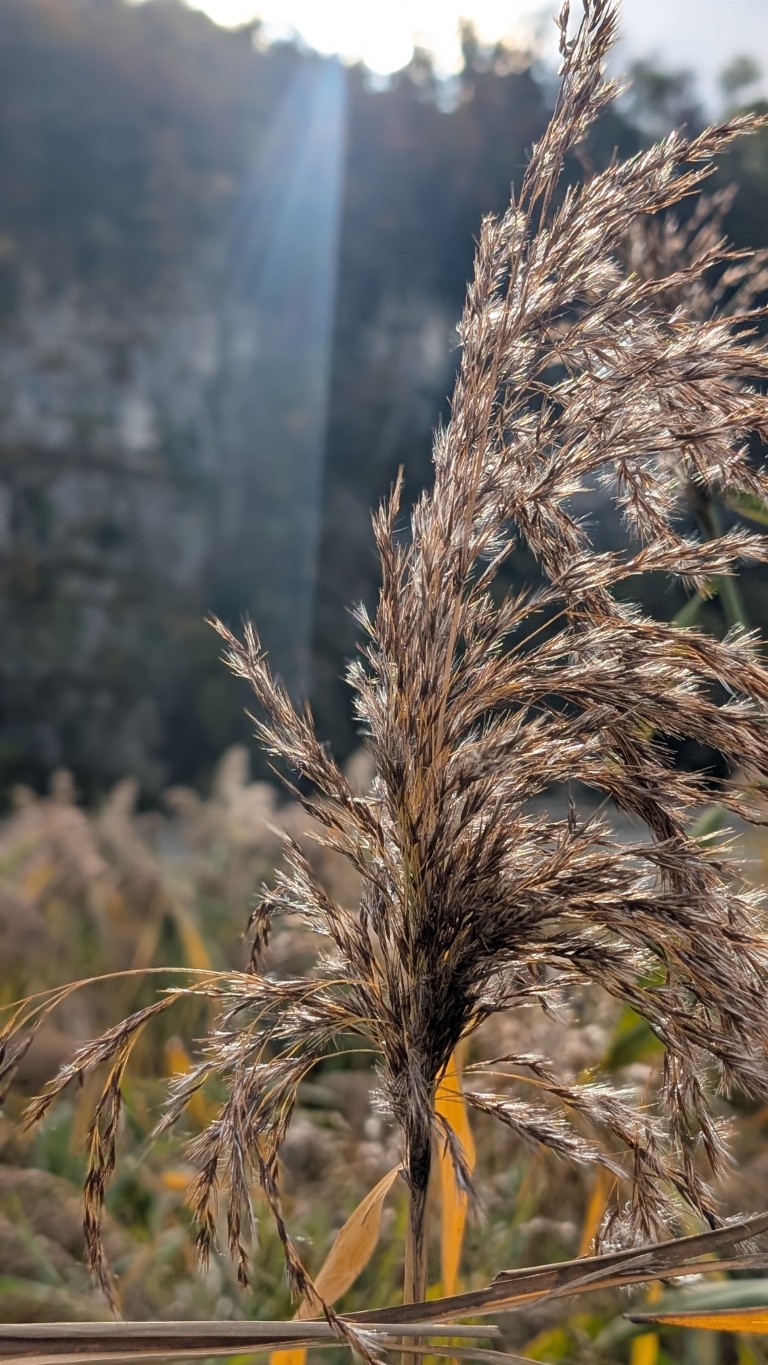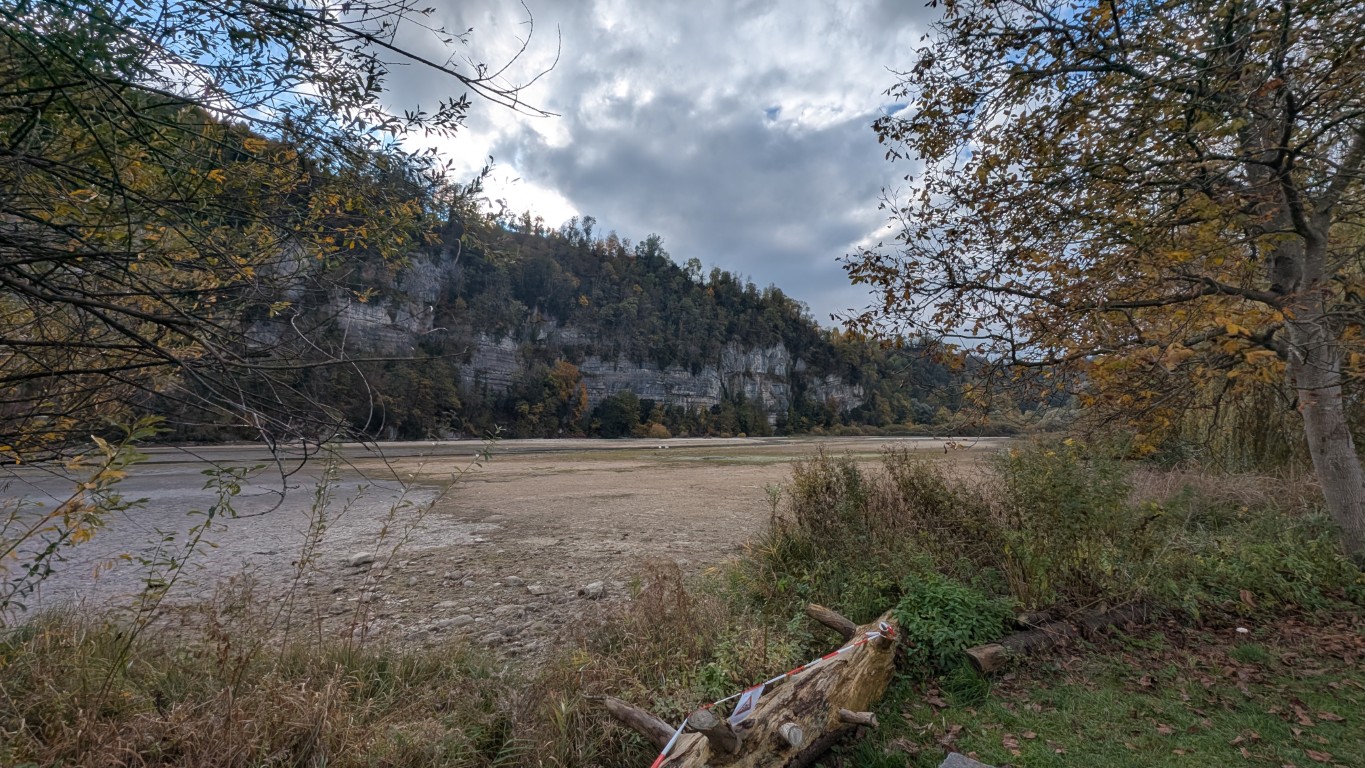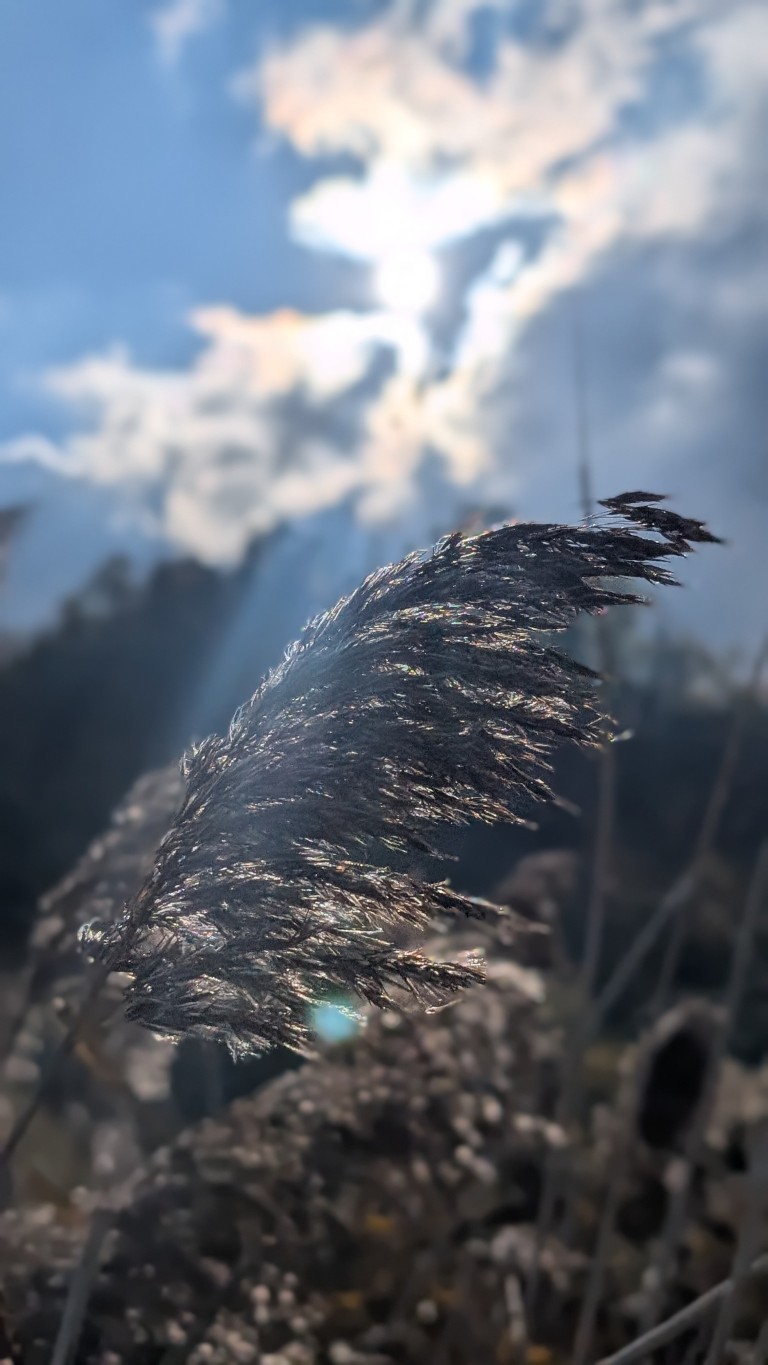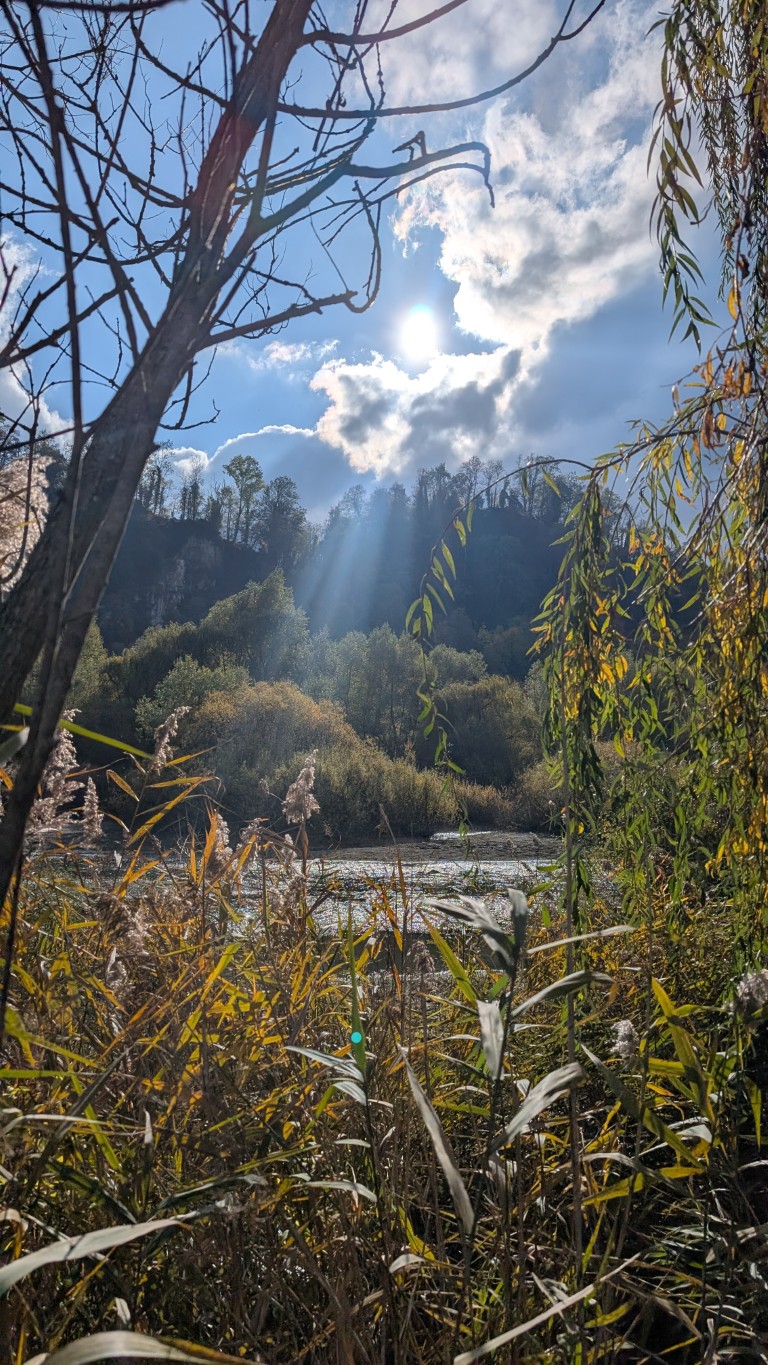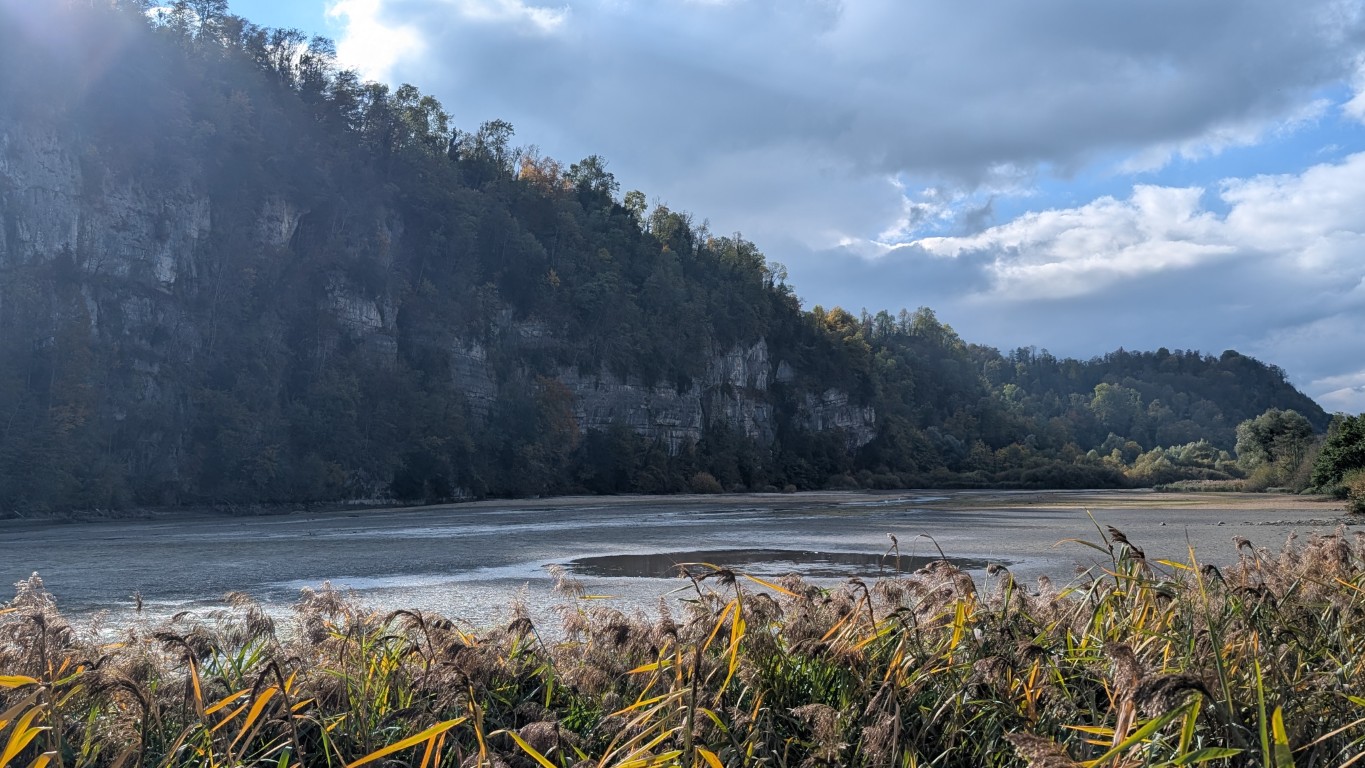
Nestled between verdant banks and a mighty cliff face lies a lake that, at first glance, appears to have been shaped by nature over millennia. The water clings to the steep rock, reeds and grasses sway in the breeze along the shore, and swans glide serenely across the surface. Only a few sounds break the silence: the rustling of leaves, the calls of birds, and occasionally the gentle lapping of water against the shore.
Lake Wichel in the canton of Obwalden is a place for anyone who enjoys pausing and observing nature. Its history, however, is not particularly long. This idyllic lake is a human creation – and at the same time a valuable habitat where nature and technology meet in a unique way.
A lake created by the power of water
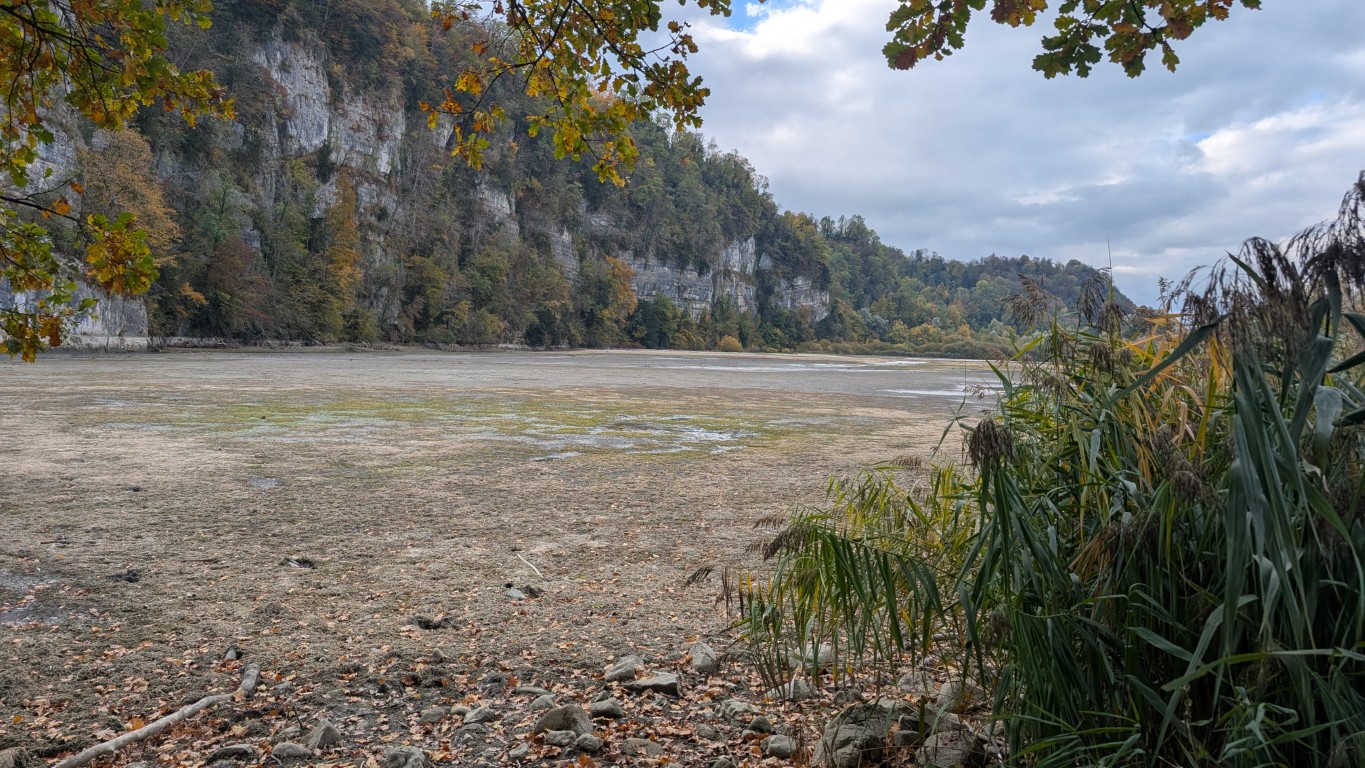
Lake Wichel lies between Alpnach and Kägiswil, within the municipalities of Alpnach and Sarnen. It stretches for approximately 1.8 kilometers in a southwest-northeast direction and is about 170 meters wide at its widest point. Its southeastern shore is particularly impressive, where the water clings directly to a steep rock face.
The lake was created in 1955 by the construction of a dam. What now appears as a natural body of water in the landscape was originally created for energy production. The water is channeled through a pressure tunnel approximately 1.86 kilometers long to the Eichi power plant. There, two Kaplan turbines drive the electricity generation.
On average, the power plant generates around 13.9 million kilowatt hours of electrical energy annually. Thus, Lake Wichel not only offers scenic beauty, but also the power that has enabled part of the region's electricity supply for decades.
Where nature and technology meet
Lake Wichel is much more than just a reservoir for hydroelectric power. Since 2005, the lake and its surroundings have been a nature reserve. The adjacent floodplain forest and the shoreline provide valuable habitats for numerous animals and plants.
The birdlife is particularly fascinating. Tufted ducks find a habitat here, as do eagle owls and numerous other waterfowl. A colony of swans also calls the lake home. With a bit of luck, you can observe these elegant birds as they glide silently across the water or search for food along the shore.
The lake is also an important habitat for fish. Because the dam interrupts a natural migration route, a bypass channel with a fish ladder was created in 2007. Another fish ladder is being built so that fish will be able to migrate downstream past the power plant in the future. This is intended to further improve the connectivity of the waterway.
It's a fascinating idea: A lake that was once created for electricity production is now being further developed as a habitat for nature with great effort.
The mysterious rock face and a small legend
No definitively handed-down legend directly attributable to Lake Wichel is documented in the available collections of legends. However, the landscape surrounding the lake offers ample material for its own little story.
The Guardian of the Cliff
It is said – or at least one could imagine it on a quiet evening by the shore – that a mysterious guardian once lived high up in the cliff face. No one knew who he was or where he came from. Some believed he was an ancient mountain spirit, others considered him the last guardian of a long-forgotten mountain kingdom.
When fog rolled through the valley in autumn, he would sit on the edge of the rocks and gaze down at the water. He knew every bird that nested on the shore, every fish that circled in the depths, and every tree that moved in the wind.
One day, so the fictional tale goes, the watchman heard a tremendous roar far below in the valley. People were building a dam, and the water began to back up. The mountain spirit watched as the landscape changed. At first, he feared his familiar valley would disappear. But over time, he discovered that new life was settling by the water. Birds arrived, fish found new places, and a very special habitat was emerging among the trees.
So the watchman decided to watch over the lake. Since that time, according to this little fantasy story, he sometimes appears as a shadow on the rock face. Anyone who looks closely on a windless evening might be able to see him – there, where the rock and water meet.
This story is not a traditional Obwalden legend, but a story invented specifically for this article, inspired by the unique landscape of Lake Wichel.
A place that has also had to withstand severe weather.
As peaceful as Lake Wichel may appear today, nature has also shown its untamed power here. In August 2005, Central Switzerland was hit by severe storms. Lake Wichel was also affected: large quantities of driftwood accumulated at the weir, and the floodwaters caused considerable damage. A road and a footbridge below the weir were destroyed.
The event highlighted the importance of thoughtful water management in this region. The lake is not only a natural habitat and a component of the energy supply, but also part of a complex system in which water levels and outflow must be regulated.
A paradise for quiet moments in nature
Anyone visiting Lake Wichel should take their time. The scenery, with the steep rock face in the background, is particularly captivating. It gives the elongated body of water an almost fjord-like appearance. Depending on the time of day, the light changes, and the rock faces are reflected in the water.
The lake is also a rewarding destination for nature photographers. Swans, waterfowl, reed beds, and the striking rock face offer a constant stream of new subjects. Those who pay attention might even discover small details along the shore that are easily missed when passing by quickly.
Lake Wichel is not a place for grand spectacles. Its charm lies rather in the tranquility, the landscape, and the opportunity to escape from everyday life for a while.
Where the water tells its own story
As the last rays of sunlight creep across the rock face in the evening and the water slowly darkens, Lake Wichel reveals its most atmospheric side. Swans glide across the lake, the birds gradually fall silent, and a peaceful stillness settles over it.
Perhaps that's precisely what makes this place so special: Lake Wichel tells a story of human ingenuity and the power of water, but also of nature's ability to create new habitats. What was once a reservoir for hydroelectric power generation is now a protected nature reserve and a valuable refuge for animals and people.
Nestled between cliffs, forest, and water, one discovers that not every special place has to be spectacular. Sometimes a still lake, a little evening light, and a view of a landscape that quietly tells its story are enough.